
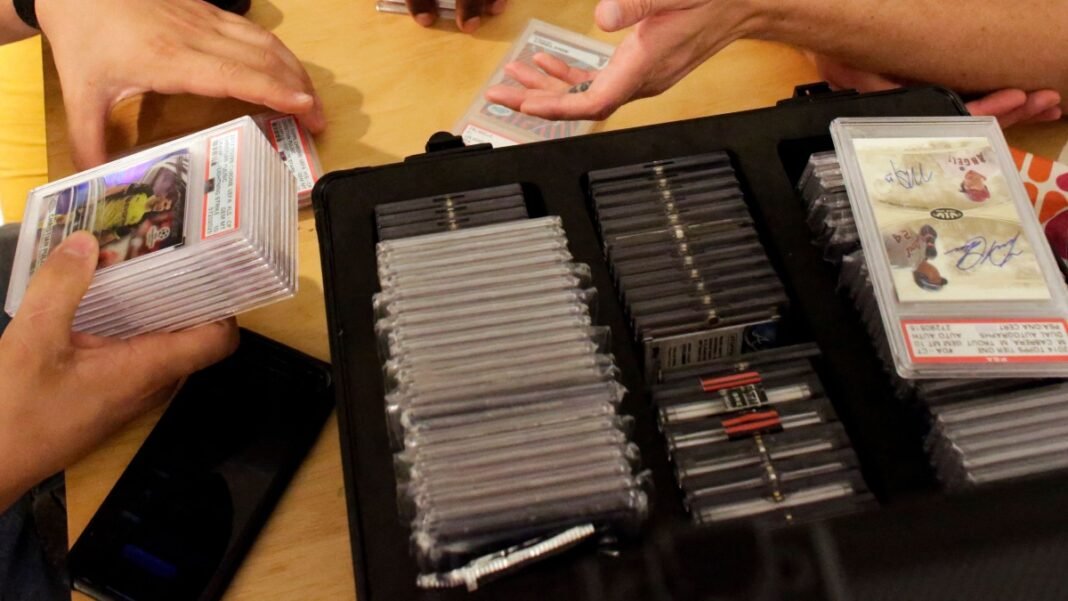


FedEx truck robbery outside the Professional Sports Authenticator headquarters in Santa Ana, California, has cost collectors an estimated $963,000 in trading cards, police said, in a theft that could rank among the largest heists in the history of the hobby.
Officers responded on Tuesday to the authentication company’s Santa Ana facility, where two full pallets of cards and a third disrupted pallet had been taken from a FedEx vehicle, Santa Ana police spokesperson Natalie Garcia said. The haul included sports, Pokemon and other collectible cards that had already passed through PSA’s grading process and were on their way back to customers, spreading the loss across many collectors.
PSA confirmed the theft in a statement, saying it is working closely with law enforcement and the carrier. The company said it has deactivated the certificates for the stolen items and notified marketplace partners so they can be on the lookout for rare and serialized items, a step designed to make the stolen cards difficult to resell through legitimate channels. Customer service staff have contacted affected customers directly and begun arranging compensation based on fair market value, PSA said.
How the FedEx truck robbery targeted post-grading shipments
The cards were in transit after grading, which is why the loss extends far beyond any single collector. Once PSA grades and authenticates cards, they are shipped back to their owners, and the stolen pallets appear to have carried finished orders from numerous customers. That distribution model makes the accounting difficult, and Garcia said the estimated value of the stolen goods could rise as owners continue to check what disappeared from their orders.
Nick Andrews, known as the Boston Card Hunter, has been compiling a crowdsourced list of cards claimed in the theft that numbered as many as 383 items by Monday evening. Among them were a 1995 Upper Deck 23K Gold Michael Jordan card and a 2024 One Piece Simplified Chinese 1st Anniversary Set Nami card, a pairing that shows how the theft swept up both high-end sports cards and popular collectibles from the same shipment.
One collector who identified himself only as Sky-B said in a YouTube video that he lost 104 cards he had spent two years assembling. The cards were insured for $156,000, a figure he believes sits well below their true market value, and he had paid $8,000 in grading fees before the shipment was intercepted while in transit to Michigan.
Why the FedEx truck robbery alarms the collectibles industry
Andrews said the heist could become one of the biggest in trading card history, noting that there are multiple victims, including one person he said lost $500,000 in inventory. PSA bills itself as the leading third-party authentication and grading service for collectibles, and its Santa Ana operation is a major hub where enormous value passes through daily. A theft at that chokepoint exposes how much of the industry’s value now moves through a small number of facilities.
The economics of modern collecting amplify the damage. Rare and serialized cards can carry five- and six-figure values individually, so two pallets of graded cards can hold wealth comparable to a bank vault. PSA’s decision to deactivate certificates is one of the industry’s few defenses. Without an active certificate, a graded card is far harder to sell at full value through legitimate channels, which may force thieves toward black markets or toward breaking valuable sets apart.
The theft also lands during a surge of mainstream interest in trading cards, from sports to Pokemon to anime sets, a boom that has drawn new money into the hobby and pushed prices for scarce cards higher. Richer targets follow higher values, and collectors are now asking whether carriers and grading companies need to rethink how high-value parcels move between facilities and doorsteps.
What the FedEx truck robbery investigation means next
Santa Ana police are investigating, and PSA said it is cooperating with law enforcement and the carrier. Deactivated certificates give investigators and marketplaces a practical tool to flag stolen items if they surface for sale, and Andrews’s crowdsourced list provides a working inventory that could help identify cards if the thieves attempt to liquidate them.
For collectors, the immediate question is compensation. PSA said customer service teams have contacted affected customers and are arranging compensation based on fair market value, within the terms and the maximum insured values owners selected. But as Sky-B’s account suggests, insured values often lag true market prices, leaving some collectors facing losses that no payout will fully cover.
The broader fallout may reshape how the industry ships valuable cards. Until the investigation produces arrests or recoveries, collectors with high-value cards moving through third-party grading will be watching closely, and the $963,000 figure may yet climb as more owners report what is missing from their orders.