
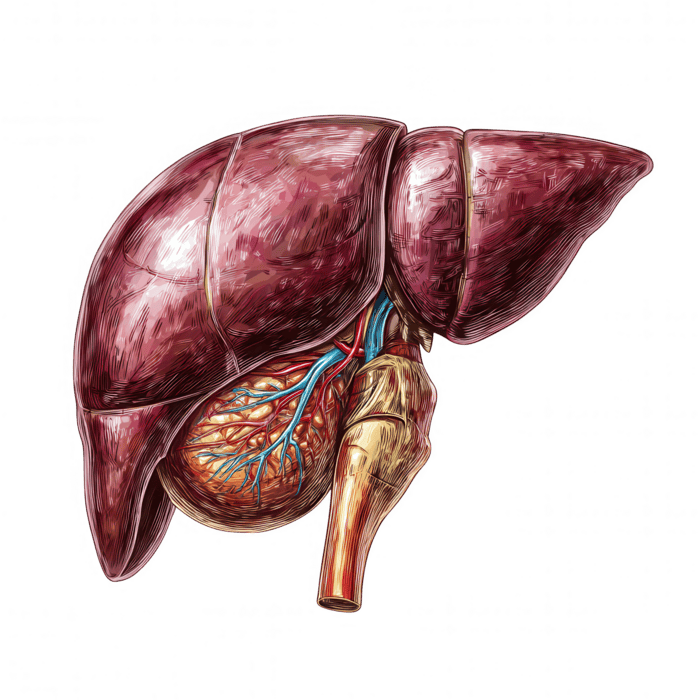


Fatty liver subtypes have been identified by scientists who found that a liver disease affecting nearly 30 per cent of adults worldwide is not a single illness but five biologically distinct conditions.
Researchers at Mayo Clinic, working with scientists from Virginia Tech, discovered that metabolic dysfunction-associated steatotic liver disease, or MASLD, can develop through several different biological pathways. The findings, published in Nature Communications, show each subtype carries different risks for heart disease, liver failure, cancer and the need for liver transplantation.
MASLD, previously called nonalcoholic fatty liver disease, develops when excess fat accumulates in the liver. It often begins without symptoms but can progress to inflammation, scarring and irreversible damage, and it is a leading cause of cirrhosis, liver cancer and transplantation worldwide.
To uncover the subtypes, the researchers integrated genetic sequencing with detailed clinical data from more than 4,600 patients. The dataset spanned liver enzymes, body mass index and lipid levels, alongside coexisting conditions such as diabetes, depression and sleep apnoea.
Of the five reproducible subtypes identified, three are predominantly systemic or extrahepatic in nature, meaning they primarily involve other parts of the body, such as a cardiorenal subtype linked to heart and kidney function. Two are intensely liver-centric, driven largely by genetic factors affecting the liver itself.
How researchers found the fatty liver subtypes
Computational models revealed the five profiles by combining genetic information with years of clinical records. The work relied partly on Mayo Clinic’s Research Data Atlas, which connects genetic information with patient health records, and drew on the Tapestry Study, a large project that has collected genetic information from more than 100,000 participants.
Some subtypes closely tracked familiar metabolic issues such as obesity and diabetes. Others appeared to be driven more by inherited genetic differences than by lifestyle or metabolic markers, challenging the widespread idea that the disease’s progression is primarily explained by metabolic alterations.
Shulan Tian, a bioinformatician at Mayo Clinic and co-senior author of the study, said that when clinical and genomic data are analysed together at this scale, patterns of disease progression emerge that would otherwise remain hidden. Once the subtypes are separated, she said, doctors can start matching treatments to the biology that is actually driving the disease.
The subtypes were also connected with different risks beyond the liver. Researchers reported associations with cardiovascular disease and conditions including depression, sleep apnoea and migraine, adding to evidence that fatty liver disease is not simply a problem of excess fat inside one organ.
What fatty liver subtypes mean for patients
One of the most important findings concerns the genetic forms of the disease. These subtypes are associated with a greater likelihood of progressing to advanced liver damage, even in people who do not have the metabolic risk factors typically linked to fatty liver disease.
That matters for people who do not fit the usual picture of the condition. A person who is not obese and has no obvious metabolic problems could still carry genetic changes that place the liver at considerable risk. Relying only on weight, diabetes or other familiar risk factors could cause some high-risk patients to be overlooked.
The researchers hope the five-subtype model could eventually improve screening. If doctors can identify which biological form a patient has, they may be better able to predict who needs closer monitoring for severe liver damage, heart disease or cancer, and to select treatments based on the specific biological processes responsible.
Large datasets can reveal patterns that are difficult to see in smaller studies. By comparing not only who develops the disease but how it changes over time, the team showed that the liver’s connections with metabolism, circulation and other body systems demand a more personalised approach.
The findings arrive as clinicians grapple with how to screen asymptomatic patients and which therapies might target each subtype. Open questions remain about how medical guidelines will adapt and whether insurance frameworks will recognise the distinct conditions. But the direction is clear. Fatty liver disease was never one disease, and treating it as five could change how millions are cared for.