
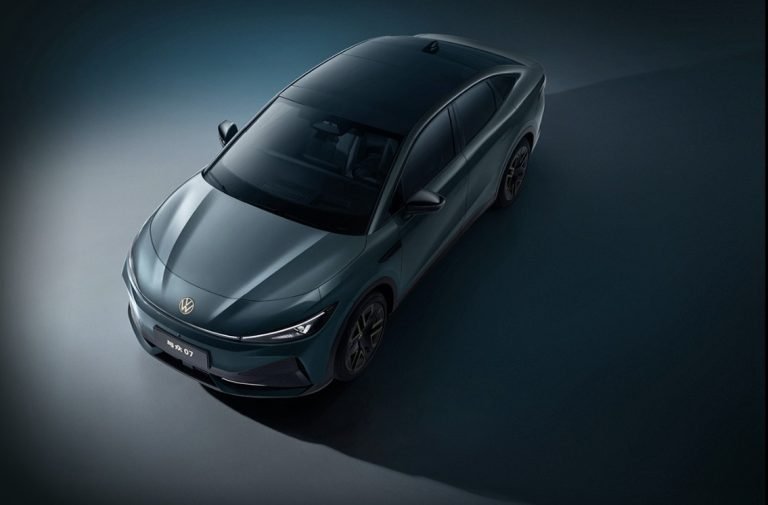


The Volkswagen Xpeng partnership was supposed to save Volkswagen’s China business. When Volkswagen turned to Chinese EV maker Xpeng in 2023, executives touted the alliance as a shortcut to developing cars tailored for China at the speed of the local auto sector. Three years later, a Reuters investigation finds the partnership’s first product exemplifies Volkswagen’s descent in the world’s largest car market.
The ID. UNYX 08 electric SUV, the first vehicle born of the Volkswagen Xpeng partnership, sold an average of just 267 vehicles a month between its April launch and August, according to data from automotive consultancy ThinkerCar. That is a fraction of the 3,622 monthly sales Volkswagen initially aimed to achieve this year, according to company planning documents reviewed by Reuters.
The findings are based on a Reuters review of previously unreported company documents and interviews with six people familiar with Volkswagen, including current and former executives and consultants. They show the German automaker’s ambitions ran well ahead of what its products, pricing and sales strategy could deliver.
Why the Volkswagen Xpeng partnership’s first car failed
The problems with the UNYX 08 began with the vehicle itself. The SUV launched with a price tag of about $34,260, but similarly priced Chinese rivals like Xiaomi’s YU7 and Zeekr’s 7X offer more sophisticated features and have proved far more popular with Chinese car buyers. The Volkswagen Xpeng partnership produced a car that was competitive on paper but outgunned in the showroom.
Distribution compounded the problem. Volkswagen sold the UNYX 08 through a nascent and limited network, while the vehicle struggled against newer, software-laden Chinese electric SUVs from domestic brands that iterate at a pace legacy automakers have found hard to match. The Volkswagen Xpeng partnership was meant to close that gap; instead, the gap defined the launch.
The weak debut reflects Volkswagen’s broader battle to revive its fortunes in China, where it reigned for decades as the top automaker until 2022. China represents the challenge at the heart of Volkswagen’s global crisis: a market that once contributed nearly 50 per cent of group profits now accounts for about 10 per cent, forcing what the company calls the biggest restructuring in its 89-year history.
The Volkswagen Xpeng partnership in the wider China strategy
Volkswagen recognised China’s shift toward higher-end technology and sought local partners to catch up. Yet the German automaker has struggled to turn those bets into commercial success. The Volkswagen Xpeng partnership focuses squarely on the Chinese market, while cooperation in Europe remains largely hypothetical.
CEO Oliver Blume has called China a “fitness centre” for the industry. At an industry conference in Paris this month, Blume said he saw no need currently for a Chinese joint venture in Europe: “Up to now we feel ourselves well prepared with our own opportunities we have ramped up during the last years in China.” An idea floated previously of filling excess German plant capacity with Chinese partners has yet to produce concrete talks.
Analysts see a sobering reversal. Stefan Bratzel of Germany’s Center of Automotive Management noted that while Volkswagen focused on partnerships in China, Stellantis’ alliance with Leapmotor is becoming a success story in Europe. “For years it was the Chinese who learned from the Germans,” Bratzel said. “Now that process has to be reversed.”
What next for the Volkswagen Xpeng partnership
The stakes for the Volkswagen Xpeng partnership could hardly be higher. Volkswagen is battling to implement sweeping job cuts, has threatened to close up to four plants in Germany, and faces pressure from investors to prove its turnaround strategy goes beyond downsizing into genuine product development and software.
A suite of affordable EVs across Volkswagen’s volume brands, including VW, Spain’s Cupra and Czech Republic’s Skoda, will be on show as the company races to update its mass-market electric offering. Whether the Volkswagen Xpeng partnership can yet deliver the China-tailored vehicles it promised will be judged on the next launches, not the first.
Three years ago, the alliance was sold as a shortcut. The Reuters investigation suggests it has become a case study in how hard the Chinese market has become for outsiders, even with a local partner in the passenger seat.