
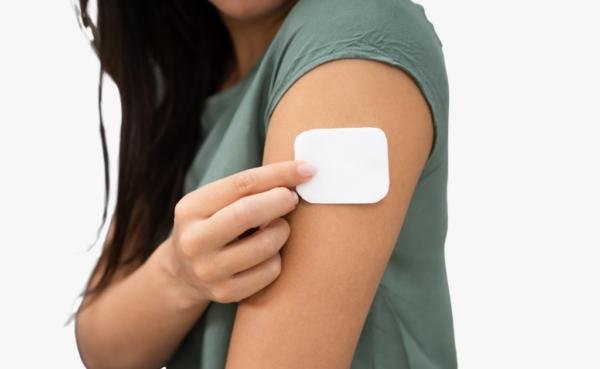


The estrogen patch shortage drew a demand for answers from Sen. Kirsten Gillibrand on Oct. 21, as the New York Democrat sent a letter to the Food and Drug Administration asking the agency to share its plan for making the menopause treatment available. Women have struggled for more than a year to fill estrogen patch prescriptions, and the estrogen patch shortage shows no sign of easing.
“Estradiol patches are a first line, widely used, and highly effective treatment for managing menopause symptoms, and FDA should be doing everything in its power to make sure this therapy is available to all women who need it,” Gillibrand told USA TODAY. “This is an urgent women’s health priority, and I will not rest until we have answers.”
What Gillibrand asked the FDA in the estrogen patch shortage letter
The estrogen patch shortage letter, sent Oct. 21, demanded that the agency share its plan to make estrogen patches available, including enacting emergency measures. Gillibrand shared an advance copy of the letter with USA TODAY. It was also signed by Sens. Tammy Duckworth, D-Illinois, and Adam Schiff, D-California.
“Passive monitoring and generic advice fail to adequately mitigate a nationwide manufacturing deficit,” Gillibrand wrote in the letter.
The FDA has acknowledged that women are struggling to find patches, but the agency has not labeled the situation a formal shortage. That label matters. Declaring a shortage could trigger the agency to speed up reviews, allow manufacturers to use new facilities, help them resolve supply issues and in some cases even allow the compounding of drugs.
Why the estrogen patch shortage keeps growing
Demand for the estrogen patch shortage treatment has climbed since the FDA removed the black box warning label on estrogen products. The warning had kept many women away from hormone replacement therapy after a 2002 Women’s Health Initiative study linked it to a higher risk of breast cancer, heart attacks and strokes in postmenopausal women. It was recognized later that the risks were mostly found in women who were older when they started hormone therapy.
Use of hormone replacement therapy fell from 27 percent of menopausal women in 1999 to 5 percent in 2020, according to the National Institutes of Health. As more physicians became certified in menopause care in the past decade, use rose again. Estradiol patch prescriptions went from about 594,000 in June 2024 to 1.6 million in May 2026, according to HealthVerity, a data company. Mark Cuban, owner of CostPlus drugs, said in a recent podcast with Dr. Mary Claire Haver that patch volume has increased at least tenfold in the past few years.
The American College of Obstetricians and Gynecologists recently announced new guidelines for hormone replacement therapy that will widen the number of women eligible for treatment, which analysts expect will push demand higher still.
Kathleen Jordan, the chief medical officer and cofounder of Midi, a women’s telehealth menopause provider, told USA TODAY earlier this year that the estrogen patch shortage predates the labeling change. “The problem isn’t an increase in demand of the patch, the problem is the manufacturers. The demand is only going up as access to care is improving. It could take years to solve it,” she said.
The American Society of Health-System Pharmacists, which represents more than 65,000 pharmacists, documents that almost 20 estrogen patch formulations are impacted by the shortage, double the number from earlier this year.
What women can do during the estrogen patch shortage
Health and Human Services Secretary Robert F. Kennedy Jr. met with physicians and manufacturers on Sept. 15 to increase access to estrogen patches and teach physicians about other options, such as estrogen gels and sprays. USA TODAY has reached out to Kennedy and the FDA for comment. In the meantime, the FDA is telling women to talk to their pharmacist or doctor about options.
Sharon Malone, an obstetrician and gynecologist and medical adviser for Alloy, says women should not skip treatment but also not panic. “We want them to remain symptom-free,” she says.
Physicians offer these suggestions for patients facing the estrogen patch shortage. Try local and mail-order pharmacies, since stock varies. Try estrogen spray or gel, which can be applied on the arm or thigh; a physician can prescribe it, and both forms let providers change doses without changing the prescription. If a woman can take oral estrogen, it is a good temporary solution, though some women with blood clots or other health issues cannot.
Patients whose pharmacy cannot fill a patch prescription can report it to the FDA at drugshortages@fda.hhs.gov. Haver also suggests that women alert the manufacturer of the drug they are seeking, sharing their zip code and asking for a resupply date. Those reports give the agency a clearer picture of where the estrogen patch shortage is hitting hardest.