
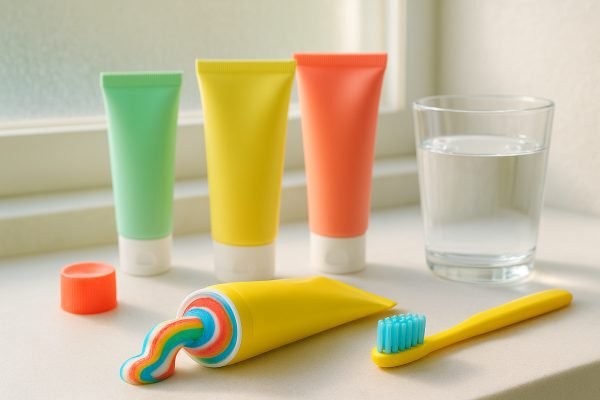


The toothpaste recall now in effect covers more than 4 million tubes sold nationwide, including popular children’s brands. Pritam International Private Limited started the voluntary recall on Sept. 10, and the U.S. Food and Drug Administration classified it as Class II on Oct. 19. The action spans multiple varieties of Brush Buddies children’s toothpaste, two Evo products and two Aru products.
The FDA said the recall includes multiple varieties of Brush Buddies kids toothpaste distributed nationwide, including character-themed and ice-cream flavors. The recall also covered two Evo products marketed for teeth whitening and sensitivity, and two Aru products marketed for gum health and cavity protection.
Toothpaste recall traced to manufacturing deviations
The FDA told USA TODAY via email on Oct. 22 that the reason for the toothpaste recall is “deviations from current good manufacturing practice (CGMP) requirements.” The agency’s CGMP rules set minimum requirements for the methods, facilities and controls used in manufacturing, processing and packaging of a drug product. The rules also help ensure a product is safe and that it contains the ingredients and strength it claims to have. When a manufacturer finds it has fallen short of those requirements, the FDA publishes the company’s recall in its enforcement report with the classification it assigns.
A Class II recall means the use of or exposure to the product may cause temporary or medically reversible health effects, or that the chance of serious harm is remote, according to the FDA’s website.
The timeline shows the recall began as a company action. Pritam International started the voluntary recall on Sept. 10. The FDA then classified it as Class II on Oct. 19. Two days later, the agency told USA TODAY by email that deviations from good manufacturing practice were the reason. The classification step is how the FDA signals the level of risk after reviewing a company’s recall.
Which products the toothpaste recall covers
The toothpaste recall lists several varieties of Brush Buddies children’s toothpaste in the FDA’s enforcement report. Character-themed flavors include Hot Wheels in strawberry, Barbie in bubble gum, My Little Pony in bubble gum, and Crayola Silly Scents in bubble gum, watermelon and strawberry.
Ice-cream flavors in the toothpaste recall include vanilla, chocolate, mint chocolate chip and cookies ‘n cream. Brush Buddies whitening and cavity-protection lines are also on the list, including the Whitening Anti-cavity Fluoride Toothpaste with Baking Soda, the Cavity Protection Cool Mint toothpaste and the Advanced Whitening Peppermint toothpaste.
The two Evo products are the Advanced Whitening Anticavity Fluoride Toothpaste in Peppermint and the Sensitive Anticavity Fluoride Toothpaste in Sweet Mint. The two Aru products are the Gum Health toothpaste in Soothing Mint and the Cavity Protection toothpaste in Cool Mint, both sold under a nine-ingredient line.
Toothpaste recall spans more than 4 million tubes
More than 4 million tubes of toothpaste were affected by the toothpaste recall, a scale that makes it one of the larger oral-care recalls in recent years. The products were distributed nationwide, and many of the Brush Buddies flavors were sold as children’s toothpaste.
For recall number codes and expiration dates, consumers can visit the FDA’s website for the full enforcement report. The agency tracks the recall through its weekly enforcement reports, which list the specific products, codes and dates covered. These reports are updated as the agency reviews the company’s actions, and they serve as the most complete public record of the affected inventory.
The recall was reported Oct. 21. Because many of the tubes went to families with children, the FDA’s classification and the published product list give parents a direct way to check the tubes in their bathrooms. Shoppers can match the brand name and flavor on their tube against the FDA’s enforcement report before deciding what to do. Anyone who finds a matching product should stop using it and follow the recall instructions posted by the FDA. The agency’s weekly enforcement reports remain the official record of which codes and expiration dates are covered as the toothpaste recall moves forward.