
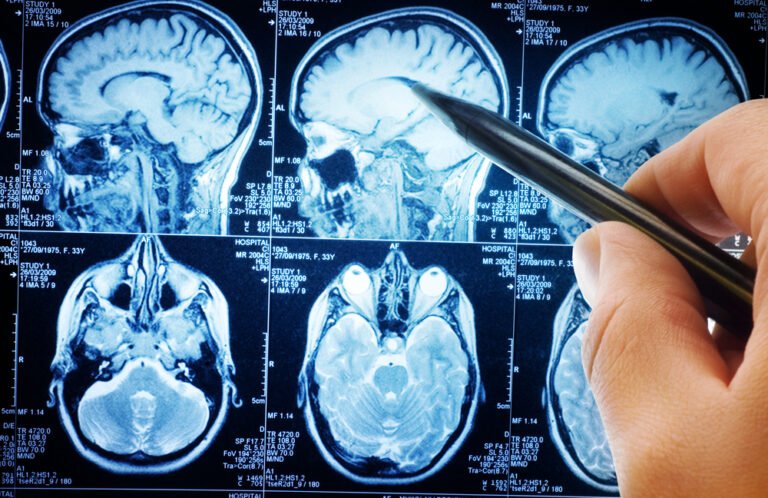


Living in a highly disadvantaged neighbourhood was associated with poorer brain health in a study of nearly 3,000 brain MRI exams, researchers have reported. The results were published in Radiology, a journal of the Radiological Society of North America. The study adds imaging evidence to a long standing suspicion that living conditions leave a mark on the brain.
“We have long suspected that your living environment affects your brain, but until now it has not been proven at scale in clinical populations,” said John-Paul J. Yu, associate professor of radiology, psychiatry, biomedical engineering and biostatistics and medical informatics at the University of Wisconsin School of Medicine and Public Health in Madison. Yu is also an associate director at the university’s Center for Health Disparities Research, and he led the work.
Researchers investigated whether living in the most socioeconomically disadvantaged neighbourhoods was associated with two measures of brain health: a higher brain age gap and lower total brain volume. Brain age gap is the difference between a person’s actual age and how old the brain appears based on estimates from MRI exams. A higher gap means the brain looks older than the person’s age.
The team analysed brain MRIs from 2,826 patients, 1,094 men and 1,732 women, ranging in age from 18 to 96 years. The scans came from consecutive inpatient and outpatient clinical MRI examinations at the University of Wisconsin Hospitals and Clinics and community partners, from January 2024 to June 2024. Patients with imaging evidence of disease were excluded. Volume measures were adjusted for head size, and models took account of age and sex.
What the brain health scans showed
People living in the most disadvantaged neighbourhoods had poorer brain health, with a higher brain age gap and lower total brain volume than people in less deprived areas. Yu put it plainly: “We found that residents in the most disadvantaged neighbourhoods had an accelerated brain age compared with people living in less deprived areas. In other words, where you live leaves a measurable imprint on your brain.”
The scans also showed higher white matter hyperintensity volume in residents of the most disadvantaged neighbourhoods. White matter hyperintensities are bright spots on MRI that reflect damage to small blood vessels in the brain. Yu described them as “essentially the footprints of cardiovascular damage in the brain” and said chronic stressors such as high blood pressure, poor sleep or constant stress can narrow blood vessels and restrict blood flow, leaving those bright spots over time.
Larger white matter hyperintensity volumes are connected with a higher risk of memory loss, cognitive problems and dementia. Elevated brain age has been associated with cardiovascular risk factors, psychiatric illness and cognitive impairment. The study did not follow patients forward to see who later developed dementia, so it shows a link at one point in time rather than a forecast.
How neighbourhood disadvantage and brain health were measured
For each patient, researchers calculated an Area Deprivation Index score, a measure of neighbourhood level socioeconomic disadvantage based on the resident’s ZIP code. The index is a census block group level composite measure built from 17 indicators of income, education, employment and housing, drawn from 2023 American Community Survey data.
That method for measuring brain health has a limit. A ZIP code score describes an area, not a person. Two people in the same area can have very different incomes, jobs and health histories, and the study cannot separate the effect of the neighbourhood itself from the circumstances of the people who live there. The authors controlled for age and sex, but they did not claim to have isolated a single cause.
The retrospective design is another limit for this brain health study. Researchers looked back at scans already taken for clinical reasons, rather than scanning a random sample of the population. People who have a clinical MRI may differ from people who never have one, and that selection could shape the results. The authors presented the findings as evidence from a real world clinical population, which is both the study’s strength and its boundary.
Why brain health findings matter for care
Yu said the findings suggest MRI data may serve as intermediate imaging markers of brain health inequity, with relevance for brain health research, population neuroscience and clinical risk assessment. A scan pattern that tracks with neighbourhood disadvantage could help health systems spot areas where people carry extra neurological risk, and plan services for those areas.
“Neighbourhood disadvantage, quantified by indices such as the ADI, is an important determinant because it reflects accumulated structural inequities extending beyond individual behaviours that contribute to disparities in clinical outcomes,” Yu said. “It is important to factor in this data when planning health intervention programs, crafting public policy, and identifying areas that need improved access to care.”