
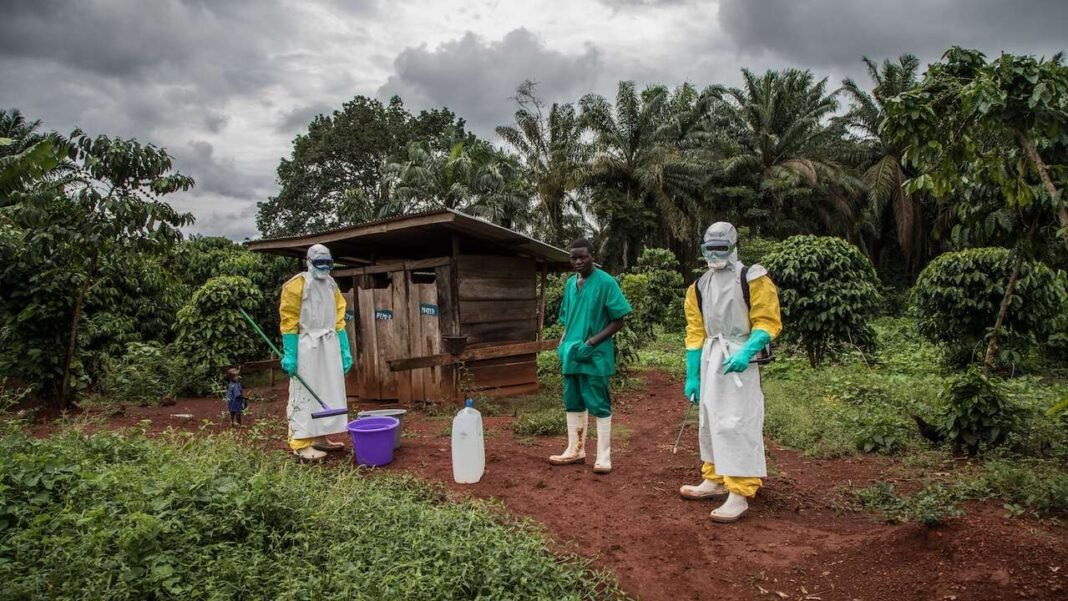


More than 5,000 people have died in the Ebola outbreak in the Democratic Republic of Congo, according to figures released by the Congolese Ministry of Health on October 31. The ministry recorded 5,026 deaths out of 10,351 infections, a fatality rate of 48.6 percent. A further 2,788 people have recovered.
The toll makes this the deadliest Ebola outbreak in DR Congo’s history. It passed the country’s previous worst outbreak, which killed 2,299 people between 2018 and 2020, and was declared the country’s deadliest in August. It is the second largest Ebola outbreak ever recorded, behind only the West African epidemic of 2014 to 2016, which killed more than 11,300 people across several countries.
The outbreak was declared in mid-May and is caused by the Bundibugyo species of the Ebola virus. There is no approved vaccine or specific treatment for this strain, although clinical trials of vaccines are under way.
Cases have been recorded in eight of the country’s 26 provinces and in 67 of its 178 health zones. The epicentre remains Ituri province in the north-east, a conflict zone that makes the virus harder to contain. Ituri and neighbouring North Kivu together account for 9,782 confirmed cases and 4,792 deaths, the majority of the national total.
Why the Ebola outbreak keeps spreading
According to the Africa Centres for Disease Control and Prevention, about 80 percent of new cases are being found outside the chains of contacts being monitored by health authorities. That figure is a warning sign for any Ebola outbreak response. Contact tracing works when most new infections appear among people already known to have been exposed. When four in five new cases appear outside those lists, it means transmission is happening faster than tracers can follow it.
Access is part of the problem. Ituri is affected by armed conflict, and health workers have faced attacks while doing their jobs. The BBC reported that earlier in the week, a nurse was killed and another health worker was seriously injured in an attack while responding to an Ebola outbreak alert. Such attacks close clinics, scare off staff, and push sick people away from formal care and toward home treatment, where the virus can spread within families.
Mistrust adds another layer. Communities that have lived through years of conflict and broken promises do not always accept outside health teams at face value. The World Health Organization’s Africa office has called for a continued scale-up of control measures, greater access to affected areas, and stronger community engagement to end the Ebola outbreak. Engagement here means local leaders, local languages, and local staff, rather than instructions delivered from distant capitals.
What the Ebola outbreak numbers mean
The headline figures hide a split between two counts. The Congolese Ministry of Health figures released on October 31 put deaths at 5,026 and infections at 10,351. International surveillance figures with an earlier cutoff were lower: the European Centre for Disease Prevention and Control and the US Centers for Disease Control and Prevention both recorded 4,992 deaths and 10,274 confirmed cases through October 28. The gap reflects different cutoff dates, not a dispute about the trend, which points in one direction in every count.
The World Health Organization’s tally as of October 26 was 10,172 confirmed cases and 4,932 deaths across five countries: Congo, Uganda, France, Kenya and Nigeria. Congo accounted for 10,141 of those cases and 4,928 of the deaths. Cases outside Congo have so far been small in number, but their presence shows why neighbouring countries and international airports are watching the outbreak closely.
Dr Patrick Otim, a programme area manager with the World Health Organization, described the rising death toll as a tragic milestone and said the figures represent thousands of families and communities torn apart by the disease. The Africa CDC chief, Jean Kaseya, told African health ministers the continent is not winning so far against the Ebola outbreak, a blunt assessment that matches the tracing figures.
What happens next in the Ebola outbreak response
For the wider world, the risk remains low but not absent. The US Centers for Disease Control and Prevention has assessed the overall risk to the American public as low, and it has introduced a travel-history declaration for air passengers arriving in the United States, taking effect late on November 3, under which travellers must confirm they have not visited DR Congo in the previous 21 days.
The longer view is grimmer. An outbreak that began in May has now killed more than twice as many people as DR Congo’s previous worst, and it is growing. The difference this time is the strain, for which no approved vaccine exists, and the setting, a conflict zone where health workers have become targets.