
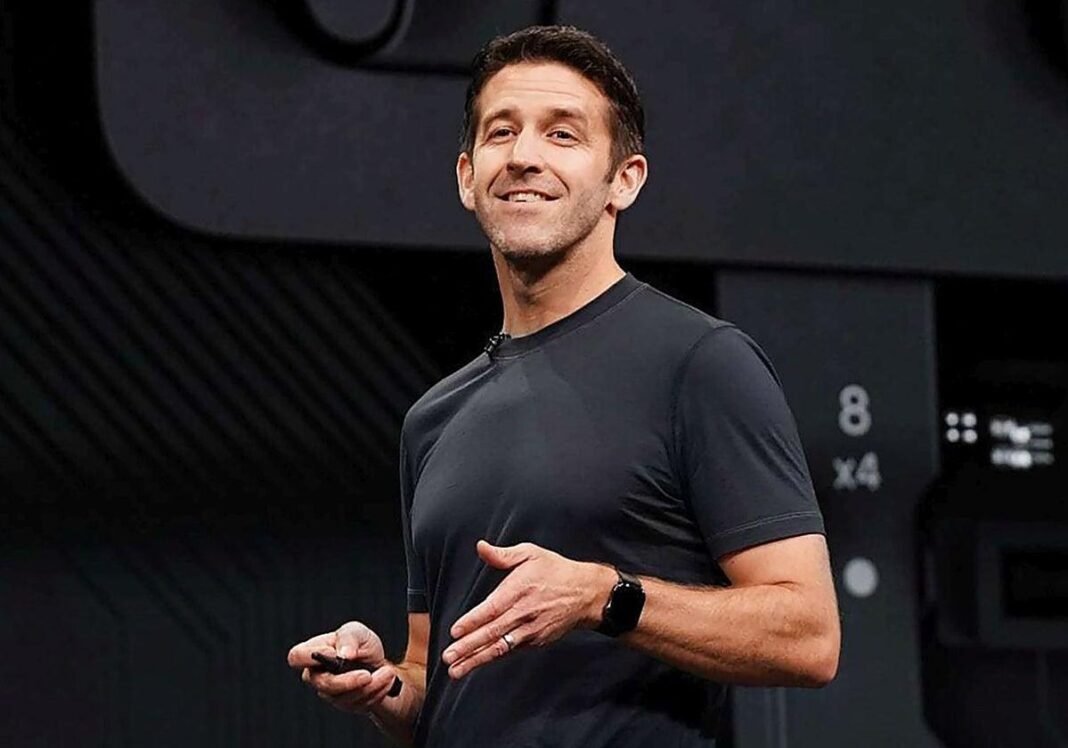


Apple chief executive John Ternus has defended the company’s position on artificial intelligence, saying Apple will use AI in its products but will not release AI features simply for the sake of it. Ternus made the remarks in an interview with WIRED’s Steven Levy, published on 30 October 2026 and covered by TechCrunch on 31 October. Levy spoke to him in Los Angeles during Apple’s launch of its new touchscreen MacBook Pro
Ternus became chief executive at the start of September 2026 after about 25 years at Apple, has faced questions about AI since he took the job. Apple has often been described as behind on AI, especially after it delayed a more powerful version of Siri, which finally launched in the summer of 2026. He acknowledged that “everyone has an opinion” on Apple’s AI work, but he insisted: “I really like where we’re at.” That line is the clearest public defence of Apple’s AI pace from its new chief so far.
His test for AI is simple, and he stated it in the interview. Apple is “absolutely going to leverage AI” in new products, he said, but the goal is products people love, not AI for its own sake. “We don’t want to ship AI for AI’s sake,” he told Levy. “When we’re doing it right, people won’t have to think about whether it was AI that made this happen or more traditional software. What matters is, did we build something that they really love?”
Ternus on products, not AI labels
Ternus told Levy that product is what he cares about most. “I do love product. I’m super passionate about it,” he said, according to coverage of the interview. That passion has been his public identity at Apple for years, since he led hardware engineering before becoming chief executive. In the interview, he linked that identity to AI directly: AI should improve the products people already use, rather than becoming a label on the box. A feature that works well matters more, in his view, than a feature that can be marketed as AI.
That bet also shapes how Apple talks about AI spending. Other large tech firms have announced very large AI infrastructure plans, and their shares have moved sharply on those plans in recent weeks. Apple has spent less publicly on AI infrastructure than some rivals, and He did not use the interview to announce a new spending plan. Investors will test that comfort when Apple reports quarterly results on 2 November, his first results call as chief executive.
Ternus on AI agents and human work
Levy pressed him on whether AI agents, software that carries out tasks on its own, could make apps unnecessary. Agents that book, buy, write and organise for a user could, in time, change how people use computers. Ternus allowed that such a shift “could make life really easy, I suppose,” but he pushed back on the idea that it would remove human work from making products. “The creation of products is a deeply human and personal thing, something that we love to do,” he said.
That answer covers two questions at once. The first is about users: will people still open apps, or will they ask an agent to do the work? Ternus did not rule out agents, and he did not say Apple will block them. The second is about makers: will AI replace the engineers and designers who build Apple products? His answer is no, at least for the creative core of product work. He presents product creation as a human activity that AI can assist but not replace, which is a position many Apple staff will welcome.
Ternus on regulation and security
Levy also asked Ternus whether he supports regulation of AI. He did not give a direct answer. “Our focus is on making sure that our products are secure and safe, and protecting the users’ information,” he said. That is a careful answer from a chief executive who has been in the job for less than two months, and who may not want to set a public policy position in his first major interview.
The interview sets the terms on which he will be judged in the short term. Analysts will ask about AI spending, about memory costs, which he called a crisis in a separate TIME interview, and about China. They will also ask whether the product-first message is a strategy or a way to explain a slower AI rollout. He has given his answer in public: products first, AI as a means, not an end. The results call on 2 November will show whether investors accept that answer, and the China beta on 4 November will show whether the product itself backs it up.