
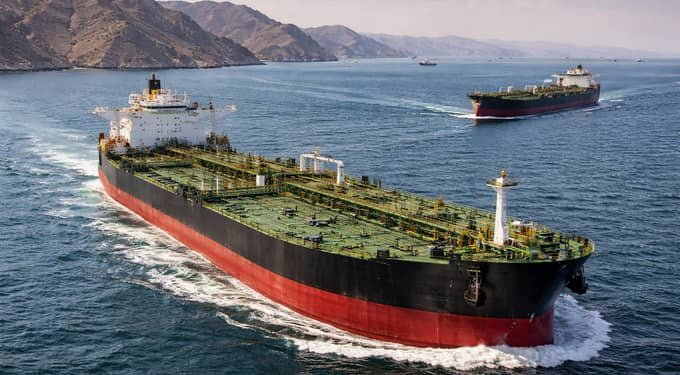


Iran’s army said on Friday that two oil tankers caught fire on Thursday after hitting naval mines in separate incidents in a restricted area east of the Strait of Hormuz. The Iranian navy said one of the tankers was sailing through the restricted area with its navigation systems switched off when it struck a mine and caught fire. Another tanker had suffered a similar incident earlier on Thursday after hitting a naval mine and catching fire, the statement added.
The army urged vessels seeking to cross the Strait of Hormuz to coordinate with the Iranian armed forces beforehand and use designated maritime routes. It warned that tankers entering the restricted zone would face the same fate. The statement did not name either vessel, give their flags or say how much oil they were carrying. No independent source has confirmed that either tanker was damaged.
Strait of Hormuz claims and the restricted zone
The claim followed a similar announcement on Monday from the Islamic Revolutionary Guard Corps Navy, which said two tankers exploded and caught fire after hitting naval mines while using a southern route through the Strait of Hormuz that Iran says was unauthorized and mined. The Guard said the vessels were carrying more than four million barrels of oil and were escorted from the air by U.S. fighter jets and drones. It said the tankers had switched off their radar and tracking systems to cross in secret, and it warned ship owners that trusting U.S. military officials would put their vessels at risk.
The Guard described the mine strikes as punitive measures in response to what it called the U.S. military’s illegal blockade and violations of Iran’s rules for the strait. It also claimed that six oil tankers caught fire and sank in the Strait of Hormuz on Sunday and Monday, and that pollution from the explosions had spread across coastal areas and waters. Those claims, like Thursday’s, have not been confirmed by any outside source.
Tehran has made such announcements almost daily since mid-October, and the Guard claims more than 30 ships have run into sea mines since the start of November. The army also claims to have targeted more than 140 ships since the war began on February 28. Iran reclosed the Strait of Hormuz on July 12, following the resumption of U.S. attacks on July 8, and Iranian authorities say it is only safe to cross using corridors they have authorized. Washington says there is no effective blockade of the strait, since it maintains military control of the passage on its outer side.
Strait of Hormuz verification questions
The latest claims have not been independently verified. The ships in Thursday’s incidents were not identified, and no shipping company has reported a mine strike in the Strait of Hormuz. Britain’s Maritime Trade Operations agency, which regularly issues alerts about incidents in the strait, was silent after the announcement. State television showed low-resolution video of smoke on the horizon, but the footage did not identify a vessel.
Five maritime experts, including a former navy captain, told The National that the Guard’s claims do not add up. Farzin Nadimi, a senior fellow at the Washington Institute for Near East Policy who has examined photos and videos of the conflict, said: “From what I have seen so far, there has been almost zero evidence of any damage caused by sea mines.” The Strait of Hormuz carries a large share of the world’s seaborne oil, and even unverified claims of mined waters can push up shipping costs and insurance rates for tankers passing through the strait.
The Strait of Hormuz is the narrow waterway between Iran and Oman that links the Persian Gulf to the open sea. A large share of the world’s oil supply moves through it by tanker, and any disruption to traffic there is watched closely by energy markets. Iran has long threatened to close the waterway in a conflict, and the strait has been a flashpoint in the fighting between Iran and the United States and Israel.