
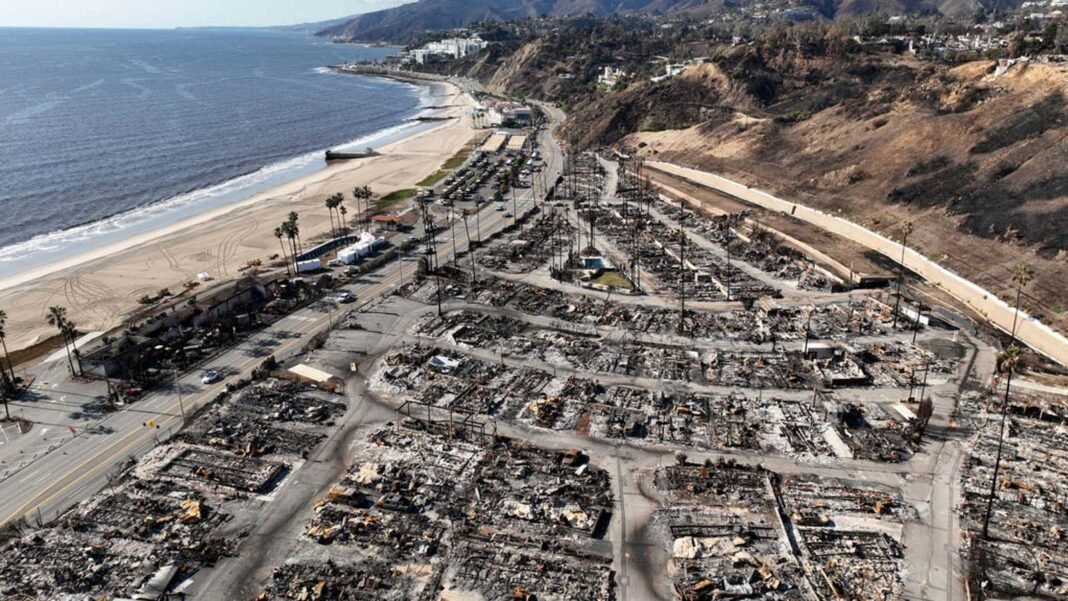


A federal jury in Los Angeles convicted Jonathan Rinderknecht on Friday of starting the blaze that grew into the Palisades Fire, the January 2025 wildfire that killed 12 people and destroyed more than 6,800 structures in Pacific Palisades. The verdict came on the third day of deliberations in a retrial, nearly five months after jurors in his first trial deadlocked and a judge declared a mistrial. Rinderknecht, 30, a former Uber driver, was found guilty on two federal counts: destruction of property by means of fire and arson affecting property used in interstate commerce.
Rinderknecht will be sentenced on March 17, 2027. He faces a minimum of five years and a maximum of 40 years in federal prison, prosecutors said. First Assistant U.S. Attorney Bill Essayli told reporters outside the courthouse that the sentence could reach 40 years, and he thanked the jury for its work. Rinderknecht has remained in federal custody since his arrest in October 2025.
The case turned on how the fire started. Prosecutors said Rinderknecht lit a fire on New Year’s Eve, December 31, 2024, in the hills above Pacific Palisades. The flames burned down and smoldered underground for seven days. Santa Ana winds then reignited the embers on January 7, 2025, and the fire spread through the neighborhood in a matter of hours. The Palisades Fire went on to burn through Pacific Palisades and nearby areas, killing 12 people and leveling thousands of homes.
The New Year’s Eve blaze burned in a remote stretch of hillside and was thought to be out before it went underground. A week later, Santa Ana winds pushed the embers back to life, and the fire moved into residential streets within hours. The Palisades Fire then burned for days across Pacific Palisades and nearby areas before fire crews brought it under control.
Palisades Fire evidence at the retrial
Jury selection for the retrial began on November 2, and testimony ran for about two weeks before U.S. District Judge Anne Hwang. Prosecutors built the Palisades Fire case on cellphone records, surveillance footage and fire investigation findings that placed Rinderknecht at the ignition site. Assistant U.S. Attorney Mark Williams told jurors that Rinderknecht’s own statements and actions pointed to him as the person who set the fire. The jury deliberated for nearly three days before returning guilty verdicts on both counts.
The defense argued that the evidence left gaps. Defense attorney Steven Haney said investigators had not ruled out fireworks as the source of the first flames, and he urged jurors to weigh the lack of direct proof that Rinderknecht lit the fire. The jury rejected that argument. The Palisades Fire trial had already split one jury, which voted 10 to 2 in favor of acquittal before Judge Hwang declared a mistrial on June 26. Prosecutors chose to try the case again, and the second jury reached the opposite result.
Federal agents arrested Rinderknecht in October 2025, about nine months after the fire. He was charged with three counts in the first Palisades Fire trial, and jurors could not agree on any of them. The retrial narrowed the case to the two counts on which he was convicted. The verdict settles the question of who started the fire, though sentencing and civil claims tied to the blaze remain open.
Palisades Fire destruction and what comes next
The January fire ranks among the deadliest and most destructive wildfires in Los Angeles history. More than 6,800 structures were destroyed, and 12 people died. The scale of the loss shaped the trial from the start, with prosecutors describing a fire that began as a small hillside blaze and ended as a disaster for an entire neighborhood. The Palisades Fire also left a long trail of insurance claims and lawsuits, and the U.S. Attorney’s office said it would not comment further while sentencing and related civil matters remain pending.
Essayli spoke to reporters after the verdict and described the first blaze as the Lachman fire, the small hillside fire that smoldered before the winds arrived. He said the office would wait for sentencing before saying more. Judge Hwang will sentence Rinderknecht on March 17, 2027, and he will stay in federal custody until then.