
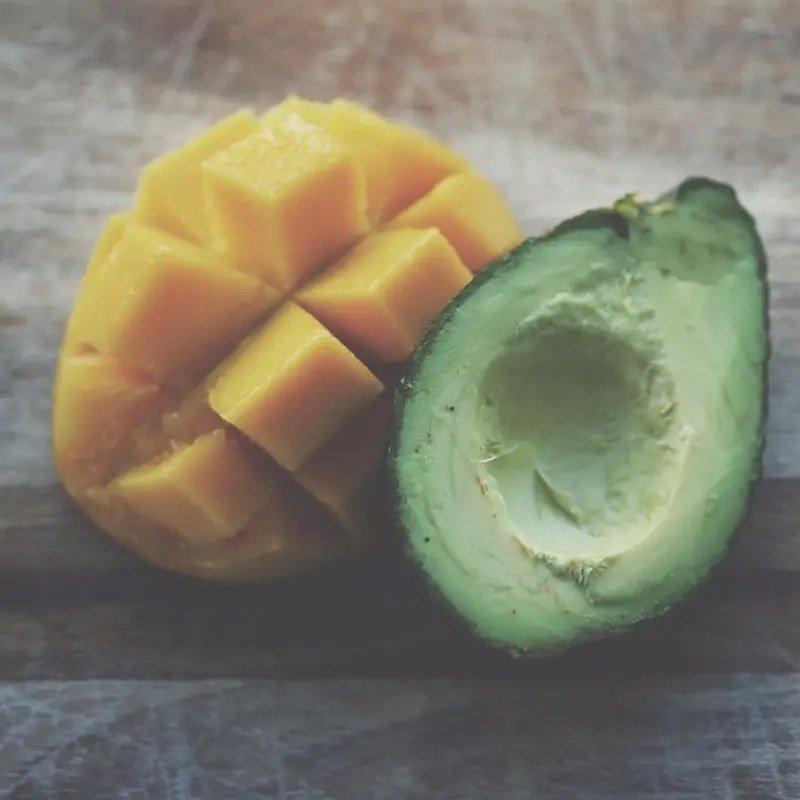


Avocado and mango eaten daily for eight weeks improved blood vessel function in adults with prediabetes, according to a trial published in the Journal of the American Heart Association in February. Researchers at the Illinois Institute of Technology asked 82 adults to add one medium Hass avocado and a cup of fresh mango to their daily meals. The group that ate the fruit saw blood vessels widen more freely, while the control group saw no such gain. The trial ran for eight weeks, and neither group gained weight.
The 82 participants were aged 25 to 60, with prediabetes and overweight or obesity, and a body mass index of 25 to 35. They were non-smokers, on no special diets and free from major chronic conditions. Each followed a calorie-controlled diet based on typical American eating patterns, with 1,500 calories a day for women and 1,750 for men. One group added avocado and mango to that diet. The other group ate carbohydrate foods with the same calories instead.
Avocado and mango: how the trial worked
The trial measured flow-mediated dilation, a test of how well blood vessels widen when blood flow rises, after eight weeks of eating avocado and mango. It is a standard gauge of the health of the endothelium, the thin layer of cells that lines blood vessels. After eight weeks, flow-mediated dilation in the fruit group had risen to 6.7 per cent, while in the control group it had fallen to 4.6 per cent. The gap between the groups was statistically significant, with a p-value of 0.008.
Blood pressure moved in the same direction, but only in men. Men in the control group saw central diastolic blood pressure rise by an average of 5 mm Hg. Men who ate avocado and mango saw it fall by about 1.9 mm Hg, a gap of nearly 7 mm Hg that the researchers said would matter for heart risk if it lasted. The change among women was not significant. The study also found no significant differences between the groups in cholesterol, blood sugar or markers of inflammation.
Avocado and mango and blood pressure in men
The avocado and mango diet added about three cups of fruit a day in total, and it raised fruit intake without adding calories. The researchers did not pin down which nutrients drove the change, and they said altered cellular redox balance and more nitric oxide in the blood were possible explanations. Britt Burton-Freeman, the lead author, said the team had no firm data on the mechanism and described those ideas as speculation. The study was paid for by an unrestricted grant from the National Mango Board and the Hass Avocado Board, which had no role in the design or the findings.
The limits matter. Eight weeks is short, so the trial cannot show whether the gains last or grow with longer eating. The participants were a narrow group, adults with prediabetes and overweight or obesity, so the results may not apply to people without those risk factors or to other age groups. The study also tested avocado and mango together rather than apart, so it cannot say whether the pair works better than either fruit alone.
The study was published on 16 February 2026 in the Journal of the American Heart Association, and the trial was registered as NCT05353790. The researchers said the work adds to a growing set of studies on how specific whole foods affect early markers of heart health. The trial was partly controlled: participants were given weekly diets, and the fruit group had the two fruits built into their meals and snacks.
What the study did not show
The improvements from avocado and mango were in early markers of heart health, not in heart attacks or strokes. Flow-mediated dilation is linked to heart risk, but a change of about one percentage point over eight weeks is a small step, and whether it would turn into fewer heart events over years is unknown. The trial also left cholesterol, blood sugar and inflammation unchanged. For people with prediabetes, avocado and mango are an easy place to start.