
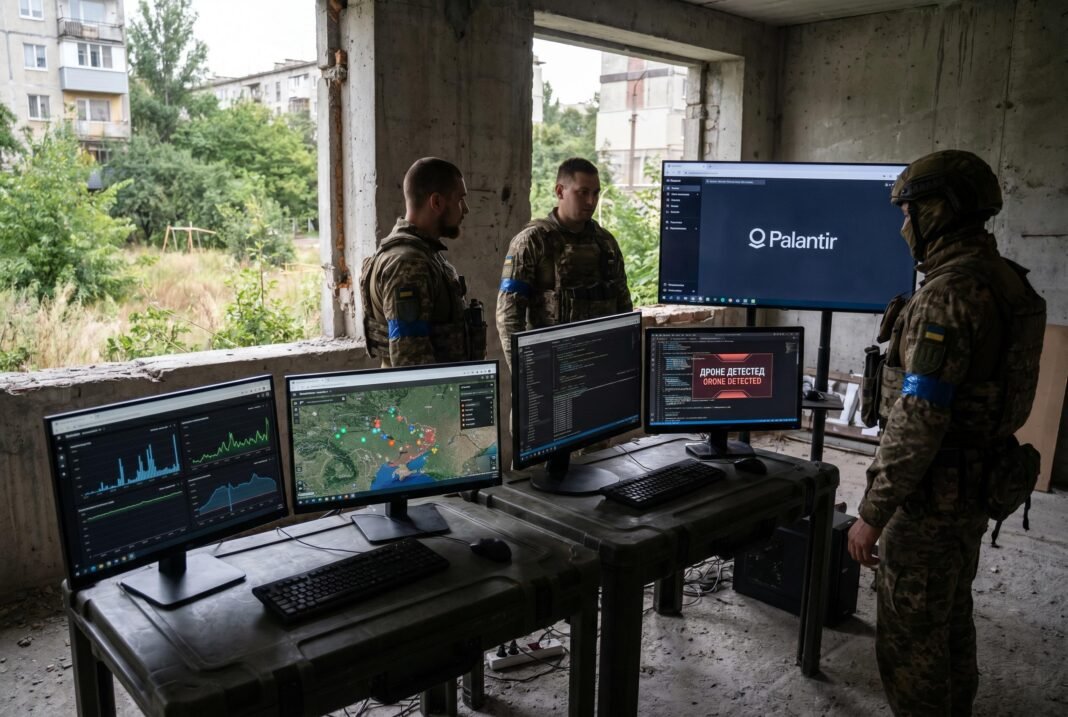


Palantir’s software has become part of how Ukraine fights its war, and the arrangement is now drawing sharp questions at home. An Al Jazeera report published on 5 November says Kyiv has given the US company access to battlefield data that no other country can offer, data collected at a terrible human cost. The report describes Ukraine as the first nation in modern history to systematically collect battlefield data, and says the material is used to train military artificial intelligence. Ukrainian critics quoted in the report ask whether the country is giving away its most valuable asset.
Palantir arrived early in the war
The partnership began months after Russia launched its full-scale invasion in 2022. Palantir chief executive Alex Karp travelled to Kyiv and became the first chief of a major Western technology company to visit the country in person during the war. President Volodymyr Zelenskyy said in June 2022 that he was delighted to have the support of such a company on what he called the digital front line. The company has worked with Ukraine’s Ministry of Defence since then, and the work has grown into a formal platform.
Video and sensor feeds gathered over four years of conflict now feed systems that help Ukraine watch, predict and respond to Russian attacks with the help of Palantir’s products. The data is rare. Elke Schwarz, a lecturer in digital technologies at Queen Mary University of London, told Al Jazeera that good battlefield data is extremely rare and hard to come by, and that those who hold it gain a clear edge. Schwarz added that data from Ukraine may not transfer directly to another war, but it still matters for training.
Palantir says customers own their data
Palantir says it does not take ownership of the material. In an emailed statement to Al Jazeera, the company said customers own and control their data, and that its software helps them combine and study the data sets they already hold. The statement added that Palantir never uses or keeps customer data for its own purposes. The company was founded after the 2001 attack on the World Trade Center in New York, to help the US defence industry build a single data environment for tracking threats.
The work reached a new stage in January with the launch of the Brave1 Dataroom, a platform built with Palantir and Ukraine’s Ministry of Defence. The platform uses battlefield data to train artificial intelligence for military use. Ukrainian defence figures have questioned the terms of the deal, which have not been made public, and asked why such a valuable asset is shared with a private company.
The questions go beyond one contract. The report says the arrangement raises wider questions about the leverage private technology companies gain over states that depend on their tools in wartime. Ukraine relies on outside firms for software, satellite imagery and communications, and that dependence gives those firms a say in how a war is fought. For Kyiv, the trade has been framed as a practical one: the tools help its forces spot threats faster, and the data that makes them work comes from its own soldiers and sensors. The terms under which the data is shared have not been published, and that silence is part of what troubles the critics.
Palantir and the price of the data
Valerii Markus, a serviceman and former chief sergeant, put the objection in blunt terms on Facebook. He wrote that Ukraine has something no other country in the world has, and that Ukrainians are paying with blood for data that someone else can turn into capital, international influence and big money. His post has become the sharpest public statement of the unease inside Ukraine’s defence community.
The report also notes that the data strengthens a US company whose tools have drawn criticism over their use beyond Ukraine, including in Gaza. Schwarz said Palantir does not need to possess the data to benefit from it, since access to the training material itself carries value. The debate in Kyiv is now about who gains from data that Ukraine collected while fighting a war, and what the country gets in return.