
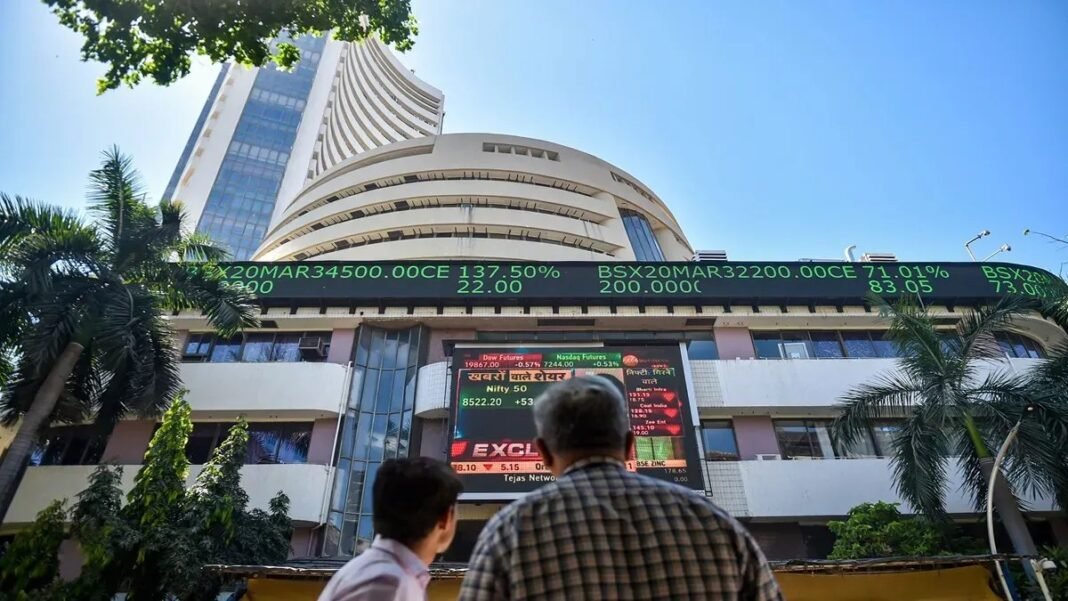


The India stock market premium over emerging market peers has narrowed sharply, but UBS says slower earnings growth and tight rates will test whether the reduced premium can hold. UBS emerging markets strategist Sunil Tirumalai told CNBC-TV18 that the premium has fallen from about 110 per cent in September 2024 to about 65 per cent now. That is still nearly double the 30 to 40 per cent premium seen before the COVID-19 pandemic. UBS said on 9 November that it prefers Korean equities over India, because subdued earnings revisions make the valuation gap harder to justify.
Tirumalai expects earnings of MSCI India companies to grow at a compounded annual rate of 10 to 12 per cent in dollar terms over 2027 and 2028. Nifty 50 earnings growth is unlikely to differ much. A market that trades at a premium needs earnings to keep pace. UBS doubts that Indian profit upgrades will arrive fast enough to close the gap with cheaper peers.
The warning comes after a strong run. Reuters reported on 16 November that the Nifty 50 was up 9.7 per cent and the Sensex 10.3 per cent so far in November. Foreign investors bought 8.9 billion dollars of Indian shares through 13 November, according to BeInCrypto, after selling in September and October. Yet the rally has not erased the year’s losses.
India stock market premium narrows but stays high
Tirumalai put the change in plain terms. “India has derated. When I say derated, I am referring to the relative valuations. If we if we take September 2024, the previous big peak as the starting point, at that point the premium on our numbers, premium to emerging markets, was about 110%. It’s now down to about 65%. So that’s a serious, de-rating that has happened.” The fall reflects two years in which the India stock market trailed the MSCI Emerging Markets Index by roughly 55 per cent.
Part of the narrowing has nothing to do with India. Tirumalai attributed part of the change to improving earnings growth prospects in other emerging markets, particularly South Korea and Taiwan, where a strong earnings upgrade cycle has gained momentum. As those markets have improved, the case for paying far more to own the India stock market has weakened. UBS has kept its preference for Korean equities even as Indian shares rallied in November.
Slower growth and tight rates test valuations
The second half of the UBS argument is about the domestic economy. October retail inflation reached 6.09 per cent, above the Reserve Bank of India’s upper tolerance limit of 6 per cent, the first breach of that limit in two years. Food inflation reached 8.94 per cent, according to the National Statistics Office. The Reserve Bank raised its repo rate by 25 basis points to 5.50 per cent at its 5 to 7 October meeting.
Barclays expects quarter point rises in December and February, taking the repo rate to 6 per cent. Gaura Sen Gupta, chief economist at IDFC First Bank, told Business Standard she expected increases at both meetings and saw a possible terminal rate of 6 to 6.25 per cent. The Reserve Bank meets next on 2 to 4 December. For a market already priced above its peers, that is a direct challenge to the India stock market. On Friday, 13 November, the Sensex fell 318 points to 81,592.45 and the Nifty 50 fell 155.05 points to 25,144.30 after the October inflation data.
India stock market draws foreign money back
Not every signal for the India stock market points down. Chief Economic Adviser V. Anantha Nageswaran told the Indian Express on 16 November that India’s position as a “non-AI” market was helping sentiment and attracting foreign investors in the near term, as money rotates away from chip heavy markets. The November inflows support that reading.
UBS is less convinced that foreign money will stay in the India stock market. Tirumalai said a possible cut in long term capital gains tax could lift sentiment in the near term, but cautioned against seeing it as the main trigger for a sustained return of foreign money. He said foreign investors also weigh earnings growth and relative market performance, and that current flows appear driven more by global liquidity than company fundamentals.
Tirumalai still sees value in parts of the India stock market. “Banks make a lot of sense to us. It is a sector which is probably one of the few which are at a big discount to their own history.” He also pointed to companies supplying the power and data centre ecosystems. The December policy meeting will test the rate path UBS expects, and the next earnings season will show whether profit growth can defend the India stock market premium, still close to double its pre pandemic level.