
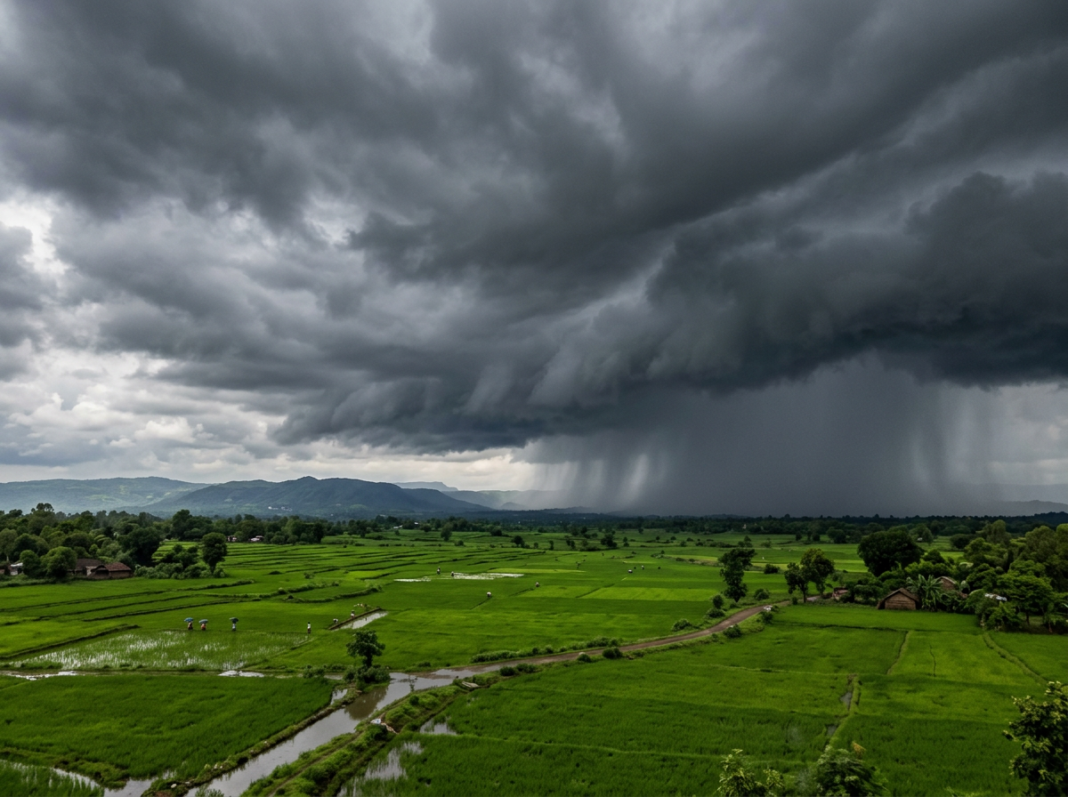


La Nina could follow the strong El Nino now building across the Pacific and bring a better monsoon for India in 2027, according to a forecast from the Indian National Centre for Ocean Information Services (INCOIS). The centre expects the El Nino to stay strong until March 2027, ease into neutral conditions, and then possibly give way to La Nina during the southwest monsoon season.
INCOIS also expects temperatures in the Indian Ocean to stay above normal until around April or May next year, and it is tracking widespread marine heatwaves across the basin. The heatwaves cover large parts of the basin, and scientists are watching them closely because warm surface water can feed weather systems that later reach the Indian coast. That warmth in the ocean can keep shaping weather around India even after the Pacific event starts to fade.
Why La Nina matters for the monsoon
La Nina is the cool phase of the El Nino-Southern Oscillation, and it is usually linked to stronger monsoon rain over India. El Nino, the warm phase, is usually linked to weaker rain. This year the southwest monsoon ended well below normal, with rainfall about 14 per cent short by early September, and the shortfall was larger over the South Peninsula. Reservoirs and soil moisture are lower than they should be as a result.
The United States National Oceanic and Atmospheric Administration (NOAA) still puts the chance of strong to very strong El Nino conditions through January to March at roughly 80 per cent. Its outlook gives La Nina only a 13 per cent chance for May to July 2027, against 70 per cent for neutral conditions, and no chance at all through March to May. The International Research Institute for Climate and Society at Columbia University, in a forecast issued on October 19, also sees neutral conditions as the most likely outcome for June to August 2027.
A La Nina shift is possible, not certain
Manmeet Singh and Sandeep Juneja, researchers at the Safexpress Centre for Data, Learning and Decision Sciences at Ashoka University, said a move to La Nina in the second half of 2027 is a distinct possibility. They pointed to history: the strong El Nino episodes of 1997-98 and 2015-16 were both followed by La Nina. They also warned that the shift is not automatic, and not every El Nino gives way to La Nina.
Forecasts that stretch across the spring are less reliable, the researchers said, because of what forecasters call the spring predictability barrier. On that basis they called a later La Nina a credible possibility rather than an outcome to bank on.
Warm winter and water stress come first
The more immediate concern for India is a warm winter and rising moisture stress as the country moves into the pre-monsoon season. El Nino winters in India tend to be warmer, with fewer cold wave episodes. That is unwelcome news for wheat, above all if temperatures rise sharply in February and March, when the crop is in its grain filling stage. Heat at that point can shorten grain development and cut yields.
The year after a major El Nino often breaks temperature records. That happened in 2016 and again in 2024, and the researchers said there are concerns that 2027 could follow a similar path. India goes into this period with moisture reserves already depleted after the poor monsoon.
Good spells of western disturbances could moderate winter temperatures and bring some relief, and the South Peninsula has been getting reasonable rain from the northeast monsoon. The researchers said these factors may not be enough to offset the wider risk. They said planning for the months ahead should assume an early and harsh pre-monsoon season, with a chance of water stress over central and north India.
INCOIS will keep watching ocean temperatures and the marine heatwaves now spread across the Indian Ocean. The India Meteorological Department issues its first long range monsoon forecast in April, and that will be the first official word on how much rain the 2027 season may bring.