
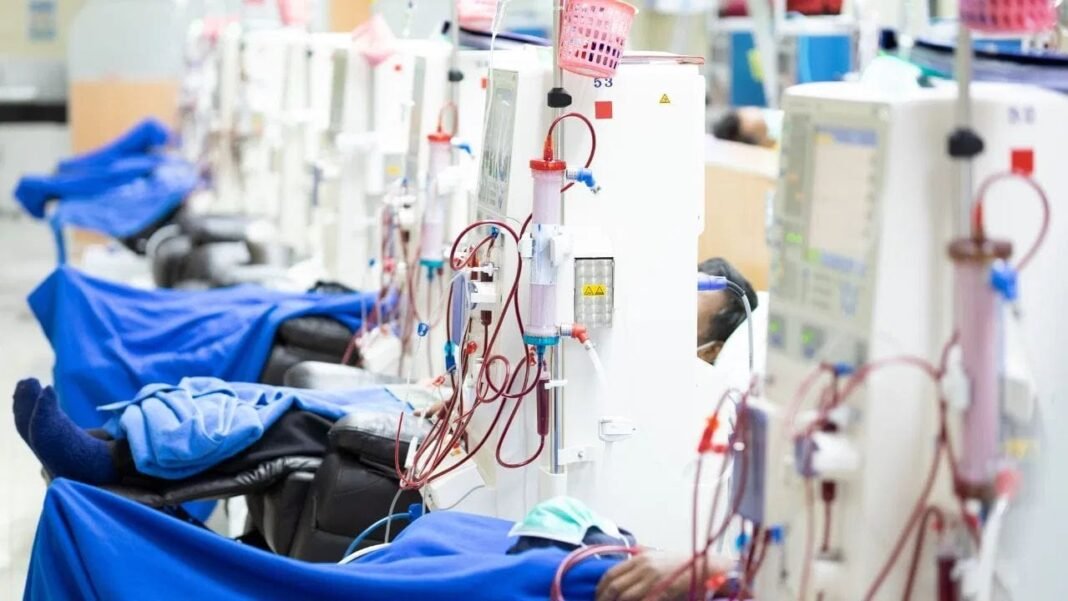


About 138 million people in India were living with chronic kidney disease (CKD) in 2023, the second highest total in the world after China’s 152 million, according to a global study published in The Lancet. The figures come from the Global Burden of Disease 2023 study, led by researchers at the University of Washington’s Institute for Health Metrics and Evaluation with institutes in the United States and Britain. It was the ninth leading cause of death worldwide that year, claiming nearly 1.5 million lives.
The study found the highest prevalence in North Africa and the Middle East, at 18 per cent, followed by South Asia at nearly 16 per cent. The condition accounted for almost 12 per cent of cardiovascular deaths around the world in 2023, and ranked as the seventh leading cause of heart-related mortality, ahead of diabetes and obesity. The condition often progresses without symptoms, so many people learn they have it only after much of their kidney function is gone. Senior author Theo Vos, professor emeritus at the institute, said the condition received far less policy attention than other non-communicable diseases, even as its impact grew fastest in regions facing the greatest health inequities.
Why kidney disease is rising in India
Diabetes and high blood pressure are the two main causes of kidney disease in India. India has about 101 million people living with diabetes and another 136 million in the pre-diabetic stage, according to the ICMR-INDIAB study, and medical studies show that 20 to 30 per cent of people with type 2 diabetes already have CKD. When diabetes and hypertension occur together, the risk of impaired kidney function rises sharply, with one study finding an almost six-fold increase compared with the general population.
The burden has grown fast. An analysis of data from 2011 to 2023 found that chronic kidney disease among people aged 15 and above rose from 11.2 per cent in 2011-2017 to 16.38 per cent in 2018-2023. The same study found a rural-urban gap, with the condition affecting 15.34 per cent of the rural population against 10.65 per cent in urban areas. Doctors say the disease often shows no symptoms until 60 to 70 per cent of kidney function is lost, which is why it is often called a silent condition.
The cost of kidney disease care
A parliamentary committee that examined the issue reported in August 2026 that India has an estimated 138 million people with chronic kidney disease, and that nearly two lakh new patients progress to end-stage disease each year. The committee said the cost of managing the disease may range from Rs 2 lakh to Rs 5 lakh a year, while maintenance dialysis may cost Rs 3 lakh to Rs 6 lakh a year. It also found shortages of nephrologists, urologists and trained dialysis technicians, and it called for vacant specialist posts to be filled in underserved states, including Bihar, Odisha, Rajasthan, Assam and Chhattisgarh.
Dialysis centres are thinly spread. A report by the Indian Society of Nephrology found only one dialysis centre for every 3 lakh people, and only about one in 10 patients who need dialysis receive it. The Pradhan Mantri National Dialysis Programme has added dialysis services through district hospitals, but the gap between need and supply remains wide. The committee recommended extending post-transplant cover under the Ayushman Bharat Pradhan Mantri Jan Arogya Yojana from 15 days to one year, and raising the family health cover under the scheme from Rs 5 lakh to Rs 10 lakh a year.
What the projections show for kidney disease
The outlook is stark. A study of the Global Burden of Disease 2021 data found that chronic kidney disease caused 175,637 deaths in India in 2021. Under a flat-rate projection, deaths would rise to 396,000 by 2040, and under a trend projection they would reach 556,000. The study said it could become one of the top five causes of death in India by 2040, but that meeting national diabetes and hypertension control targets could cut the projected burden by 15 per cent.
Doctors say routine screening is the fastest way to slow the rise. Testing urine and blood creatinine when diabetes is first diagnosed can catch kidney disease early, when treatment can still slow its course. The national programme for prevention and control of non-communicable diseases now encourages screening for diabetes and hypertension, and more than 1.5 lakh health and wellness centres under Ayushman Bharat offer routine checks for high blood pressure and diabetes.