
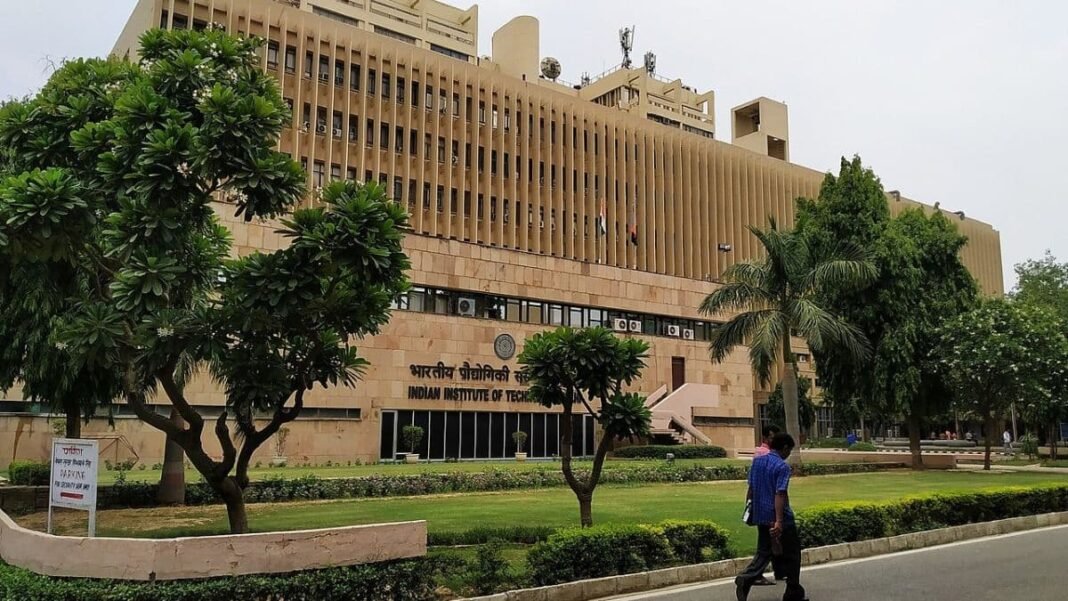


IIT Kharagpur has become the first Indian Institute of Technology to offer postgraduate medical degrees approved by the National Medical Commission (NMC), bringing the country’s engineering schools into clinical medicine. The institute will run six Doctor of Medicine (MD) courses from the 2026-27 academic session at its Dr BC Roy Multi-Specialty Medical Research Centre, with two seats in each specialism and a first intake of 12 students.
The Ministry of Education announced the IIT Kharagpur programmes on 12 November 2026. Admission will run through the second round of NEET-PG 2026 counselling, conducted by the Medical Counselling Committee, and the 12 seats will appear in the committee’s seat matrix under the name of the Dr BC Roy centre. Fees and stipends follow the norms used at the All India Institute of Medical Sciences (AIIMS).
Six MD courses at IIT Kharagpur
The six specialisms at IIT Kharagpur are General Medicine, Radiology, Physiology, Pathology, Community Medicine and Biochemistry. Each will take two students, and the courses run for three years, so the first IIT-trained MD graduates are due to finish in 2029. The institute says the small intake will allow close mentoring and joint work with researchers from its engineering and science departments.
Community Medicine is one of the six, and it drew a specific comment from Dr Anant Bhan, a global health researcher. He told University World News that public health is central to understanding and responding to health needs in India. “Understanding how health technology fits local needs, especially in underserved parts of India, and how health innovations can be sustainably evaluated and integrated into public health delivery pathways is critical,” he said.
How IIT Kharagpur will train its first doctors
Unlike students at traditional medical colleges, those at IIT Kharagpur will work beside specialists in engineering, artificial intelligence, data science and biomedical research. The institute plans to draw on that mix in the teaching. Artificial intelligence can help read the medical images used in radiology and pathology, while work in biochemistry can lead to better ways of testing for disease.
Professor Suman Chakraborty, the director of IIT Kharagpur, said the aim goes beyond training specialist doctors. He described an ecosystem where clinical work meets engineering, artificial intelligence and translational research, and said he wants graduates who are strong clinicians and also innovators able to work on pressing healthcare problems. The institute, founded in 1951, was the first IIT in India.
Other IITs move into medicine
The shift at IIT Kharagpur is part of a wider move across the IIT system. IIT Madras already runs a four-year BS programme in medical sciences and engineering through its Department of Medical Sciences and Technology, and it plans to open a full School of Medical Sciences. IIT Kanpur is building a 500-bed super-speciality hospital with a cancer care and research centre under its Gangwal School of Medical Sciences and Technology, and it plans postgraduate and super-speciality programmes before starting an MBBS course.
The Indian Institute of Science in Bengaluru is developing the 800-bed Bagchi-Parthasarathy Hospital, with plans for postgraduate medical education and an integrated MD-PhD programme. IIT Jodhpur and AIIMS Jodhpur are working together on postgraduate and doctoral programmes in medical technology. IIT Guwahati, IIT Bombay, IIT Delhi and IIT Hyderabad are also building up work in biomedical sciences, healthcare technology and medical research through specialist schools and research centres.
Clinical training and the questions ahead
The move raises practical questions. Medical training needs long hours with patients and hands-on clinical work, and established schools such as AIIMS and CMC Vellore have long drawn on high patient numbers to give students that exposure. The new medical schools, including the one at IIT Kharagpur, will need their hospitals to offer a similar range of cases, and to meet the National Medical Commission’s requirements on infrastructure, faculty and training.
Bhan also sounded a note of caution. He said there is very little evidence so far on how well medical education works inside technology institutions, including the problems that arise and how they are handled. He called for a clear framework with proper training, mentoring and career paths, and for links across the system. “There is a need for more ‘connectors’ within the ecosystem to foster and support collaboration. We should prioritise quality over quantity. There is already a shortage of faculty amid the growing number of medical colleges in India,” he said.
For now, the next step is practical. The 12 seats at IIT Kharagpur will be open for choice in Round 2 of NEET-PG 2026 counselling, and the first students will join the Dr BC Roy centre for the 2026-27 session.