
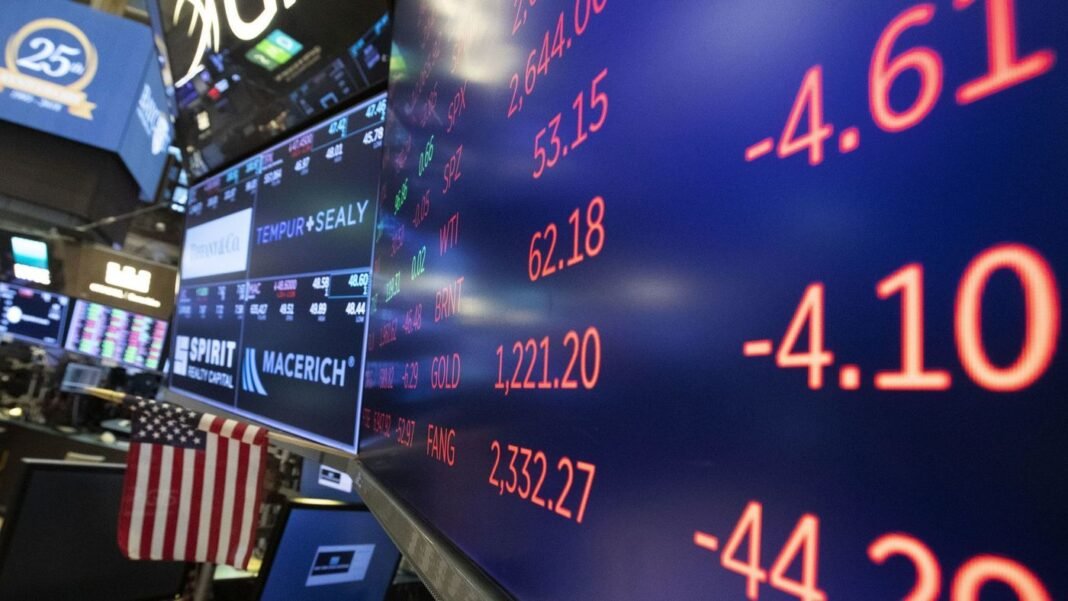


The AI selloff that tore through Wall Street on Thursday, 5 November, spread across Asia on Friday, but Indian shares went the other way. The Nasdaq Composite fell 5.5 per cent, its steepest single-day drop in 19 months, and the Nasdaq 100 lost an estimated $2.5 trillion in market value in the session. By the close in Mumbai, the Sensex had risen 1,718 points to 81,028.02 and the Nifty 50 had climbed back above 25,000.
How the AI selloff spread across Asia
The AI selloff began with worries about regulation. The Democrats’ wins in the United States midterm elections raised the prospect of tighter rules for artificial intelligence infrastructure, data centres and their electricity use, and investors began to question the sums being poured into the sector. The S&P 500 fell 4.4 per cent and the Dow Jones Industrial Average dropped about 3.4 per cent. The Philadelphia Semiconductor Index tumbled more than 12 per cent.
The AI selloff hit Asia hardest where chip makers dominate. South Korea’s Kospi fell more than 8 per cent in early trade on Friday, which triggered a 20-minute halt, and Samsung Electronics and SK Hynix each lost more than 9 per cent at the open. The Kospi later recovered part of the fall and stood 4.91 per cent lower by 2 pm local time. Japan’s Nikkei 225 closed about 6 per cent lower at 57,434.77, its biggest percentage fall since April 2025, and Taiwan’s market fell 3.51 per cent.
The scale of the selling set it apart from a normal down day. The Nasdaq 100 had its steepest single-day fall in 19 months. In Seoul, foreign investors sold more than 1 trillion won of shares, according to Seoul Economic Daily, and the Kospi halt stopped trading for 20 minutes. The selling was concentrated in the companies that had gained most from the artificial intelligence boom, and it left the rest of the market to judge how far the reassessment would run.
Why the AI selloff passed India by
India opened lower on Friday, with the Sensex almost flat at 79,344.27 and the Nifty 50 down 0.21 per cent at 9:25 am, but the AI selloff did not take hold. By 10:33 am the Nifty had risen 0.51 per cent and the Sensex was up 0.76 per cent, according to Reuters, and by 1:50 pm the Sensex had jumped 1,000 points. Both domestic and foreign investors bought through the session, and the Nifty closed at 25,030.35.
The gap comes down to what each market holds. Indian benchmarks have relatively little exposure to semiconductor manufacturing and the data centre builders at the centre of the AI selloff. The domestic technology sector is led by software services firms, and Infosys rose 2.01 per cent soon after the open, with Tech Mahindra up 1.34 per cent, TCS up 1.30 per cent and HCL Technologies up 1.26 per cent. Foreign investors had also returned as buyers, with net purchases of about Rs 15,000 crore on Thursday, their biggest single-day buying in nearly six years.
What the AI selloff means for Indian investors
VK Vijayakumar, chief investment strategist at Geojit Investments, said India was likely to be the least hit of the major markets by the AI selloff, and that the cooling of the artificial intelligence trade could work in India’s favour. Money that had chased chip makers and data centre builders is now looking for markets that missed the boom, and Indian shares are among them. The cooling of the artificial intelligence trade has a second side for India. Domestic investors have been buying alongside foreign buyers, and the Sensex rose in seven straight sessions, a run that began on 28 October. The Nifty closed above 25,000 for the first time since 27 February 2026.
The shelter is not complete. Brent crude climbed back above $100 a barrel on Friday, and a fresh rise in oil would weigh on the import bill and the rupee. The AI selloff could also deepen if regulation moves faster than investors expect, and a second wave of selling would test markets that held up the first time. For now, the Sensex has risen for seven straight sessions, and the next test comes when trading resumes on Monday after the Diwali Muhurat session on Sunday.