


Apple has warned in its annual financial filing that artificial intelligence agents could act in unintended or unpredictable ways, exposing the company to lawsuits and damage to its reputation. Apple filed the annual report, known as a 10-K, with the US Securities and Exchange Commission on 3 November. The filing said AI agents and other technologies can take actions on their own, including interacting with internal or external systems they may not be authorised to access, executing or altering code, sending communications and completing transactions. The filing added that agents "may behave in unintended or unpredictable ways, including by taking actions that were not directed, instructed or authorized."
The warning marks a shift in how the company talks about AI risk in public filings. The company's AI risk section grew from roughly 199 words to 628 words in the new filing, according to a review of the document. Apple said its ability to oversee and control third party AI agents and other technologies may be limited. That limit matters because agents built by other companies can run on Apple devices and services, and their actions may still be linked to Apple in the eyes of users, regulators or courts. It did not put a figure on the potential financial impact of the risks it described. Annual filings routinely list risk factors that a company believes could affect its business, and the new language puts agentic AI on that list in plain terms.
Apple filing on AI agent risks
The filing set out the range of actions an agent can take without direct human control. An agent can reach systems it was not given permission to use, change code, send messages and carry out transactions. It can also conceal or manipulate information, according to the filing. Those abilities are what make agents useful, since they can complete multi step tasks for a user, and they are also what make them hard to supervise. A single mistaken step, such as a message sent to the wrong person or a transaction completed without approval, can be difficult to undo. The company said that risk applies to its own products and to third party agents that operate around them.
The filing also flagged regulatory risk. The company said the rules around AI and "super intelligence" are changing and hard to predict, and that adapting to new laws could be costly. The company cited ethical concerns and negative public perceptions tied to automation, artificial intelligence and super intelligence, including perceived threats to safety or other harms. Those concerns are not abstract for Apple. The company sells devices that hold personal photos, messages, calendars and payment details, and any incident involving an agent acting without permission would strike at the trust those products depend on. It tightened product controls in October by requiring explicit user action to grant macOS Full Disk Access, which governs whether an application can reach large amounts of stored user data.
Apple position on Siri and agents
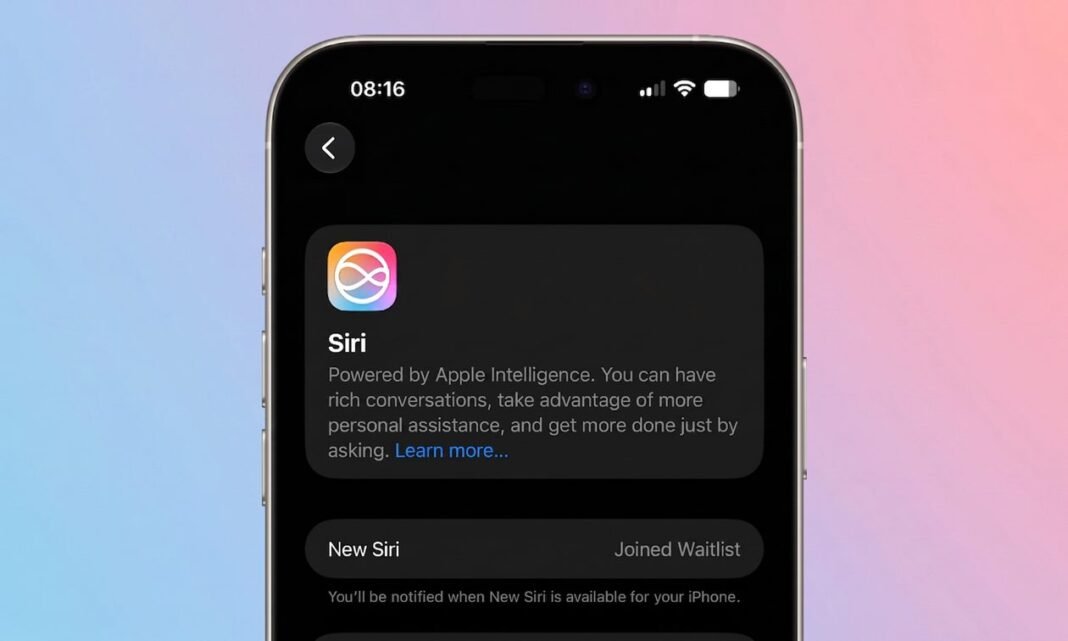
The company does not currently have an agentic AI product of its own. Chief executive John Ternus was asked about AI agents on the company's earnings call on Monday, a day before the filing. He said the company had "real room" to expand the capabilities of Siri, its digital assistant, and called agentic capabilities "promising tools for users". Ternus added that It wants to ensure users are aware of what they are giving access to, and that access is "done in a way that protects security and privacy". This fall, It released Siri AI, a new assistant that uses local data stored on the iPhone to access calendars, emails and other information. That assistant cannot work on its own for long stretches in the way that OpenAI's Dots or Meta's Muse can.
Ternus stressed a distinction Apple has made before. The company cannot access private data stored on its devices, he said, calling that a core differentiator for the company. Siri can draw on data held locally on the phone, while Apple itself stays out of that store. Expanding Siri into longer, more autonomous tasks would test that distinction, since an agent that acts for a user needs access to the same data and to outside systems. The company has not said when, or in what form, it will release an agentic product. The filing shows the company is weighing that step against legal exposure, regulatory change and the risk that an agent could act beyond what its user asked it to do.