
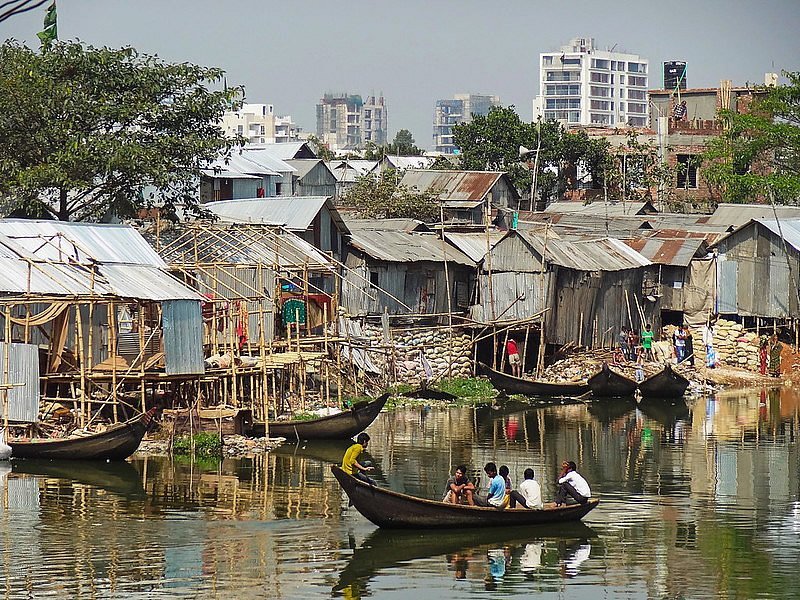


The Chinese vloggers Dhaka investigation was published by Prothom Alo, a leading Bangladeshi daily, on 6 November 2026, and it found about 150 Chinese nationals filming in the low-income neighbourhoods of Dhaka and telling their audiences they were in New Delhi. The streamers have been working in the Tekpara area and Sector 12 of Uttara for months, livestreaming on Chinese platforms including WeChat, Douyin and Kuaishou, and presenting the poverty of Dhaka’s slums as the reality of the Indian capital.
The Chinese vloggers Dhaka crews carry two mobile phones each, one for continuous broadcasting and the other for monitoring scripts and real-time audience engagement. Their broadcasts run from morning until night, and at times they enter people’s homes and record videos. Local residents estimate that more than 150 Chinese nationals are filming in this manner in the neighbourhood’s streets and alleyways, though no accurate information is available on how many are involved in total.
The Chinese vloggers Dhaka investigation was built on direct observation and language analysis. Prothom Alo reporters visited the area on 27 October and 3 November 2026, and tried to speak with 17 Chinese nationals engaged in filming. Some of their commentary during livestreams was translated using Google Translate and verified by four Bangladeshis who know Chinese. The analysis showed that although the videos are recorded in Uttara, the streamers claim during their livestreams that they are broadcasting from New Delhi, India.
The operation has been running for months, and the streamers treat the local poverty as a backdrop for their broadcasts. The broadcasts are aimed at large domestic audiences in China, and the vloggers tell their viewers they are watching life in the Indian capital. The footage is presented as a picture of India’s development, and the commentary that goes with it is derogatory, with claims about housing, sanitation and law and order that do not match the place being filmed.
Chinese vloggers Dhaka and the Mianmian livestream
One streamer, a woman who calls herself Mianmian and says she is from China’s Sichuan province, was filmed on 1 November standing beside the canal in Sector 12 of Uttara, showing viewers videos of Tekpara. During her livestream she said: “This is New Delhi. Their homes are extremely dirty. There isn’t even a fan inside the tin-roofed houses. This place is quite underdeveloped, dirty and unhygienic, and the law-and-order situation is poor.”
The Chinese vloggers Dhaka broadcasts also carry claims about the people they film. Another streamer, Wang Wei, filmed patrons at local tea stalls in Tekpara and falsely claimed the tea was prepared with cow urine and dirty river water. Other streamers described Bangladeshis as poor people living in dirty and damp conditions, and some said Bangladeshi men misuse money whenever they get their hands on some. Some Chinese women who livestream can be heard saying that they live there with their husbands and families because they got married in India.
Chinese vloggers Dhaka and the official response
Local police are aware of the Chinese vloggers Dhaka filming. Mohammad Khalid Mansur, the officer-in-charge of the Uttara West police station, confirmed that the matter has been reported to senior authorities and that investigations are ongoing. The main concerns are the unauthorised filming of private citizens and the circulation of misleading geographic information on international social media platforms.
The Chinese vloggers Dhaka case has drawn attention beyond Bangladesh. Bangladeshi outlets Kaler Kantho and Bangladesh Pratidin have also covered the story, and the reports have been picked up in India, where the false claim that the footage shows New Delhi has raised concerns about cross-border digital manipulation. The streamers told Prothom Alo that they livestreamed on WeChat as part of product promotion activities, but the content of the broadcasts went far beyond selling products.
The Chinese vloggers Dhaka operation shows how easily a livestream can move a place across a border. The footage was filmed in Dhaka, the words said New Delhi, and the audience in China saw the slums of one capital presented as the slums of another. Prothom Alo’s investigation put the location back where it belongs, and the police inquiry into the filming is still going on.