
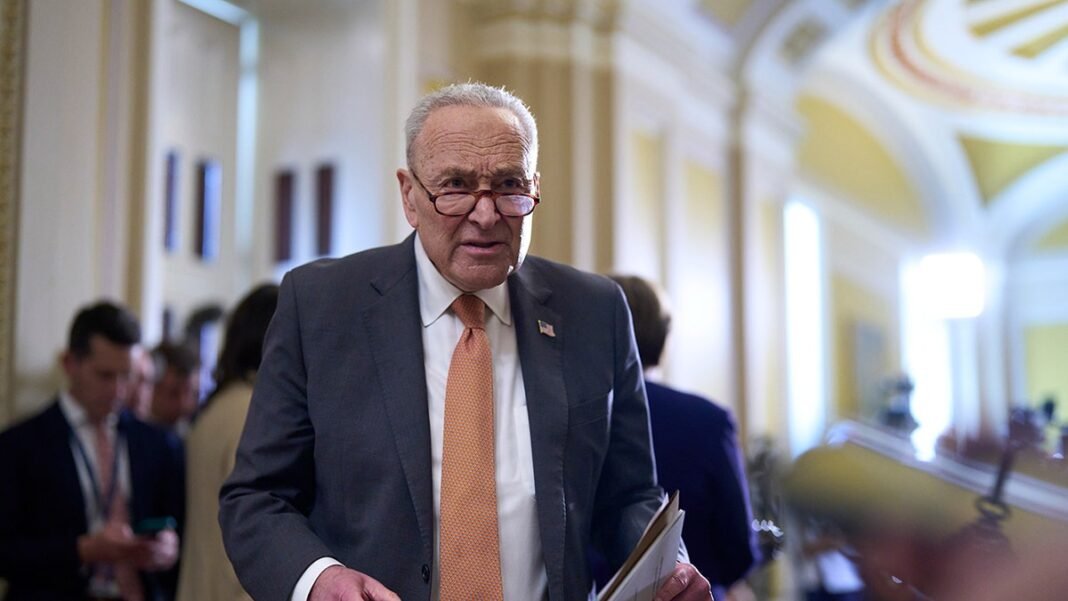


At least seven incoming Democratic senators have declined to commit to backing Chuck Schumer as Senate majority leader, turning the discontent that followed the midterm elections into an open revolt over who leads the new majority. The holdouts come from Illinois, Kansas, Maine, Michigan, Minnesota, New Hampshire and Texas, and their refusals have left Chuck Schumer’s hold on the job in doubt for the first time.
The senators-elect are Juliana Stratton of Illinois, Adam Hamilton of Kansas, Troy Jackson of Maine, Abdul El-Sayed of Michigan, Peggy Flanagan of Minnesota, Chris Pappas of New Hampshire and James Talarico of Texas. Some have said plainly that they will not support Chuck Schumer, while others have said they want to hear his plans first or have backed a different candidate.
The senators who will not back Chuck Schumer
Adam Hamilton, a moderate pastor who unseated Republican Senator Roger Marshall in Kansas, has been the clearest of the group. He gave Democrats their first Senate win in Kansas in nearly a century. Speaking to CNN in September, Hamilton said: “I mean no disrespect for Chuck Schumer, but we need new leadership.”
Troy Jackson, the senator-elect from Maine and a former state senator, told reporters just before Election Day that his position had not changed. “I told Schumer that I’m going to, you know, support somebody else,” Jackson said. “So it’s no different now.”
Abdul El-Sayed of Michigan has backed Senator Chris Van Hollen of Maryland as an alternative, while Juliana Stratton of Illinois, Peggy Flanagan of Minnesota, Chris Pappas of New Hampshire and James Talarico of Texas have all declined to commit to Chuck Schumer. Van Hollen said on Wednesday that no senator should commit to a leader yet without a commitment to a bold agenda for working people.
How Chuck Schumer answered the revolt
Chuck Schumer has led Senate Democrats since 2017, as majority leader and as minority leader. He told reporters on Wednesday: “I’ll be re-elected as majority leader.” He added that the election was not about him, but about focusing on the American people and what they want.
Schumer still has support in the caucus. Senator Cory Booker said Schumer deserves credit for one of the most historic sweeps in the party’s history. Schumer needs only a majority of his own caucus to keep the job, and Democrats hold a reported 54 seats, with the Mississippi and Alaska results still leaning their way.
The arithmetic is tight. With 54 seats, Schumer needs 28 votes in the caucus to win, and the seven holdouts amount to more than a quarter of the votes he needs. If all seven vote against him, he would need the support of almost every other Democrat in the room. That is why a leadership election that is usually settled by acclamation has become a live contest.
Critics of Chuck Schumer point to his retreat during last year’s government shutdown, his failure to block Trump’s cabinet picks and his stance on aid to Israel. The progressive group Indivisible released a memo demanding a contested leadership election, and two petitions urging a new Senate leader passed 100,000 combined signatures on Thursday, 6 November.
When the Senate will choose its leader
The leadership vote is expected next month, before the new Congress convenes in January 2027. The incoming senators will cast their first votes as caucus members in that election, and their refusals have made a vote that is usually a formality into a contest.
Van Hollen told Bloomberg that working people had been hurt for too long and that the party needed to move a bold agenda on household costs. “It’s not a time for incrementalism,” he said. “It’s a time to move forward a very bold kitchen table agenda.”
Van Hollen has said he is not seeking the leadership job, and an aide said he is considering a run for president in 2028. That has left the revolt without a single declared challenger, even as the number of senators refusing to back Schumer keeps growing. The count stood at seven by Friday, with an eighth name, Annie Andrews of South Carolina, added by some tallies.
The Senate Democratic caucus is due to meet in the coming weeks to settle the leadership question. Chuck Schumer remains the favourite to keep the job, but the seven holdouts have shown that his re-election is no longer certain.