
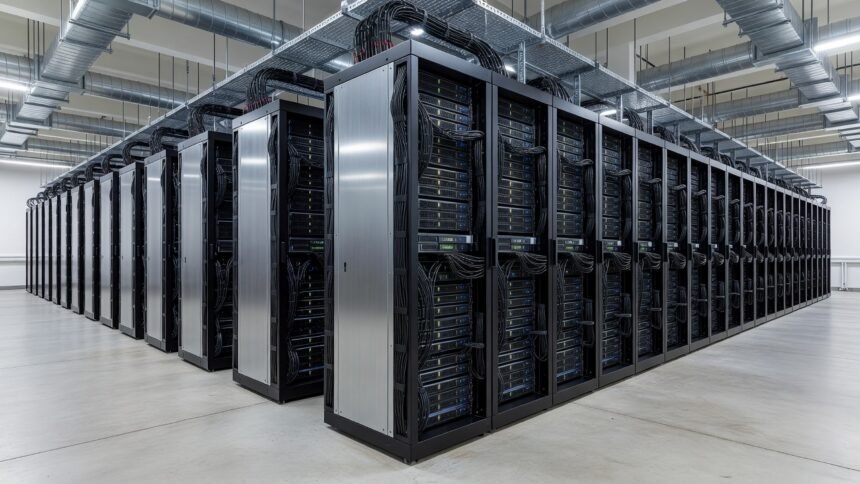


Delta Electronics has unveiled its AI Modular Data Center and Microgrid Solutions at Data Center World Asia 2026 in Singapore, positioning the power management specialist at the heart of the artificial intelligence infrastructure boom. The new offerings include an 800-volt direct-current power system designed for NVIDIA’s Vera Rubin architecture, the next generation of the chipmaker’s AI computing platform. The announcement was reported by Pocket News on Oct 21.
The unveiling highlights a critical but often overlooked dimension of the AI build-out: power. As AI models grow larger and data centres grow denser, the electricity required to train and run them has become one of the industry’s principal constraints. Delta, a Taiwan-based company with decades of experience in power electronics, is betting that its expertise in efficient power conversion gives it a central role in the next phase of data centre construction.
Powering the next generation of AI computing
The 800V DC power system is designed specifically for NVIDIA’s Vera Rubin architecture, the successor to the company’s current AI platforms. Higher-voltage direct-current distribution is an emerging trend in data centre design because it reduces energy losses during power conversion, allowing more of the electricity entering a facility to reach the chips that perform AI computations. As rack power densities climb into the hundreds of kilowatts, these efficiency gains translate into meaningful savings in both energy costs and cooling requirements.
Delta’s modular approach is equally significant. Modular data centres are prefabricated units that can be manufactured, shipped and assembled far more quickly than traditional purpose-built facilities. In an industry where the binding constraint is often construction time rather than capital, the ability to deploy capacity in months rather than years is a powerful selling point. The company’s AI Modular Data Center offering is aimed squarely at operators racing to bring new AI capacity online.
The microgrid component addresses another pressing challenge: grid capacity. In many markets, data centre developers face long waits for utility connections, and some are turning to on-site generation and microgrids to power their facilities independently. Delta’s Microgrid Solutions package the power management, energy storage and control systems needed to operate a data centre as a semi-autonomous energy island, reducing dependence on strained public grids.
Data Center World Asia as a showcase
The choice of Data Center World Asia 2026 in Singapore as the launch venue reflects the region’s growing importance in global AI infrastructure. Southeast Asia has become one of the fastest-growing data centre markets in the world, driven by digitalisation, cloud adoption and the region’s strategic position between the major economies of East Asia and the West. Singapore, despite its land and energy constraints, remains the region’s premier data centre hub thanks to its connectivity, stability and skilled workforce.
The event draws the operators, vendors and investors who are shaping the region’s digital infrastructure, making it a natural stage for a product launch aimed at the AI data centre market. Delta’s presence there underscores how the centre of gravity in data centre investment is shifting toward Asia, where much of the world’s new capacity is being built.
For Delta, the unveiling is also a statement of strategic intent. The company has long been known for power supplies and electronic components, but the AI infrastructure boom has elevated power management from a supporting function to a strategic differentiator. By aligning its products with NVIDIA’s roadmap, Delta is positioning itself as an essential partner in the AI supply chain rather than a commodity vendor.
The energy challenge behind the AI boom
The broader significance of Delta’s announcement lies in what it says about the AI industry’s priorities. For several years, attention focused on chips and models; increasingly, the conversation has shifted to the physical infrastructure required to run them. Electricity availability, cooling capacity and construction timelines are now among the most discussed topics in the industry, and companies that solve these problems are attracting investment and partnerships at a rapid pace.
NVIDIA’s Vera Rubin architecture, for which Delta’s power system is designed, represents the next step in the chipmaker’s relentless cadence of new platforms. Each generation delivers more computing power per chip but also demands more from the facilities that house it. The ecosystem of vendors building power, cooling and networking equipment around these platforms has become as important to AI progress as the chips themselves.
As data centres multiply across Asia and the world, the companies that make them efficient, resilient and fast to deploy will share in the value created by the AI boom. Delta’s new solutions are a bid to ensure it is among them.