


Manesar, October 18 — The Centre has approved Rs 776.29 crore to strengthen EV testing infrastructure for electric vehicles and emerging automotive technologies, a major investment disclosed at the PM E-Drive Dialogue with Industry held at the International Centre for Automotive Technology in Manesar.
The event, presided over by Heavy Industries Minister H D Kumaraswamy as part of ICAT’s 20th anniversary programme, underlined the growing importance of EV testing as India scales up electric mobility. Heavy Industries Additional Secretary Hanif Qureshi said the sanctioned funds would upgrade testing agencies including ICAT in Manesar, ARAI in Pune, GARC in Chennai and NATRAX in Indore, preparing them for electric vehicles, batteries, clean technologies and advanced automotive components.
“We have sanctioned Rs 776 crore for upgrading the testing agencies under PM E-Drive,” Qureshi said, according to The Hindu BusinessLine. He added that with India already the world’s largest producer of two- and three-wheelers, manufacturers and testing agencies needed to work together on technologies that could also support exports. “We have to move towards Make in India for the World,” he said.
Electric two-wheelers accounted for nearly one in every 10 two-wheelers sold in India during April–August FY27, reaching 9.9 per cent penetration, up from 6.6 per cent in FY26, according to Suneet Shukla, chief general manager at IFCI. Electric L5 three-wheelers accounted for 46.1 per cent of their segment in the period, compared with 31.7 per cent in FY26.
PM E-Drive raises the bar for EV testing capacity
The PM E-Drive programme’s outlay has been raised to Rs 11,900 crore, while incentives for electric two-wheelers have been extended until March 2028. The programme’s target for the segment has increased from 24.8 lakh to 45.8 lakh vehicles — a scale-up that will demand far greater EV testing capacity for safety certification, battery validation and component approval.
Qureshi also said ICAT generated a Rs 142-crore profit last year, which he cited as evidence of the progress made by India’s automotive testing infrastructure. When the National Automotive Testing and R&D Infrastructure Project (NATRIP) was conceived in 2005, the initial sanction was Rs 1,700 crore for setting up three testing centres; it was subsequently enhanced to around Rs 3,700 crore, with the objective of creating world-class facilities that could support industry and eventually become self-sustaining.
Indigenous equipment joins India’s EV testing arsenal
Kumaraswamy called for closer collaboration among testing agencies, vehicle manufacturers, component suppliers and researchers as India develops new automotive technologies and strengthens manufacturing capabilities. At the event, he also inaugurated an indigenously developed 100 kN load car, an agricultural-machinery testing facility and a lift-capacity facility for tractors.
The load car applies controlled resistance while a tractor pulls it, enabling engineers to measure pulling power, wheel slip and fuel consumption under repeatable conditions — a practical constraint in tractor performance testing that was addressed through an in-house engineering solution. Officials said the new facilities are expected to improve testing availability and make certification schedules more predictable.
The Automotive Research Association of India in Pune and NATRAX in Indore are among the country’s primary homologation facilities, while GARC in Chennai serves manufacturers in the south. Upgrading all four under a single programme reflects how centralised the certification system has become as vehicle software and electrification grow more complex.
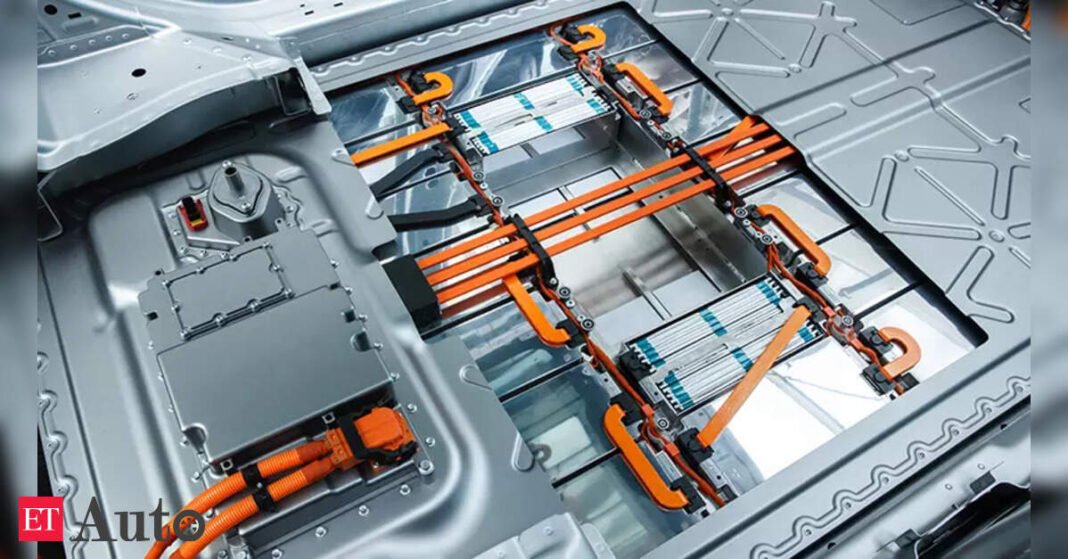
As electric mobility accelerates, robust EV testing has become central to consumer confidence and regulatory compliance. Battery safety, electromagnetic compatibility, crash performance and durability trials all feed into certification, and expanded domestic capacity means manufacturers can validate products faster without depending on overseas laboratories.
What stronger EV testing means for India’s auto industry
Industry observers say the investment signals that India’s EV testing ecosystem is maturing alongside its manufacturing base. With two-wheeler electrification nearing double-digit penetration and three-wheeler electrification surging past 46 per cent, the pressure on testing agencies will only intensify as new models, battery chemistries and charging technologies reach the market.
The upgraded infrastructure is also expected to support India’s export ambitions. World-class EV testing facilities can help domestic manufacturers certify products for international markets, reinforcing the government’s push to position India as a global manufacturing hub for clean mobility — Make in India, for the world.