
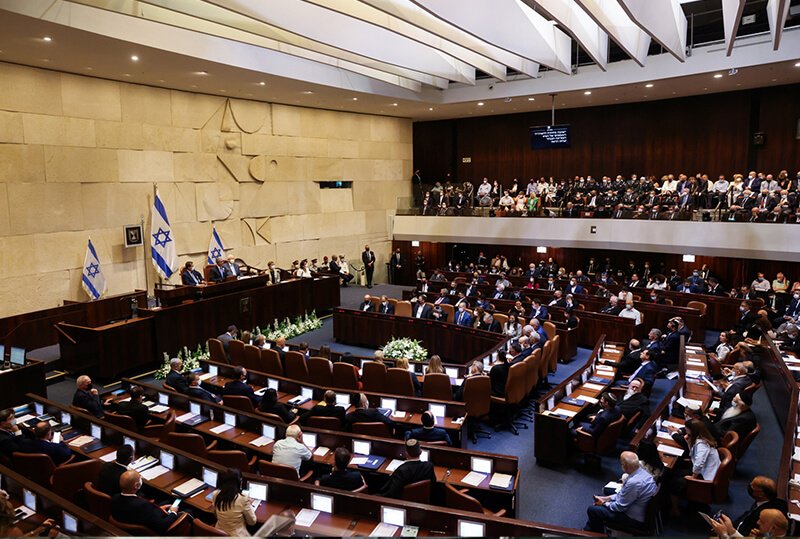


Israeli President Isaac Herzog has asked Gadi Eisenkot to form the next government of Israel, after the former army chief won the backing of a majority of lawmakers in consultations. Eisenkot, who leads the Yashar party, won the support of 67 of the 120 members of the Knesset, and he will now have 28 days to try to build a coalition. The task is not an easy one, and Eisenkot will need to bring together parties from across the political spectrum. The former army chief has said he wants to form a government that will focus on the issues that matter to Israelis, and he has said he will work to bring the country together. The task is a difficult one, and it will require Eisenkot to make compromises with parties that have very different views.
The consultations began on Monday, and they were held at the President’s Residence in Jerusalem. Herzog met with the leaders of all the parties in the Knesset, and he asked them who they wanted to form the next government. Eisenkot won the backing of 67 lawmakers, and he was the only candidate to win the support of a majority. The other candidate, Benjamin Netanyahu, won the backing of 43 lawmakers, and he was not able to win a majority. The consultations were held over two days, and they ended on Tuesday. Herzog announced his decision on Wednesday, and he said Eisenkot was the best person to form the next government.
The task facing Eisenkot is a difficult one. He will need to bring together parties from across the political spectrum, and he will need to make compromises with parties that have very different views. The former army chief has said he wants to form a government that will focus on the issues that matter to Israelis, and he has said he will work to bring the country together. Eisenkot will need to negotiate with the ultra-Orthodox parties, the Arab parties, and the left-wing parties, and he will need to find common ground with them. The task is a difficult one, and it will require Eisenkot to make compromises.
Gadi Eisenkot and the 28 days to build a coalition
Eisenkot has 28 days to try to build a coalition, and he can ask for a 14-day extension if he needs more time. The former army chief has said he wants to form a government that will focus on the issues that matter to Israelis, and he has said he will work to bring the country together. Eisenkot will need to negotiate with the ultra-Orthodox parties, the Arab parties, and the left-wing parties, and he will need to find common ground with them. The task is a difficult one, and it will require Eisenkot to make compromises with parties that have very different views. The 28 days will be a test of Eisenkot’s ability to negotiate, and it will show whether he can bring the country together.
Obstacles facing Gadi Eisenkot in the talks
The obstacles facing Eisenkot are significant. He will need to bring together parties from across the political spectrum, and he will need to make compromises with parties that have very different views. The ultra-Orthodox parties want to keep their exemptions from military service, and the Arab parties want more funding for their communities. The left-wing parties want a two-state solution, and the right-wing parties want to keep the settlements. Eisenkot will need to find common ground with all of them, and he will need to make compromises. The task is a difficult one, and it will require Eisenkot to be a skilled negotiator.
What happens next in Israel
The next step is for Eisenkot to begin negotiations with the parties, and he will have 28 days to try to build a coalition. If he succeeds, he will present his government to the Knesset for approval, and the new government will be sworn in. If he fails, Herzog will have to choose another candidate, or call new elections. The task is a difficult one, and it will require Eisenkot to make compromises with parties that have very different views. The former army chief has said he wants to form a government that will focus on the issues that matter to Israelis, and he has said he will work to bring the country together.