
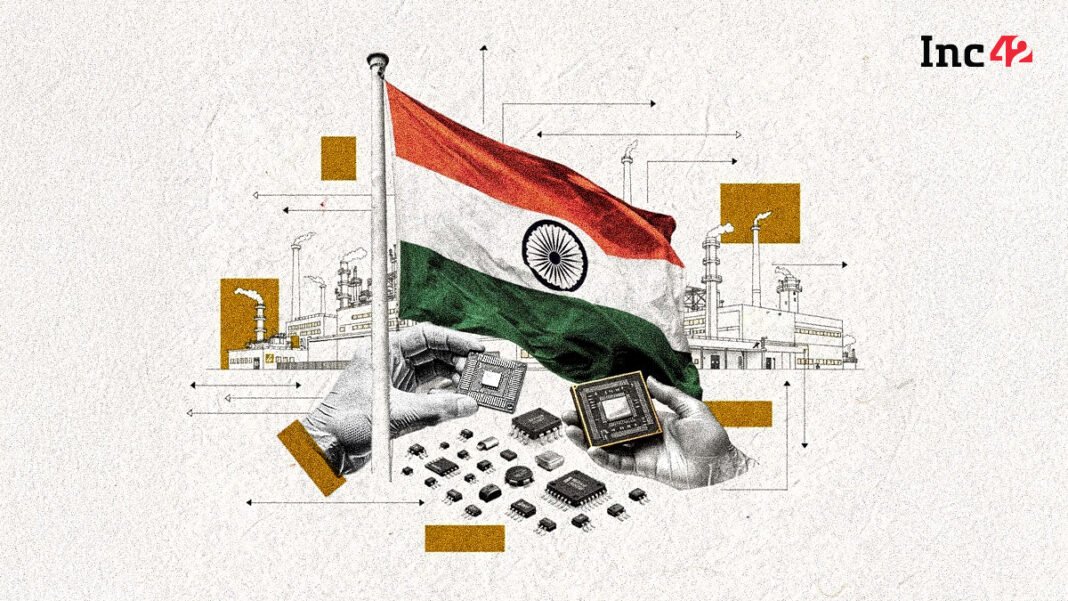


India has approved 12 semiconductor manufacturing projects and five of them have started commercial production, a senior government official said on 5 November, as the country moves from writing chip policy to building the factories and supply chains behind it. Amitesh Kumar Sinha, additional secretary at the Ministry of Electronics and Information Technology (MeitY) and chief executive of the India Semiconductor Mission, said global technology partnerships and resilient supply chains will be essential for the India semiconductor sector to grow.
Sinha was speaking at the first International Semiconductor Industry Group (ISIG) Executive Summit held in India, a two-day meeting in New Delhi held under the theme “Enabling the Intelligent Future: Advanced Semiconductors, AI, Data Centers and Power Electronics”. The summit brought together senior executives, global technology leaders, researchers, investors and government officials to plan the next phase of the India semiconductor industry.
“India’s semiconductor strategy is moving from policy design to ecosystem development, with early manufacturing projects already underway. India’s market, talent pool and government incentives are important advantages, but global technology partnerships and resilient supply chains will be essential,” Sinha said, according to a statement from ISIG.
The government is backing the push with Semicon 2.0, a programme worth Rs 1.27 lakh crore that the Union Cabinet approved on 15 July 2026. Sinha said the programme covers design companies, materials, chemicals, gases and equipment, alongside manufacturing, research and development and talent. The aim is to build the full chain around chip making, rather than factories alone, and the India semiconductor programme is designed to cover that whole chain.
The summit’s theme pointed to where the chips are meant to go. Advanced semiconductors sit behind artificial intelligence systems, data centres and power electronics, and demand from those areas is driving investment in fabrication and packaging around the world. India wants a share of that work, and the India semiconductor push is aimed at winning fabrication and packaging orders. The summit drew executives, researchers and investors from India and abroad to discuss what the country still needs to build.
India semiconductor projects approved so far
The 12 approved manufacturing projects are the clearest sign of how far the India semiconductor programme has moved. Five have begun commercial production, Sinha said. The reports from the summit did not give completion dates for the remaining seven projects.
The talent pool is one of the reasons companies are looking at India. The country trains large numbers of chip design engineers each year, and design work has been done in India for global firms for decades. What India has lacked is fabrication capacity and the supplier base that sits around a fab, from specialty gases to packaging.
India semiconductor supply chains and global partners
That gap is why Sinha put partnerships at the centre of his remarks. Chip making depends on machines, materials and chemicals that come from a small number of suppliers in a few countries, and no single country makes every part of the chain on its own. For India, access to that equipment and to buyers abroad will decide whether the new factories run at the scale the government wants.
ISIG said it aims to push investment in advanced packaging technologies in India and in quantum computing technologies. Advanced packaging, which joins several chips into one unit, is one of the areas where India hopes to build strength without first building the most advanced fabrication plants. Packaging has become a bigger part of chip making as transistors shrink more slowly. Joining several chips into one package lets makers combine memory, logic and other functions without waiting for the next fabrication node, and it is an area where new entrants can compete sooner.
The summit also produced a memorandum of understanding between ISIG and the Government of Bihar on cooperation to develop the state’s semiconductor and electronics ecosystem. The agreement covers work on the supply chain and on attracting investment to the state.
Reports after the Cabinet approval said the mission’s second phase would focus on equipment, materials, indigenous intellectual property, resilient supply chains, research, training and advanced manufacturing. The budget for 2026-27 set aside Rs 1,000 crore as an initial allocation for the India semiconductor mission’s second phase.
The next edition of the summit will be held in India between 30 November and 1 December 2027, ISIG said.