
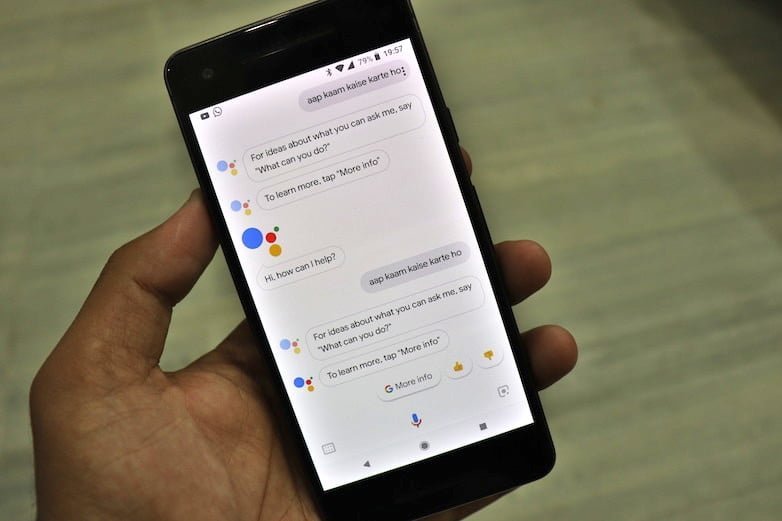


India’s move to voice-first artificial intelligence is running into two barriers, and the India VoiceAI shift is being slowed by linguistic diversity and by legacy technology. Companies in India are adopting voice AI quickly for customer service, sales and other business processes, but moving the technology from early experiments to dependable large-scale use remains a major challenge. The difficulty comes from India’s many languages, regional accents, switching between Hindi and English, and the need to understand customers clearly even when there is noise around them.
The numbers behind the India VoiceAI shift show how early the adoption still is. According to figures shared with reference to NASSCOM’s India Voice AI Readiness 2026 report, only 13% of the organisations surveyed have implemented voice AI at scale across multiple customer journeys. More than 30% of organisations reported inconsistencies in understanding and handling regional Indian accents. The report puts language at the centre of the problem: Indian languages and regional accents decide how well voice AI understands and responds to customers, and the use of mixed Hindi-English speech is another important challenge.
India is a hard test for voice systems, and the India VoiceAI shift has to solve it first. The country has 22 official languages and 720 dialects, and people switch between languages mid-sentence as a matter of course. Voice handles that switching better than structured apps, but global models still struggle with Hinglish, interruptions and partial speech. Standard tokenisers trained mostly on English also carry a cost: Western tokenisers need five to eight times more tokens to represent Hindi or Tamil than English, which raises API fees and shrinks the effective context window for Indian users.
India VoiceAI shift and the language barrier
The India VoiceAI shift has a local answer taking shape. Sarvam AI is building sovereign multilingual voice and language-model infrastructure, and Krutrim is building Indic foundation models with native tokenisers. Gnani.ai has launched Vachana, an Indic speech-to-text model, and Smallest.ai delivers low-latency, real-time voice systems. Oriserve is building voice infrastructure for enterprises. The government is investing in the same direction: BHASHINI is being developed as national multilingual AI infrastructure, and the open-source VoicERA voice-AI stack was launched in February 2026 to support multilingual conversational systems at scale.
The demand for voice is not in doubt. India has 958 million active internet users, and 57% of them are rural, with rural users growing nearly four times faster than urban ones. Almost all Indian internet users, 98%, consume content in a local language, and even in urban India 57% prefer their own language over English. India is already the largest market in the world for large language models, with daily Indian ChatGPT use at about 65 million, and Sam Altman announced in February 2026 that India had crossed 100 million weekly ChatGPT users. The domestic AI market is projected to triple to 17 billion dollars by 2027.
India VoiceAI shift and the legacy systems
The India VoiceAI shift is also held back by what came before it. Long before generative AI arrived, Indians were engaging with technology through IVRS menus and call centre bots, and the country’s digital infrastructure became text-based, often English-first and heavy on mobile interfaces. That shift excluded millions in tier two and tier three markets, where literacy, language and digital fluency remain real barriers. Real-time speech recognition plus a language model plus text-to-speech still costs about 7 cents per interaction, and mobile voice interfaces and enterprise integrations still lag behind the models themselves.
For the India VoiceAI shift to reach scale, the systems have to work in the languages people actually speak, on the networks they actually use, and inside the call centres and apps that already exist. The NASSCOM figures show the gap: 13% at scale, and more than 30% struggling with accents alone. The India VoiceAI shift will be decided by whether the next wave of systems can handle a customer who switches from Hindi to English mid-sentence, in a noisy room, on a slow connection, and still get the answer right.