
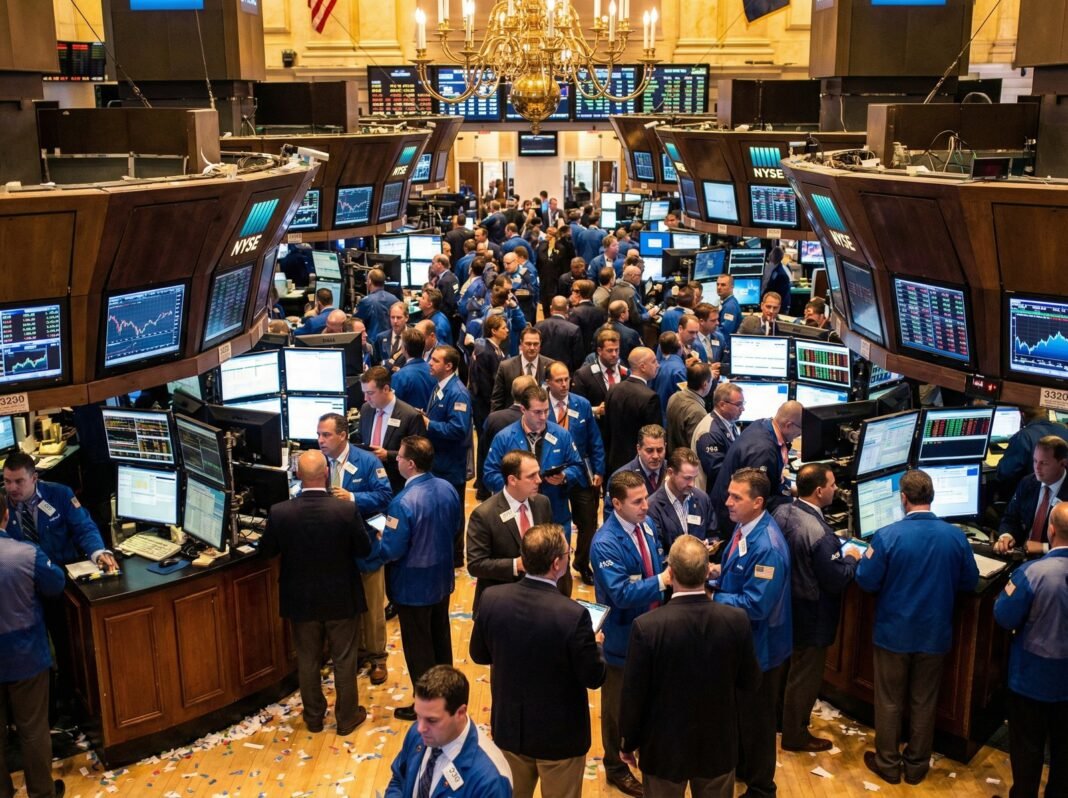


Wall Street suffered its worst day in more than a year on Thursday, 5 November, as an AI selloff wiped an estimated $2.5 trillion from the Nasdaq 100 and pushed the Nasdaq Composite into correction territory. The Nasdaq Composite fell 5.5 percent, its steepest one-day drop since April 2025, while the Nasdaq 100 fell 6.4 percent. The Dow Jones Industrial Average lost 1,833 points, or 3.4 percent, and the S&P 500 dropped 4.4 percent.
The scale of the AI selloff caught traders by surprise. Stocks had rallied the day before after Democrats swept the midterm elections, but the mood turned within 24 hours as investors weighed what the results would mean for the artificial intelligence buildout. Every sector in the S&P 500 finished the day in the red.
The AI selloff was set off by politics. Democrats won control of Congress and a string of governorships in states where large numbers of data centers are planned, including Texas. Investors read the results as a sign that new data centers will face tougher scrutiny, slower permits and higher costs. Voters in several states also backed limits on data center development in local referendums held on Tuesday.
The AI selloff hit chipmakers and data center companies hardest. The Philadelphia Semiconductor Index fell 12 percent, its worst day since the depths of the coronavirus pandemic. Nvidia dropped 9 percent, erasing almost $450 billion in market value in a single session. Advanced Micro Devices fell 17 percent. CoreWeave fell 10 percent. Nebius dropped 15 percent.
The Magnificent Seven group of large technology companies, Alphabet, Amazon, Apple, Meta, Microsoft, Nvidia and Tesla, lost around $1 trillion in combined market value on the day. Amazon and Alphabet each fell 2.2 percent. Microsoft declined 3.6 percent. Tesla fell close to 11 percent.
Why the AI selloff spread so fast
The AI selloff came after weeks of growing doubt about the returns on the huge sums being poured into AI infrastructure. Tech companies have committed trillions of dollars to data centers, chips and power, much of it funded with debt. Investors have started to ask how long that spending can continue while free cash flow at some of the largest spenders turns negative.
UBS analysts estimated that around 30 percent of expected United States data center capacity additions in 2028 could be at risk from construction pauses. Former Federal Reserve Bank of New York president Bill Dudley has estimated the AI sector will probably need about $3 trillion in annual revenue to produce adequate returns on its investment.
Credit markets showed the strain. CoreWeave’s five-year credit default swap spreads, which measure market expectations of a possible default, widened to a record 1,267.9 basis points, according to S&P Global Market Intelligence data.
“The market’s moving from the promise of AI to the price of AI,” said Ted Parkhill, founder and chief executive of Incline Investment Management. “There’s no question that AI is going to be transformative for the world in the long run. But that doesn’t mean every AI-related stock is currently priced appropriately. There’s going to be a lot of turmoil.”
What the AI selloff means for data centers
Thursday was the second straight day of selling in AI stocks. The Nasdaq Composite has now lost nearly 12 percent from its record close on 6 October.
Michael O’Rourke, chief market strategist at JonesTrading, said the election outcome pointed to a lasting change in how the data center buildout is viewed. “The big election outcome was, especially with the Democrats winning a lot of the governorships, that the slowdown of the data center buildout is the real key theme that’s going to stick,” he said.
Bruce Zaro, managing director at Granite Wealth Management, said permitting would be the next test. “There’s going to be a lot of pushback about those data centers being geographically located in someone’s backyard, straining the power grid, straining the water systems,” Zaro said. “Although there are a number of data centers already approved, there are still a lot to be permitted. There’s going to be a difficult road to get those permitted forthcoming.”
The AI selloff also spread to utilities and equipment suppliers tied to the buildout. Data center operators Applied Digital, Cipher Digital and IREN each tumbled more than 14 percent.
The AI selloff rattled the options market as well. Wall Street’s fear gauge, the VIX index of expected price swings, posted its largest increase since December 2024.
Some analysts wondered whether the scale of the wipeout could affect the timing of Anthropic’s blockbuster initial public offering, expected this fall. Any delay could add to the negative mood around AI stocks after the AI selloff.