


Eli Lilly’s investigational drug retatrutide is the obesity pipeline treatment physicians remember most clearly, even as awareness of new obesity evidence remains limited overall, according to an October 2026 survey from Spherix Global Insights. The survey covered 53 primary care physicians and 49 endocrinologists in the United States, and its findings were released on October 28, 2026.
Retatrutide stood out against that background. It was the most frequently recalled pipeline agent without prompting among both groups, named by 26 percent of primary care physicians and 43 percent of endocrinologists. Its Phase 3 TRIUMPH-2 results were the most widely recognized pipeline development in the survey when physicians were prompted, recognized by about one-third of primary care physicians, 32 percent, and nearly half of endocrinologists, 49 percent.
Among physicians who were aware of the TRIUMPH-2 results, 76 percent of primary care physicians and 75 percent of endocrinologists said the data would have a high impact on their likelihood to prescribe it if it is approved. That gap between limited awareness and strong interest among those who know the data is the central finding of the survey: many physicians have yet to encounter the latest evidence, while those who have tend to say it could change their future treatment decisions.
Retatrutide TRIUMPH-2 weight loss results
TRIUMPH-2 was a Phase 3 trial in 1,152 adults with obesity or overweight and type 2 diabetes. Participants received weekly injections of retatrutide at target doses of 4 mg, 9 mg or 12 mg, or a placebo, for 80 weeks, along with guidance on diet and physical activity. The results were published in The Lancet on September 29, 2026, and presented at the European Association for the Study of Diabetes meeting in Milan.
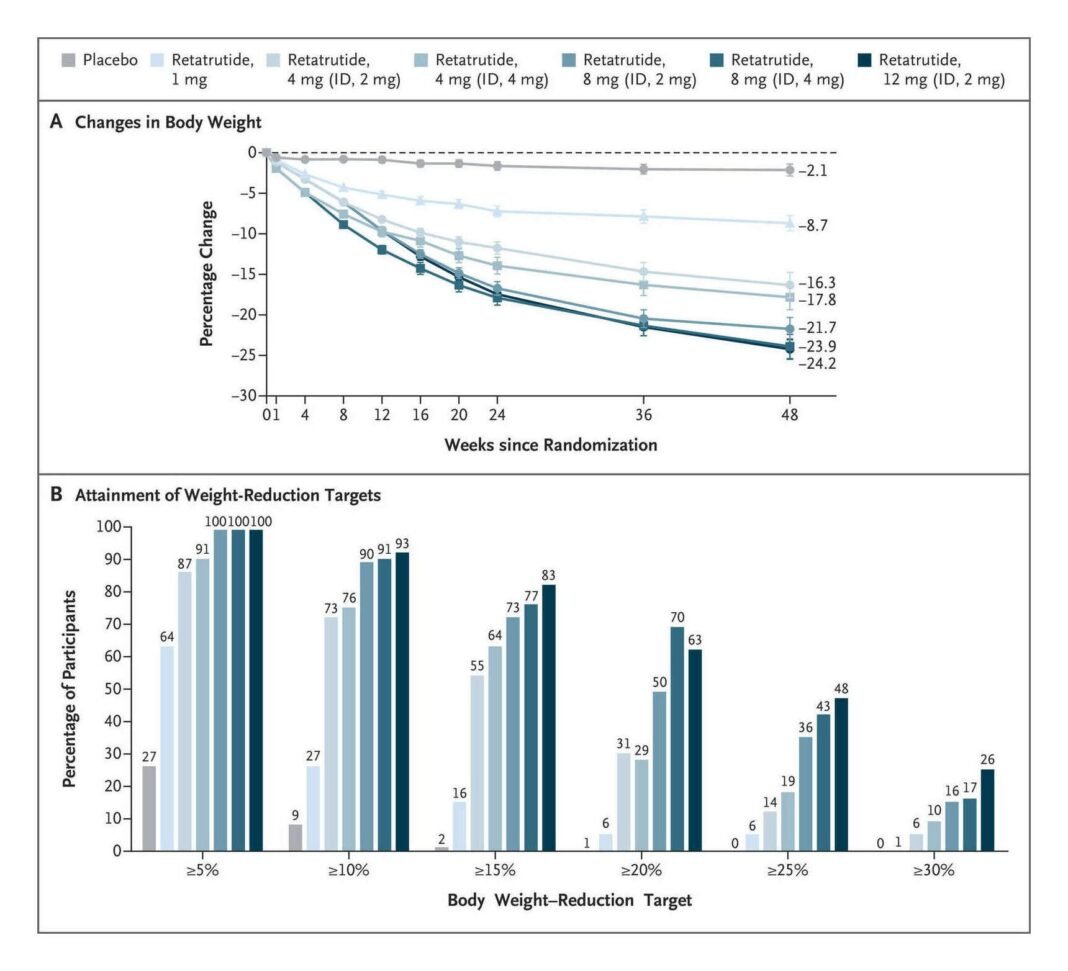
Participants on the highest dose lost an average of 20.8 percent of their body weight over 80 weeks, under the analysis that estimates weight loss if participants had continued treatment as planned. That figure equals an average loss of 49.6 pounds, or 22.5 kilograms. Participants on 9 mg lost 19.1 percent, participants on 4 mg lost 12.7 percent, and participants on placebo lost 4.0 percent on the same analysis.
A second analysis, which counts everyone assigned to a group regardless of whether they stopped treatment, found a slightly smaller effect: an average reduction of 18.8 percent on 12 mg, compared with 5.1 percent on placebo. Both analyses showed larger weight loss on retatrutide than on placebo at every dose, with differences reported as statistically significant.
Retatrutide side effects and triple agonist design
Side effects in TRIUMPH-2 were mostly gastrointestinal, as with other drugs in this class. Diarrhea occurred in 33.6 percent of participants on 12 mg, compared with 13.2 percent on placebo, and nausea occurred in 28.0 percent, compared with 8.0 percent on placebo. Dysesthesia, an abnormal skin sensation, occurred in 7.3 percent of participants on 12 mg, compared with 0.7 percent on placebo. Adverse events were the most common reason for withdrawal from the trial, and 965 of the 1,152 participants completed the study.
Retatrutide is a once-weekly triple agonist, meaning it acts on three hormone receptors: GIP, GLP-1 and glucagon. Those receptors are involved in appetite, blood sugar regulation and energy expenditure. The idea behind targeting three receptors at once is to combine effects that existing drugs achieve through one or two pathways, though the trial results are the test of whether that design delivers larger weight loss in practice.
Retatrutide has not been approved by the FDA, and it remains an investigational drug. Eli Lilly plans to submit a Biologics License Application in the first quarter of 2027, according to reporting on the TRIUMPH-2 results. Approval, if granted, would depend on the FDA’s review of the full trial data, including safety findings and manufacturing information.
Retatrutide and the wider obesity pipeline
For retatrutide, the next steps are regulatory rather than clinical. The TRIUMPH-2 data are published, the survey shows the results have reached a minority of physicians so far, and the physicians who know them report strong interest. Whether that interest turns into prescriptions will depend on the FDA application, the final labeling, and how the drug compares in practice with approved treatments already available for obesity and type 2 diabetes.