
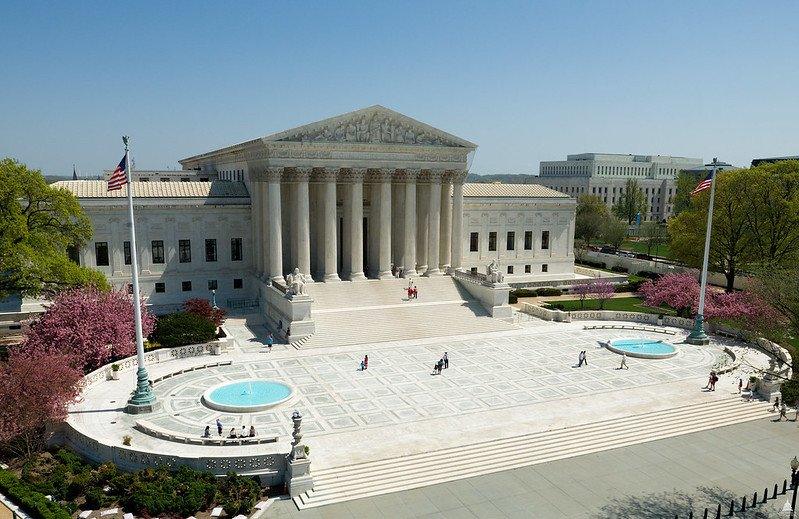


The Supreme Court border wall ruling on Monday cleared the way for the Trump administration to resume building barriers and roads in the Big Bend region of Texas. The justices lifted a federal judge’s order that had halted the work in October, and construction can now go ahead in Big Bend National Park and along more than 500 miles of the Rio Grande. The ruling was unsigned and brief, and it suspends the lower court’s injunction while the lawsuit over the project continues.
The Supreme Court border wall case turns on a 1996 law, Section 102 of the Illegal Immigration Reform and Immigrant Responsibility Act, which sharply limits judges’ power to intervene when the federal government decides speedy border barrier construction is necessary. The court said the law at issue likely precludes judicial review of the claims in the lawsuit, and it found the lower court was exceedingly likely to have lacked jurisdiction to hear the central claim. The justices said the government’s interest outweighs any aesthetic, recreational and environmental harm alleged by the respondents.
Supreme Court border wall ruling splits the court
The Supreme Court border wall decision was 8-1, with Justice Ketanji Brown Jackson the only member of the court to say she would have denied the administration’s request. The court declined the administration’s separate request to summarily reverse the lower court’s ruling outright, and the stay remains in place while the government pursues a full appeal. The stay ends automatically if the justices decline to take up the case. The case is Mullin v. Friends of the Ruidosa Church, named for Homeland Security Secretary Markwayne Mullin.
The injunction was issued on 2 October by U.S. District Judge Kathleen Cardone of the Western District of Texas, and it had stopped barrier and road construction across the Big Bend region for the past month. The lawsuit was brought by the Center for Biological Diversity, a Big Bend area river guide and landowner, and a group seeking to preserve a historic church in Ruidosa, Texas, which says its fragile adobe structure is threatened by the construction. The Supreme Court border wall dispute arose after the Department of Homeland Security used waivers to set aside environmental and conservation requirements that would otherwise slow the work.
Supreme Court border wall waivers and the park
The Supreme Court border wall waivers were issued between February and July, first by former Homeland Security Secretary Kristi Noem and later by Mullin. The waivers marked the first time the federal government set aside a broad slate of environmental laws inside a national park, including the Endangered Species Act, the National Wild and Scenic Rivers Act and the National Park Service Organic Act. The government described the project as covering 341 miles of border infrastructure, with 30 foot steel barriers in some areas, vehicle barriers and new roads. Plans include more than 200 miles of patrol roads and about 17 miles of vehicle barriers inside Big Bend National Park.
Congress funded the project last summer with 46 billion dollars, and Customs and Border Protection has been erecting 12 miles of barriers a week across the entire border. The goal is to eventually cover the whole 2,000 mile border with a mixture of 30 foot tall steel walls, vehicle barriers and surveillance technology. The border wall is a signature project of President Donald Trump, who has long vowed to build a wall from the Pacific Ocean to the Gulf of Mexico. The Big Bend sector covers a rugged 600 mile stretch of Texas terrain along the Rio Grande.
Supreme Court border wall case is not over
The Supreme Court border wall case is not over. The ruling suspends the injunction while the lawsuit proceeds, and it is not a final ruling on the legality of the waivers. The lower court proceedings continue, and the government will file a petition asking the justices to take up the dispute in full. If review is granted, construction can continue until the court issues its judgment. If review is denied, the stay ends automatically. Opponents of the project called the ruling a blow, and they argued the project is a waste of money that threatens the unique terrain of the region.
The Supreme Court border wall ruling lets work resume in one of the most remote stretches of the border, and the crews will return to a project that was frozen for a month. The legal fight will go on in the lower courts and may return to the Supreme Court, but the barriers will go up in the meantime. The administration has its green light, and the Big Bend will see construction again within days.