
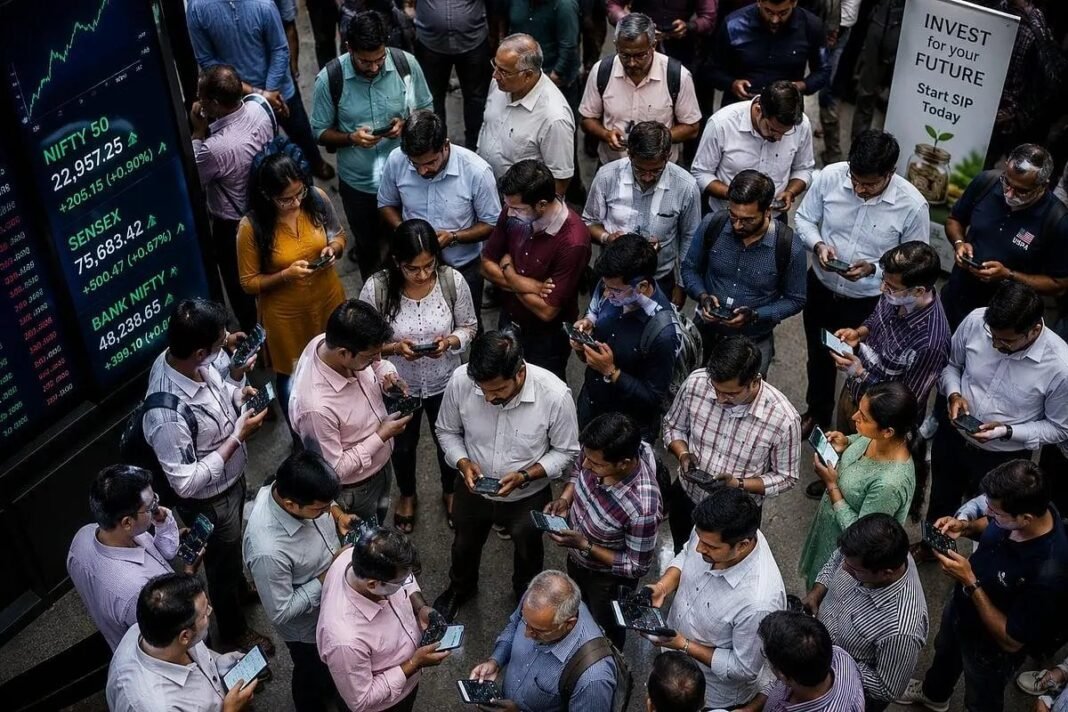


Foreign selling, an oil shock and a weak rupee shaped Indian markets for much of 2026, and the trends investors should track before 2027 start with those three. NDTV’s market piece on 9 November lists seven trends for investors to watch into the new year, and the first three explain most of the pressure. The other themes in the piece cover United States bond yields, the global rotation into artificial intelligence stocks, domestic institutional buying and the earnings outlook. Together they form the year-end checklist.
Foreign selling is the largest of the three pressures. Foreign investors have sold almost 63.6 billion dollars of Indian equities since October 2024, wiping out roughly 63.5 billion dollars of buying from the previous nine years, according to National Securities Depository figures. It is the first of the trends investors should track before 2027, and the numbers behind it are stark. The cumulative flow series since October 2015 now stands at about minus 110 million dollars. Selling accelerated in 2026, with overseas investors withdrawing about 32.8 billion dollars, after 18.9 billion dollars of outflows in 2025. In rupee terms, foreign portfolio investors sold a net 2.95 lakh crore rupees of Indian shares in 2026 through October, about 1.8 times the 2025 total of 1.66 lakh crore rupees.
The monthly figures show how heavy the selling became. March 2026 saw selling of 1.18 lakh crore rupees, the highest in 34 years, after the West Asia crisis began. October ended at a net outflow of 34,843 crore rupees, despite foreign investors buying about 6,300 crore rupees in its last week. September brought withdrawals of 358.61 billion rupees, and early October added 474.17 billion rupees. The trends investors should track before 2027 include whether that selling has run its course, and the first signs of a turn came in November, when foreign buyers returned at scale.
Trends investors should track: the oil shock
The trends investors should track before 2027 include the oil price, because India is the world’s third-largest oil importer. Brent crude closed at 88.10 dollars a barrel on 28 August and reached 107.63 dollars by 10 September. India’s crude import dependence stood at about 88.6% in 2025-26 up to January 2026, and the crude import bill rose to 63.4 billion dollars in the April to July 2026 period, up from 40.5 billion dollars a year earlier. Net oil imports stood at 3.5% of gross domestic product, and a sustained high price pressures the rupee while weaker remittances from the Middle East add to the strain. Citi has estimated that a 10 dollar decline in oil prices could lift Nifty earnings per share by about 2%.
The weak rupee is the third pressure, and it feeds the other two. The rupee closed August at 95.142 to the United States dollar and ended September at 95.948, then weakened past 97 on 8 October after touching around 96.75 the day before. It had hit a record low of 96.90 per dollar on 20 May. A weaker rupee cuts the dollar value of foreign holdings, which gives overseas investors another reason to sell, and it raises the cost of imports, which pushes the currency lower still. The currency is one of the trends investors should track before 2027. The Reserve Bank of India raised rates on 7 October, and Barclays has said the rupee could reach around 97.4 per dollar by the end of the first quarter of 2027.
Trends investors should track: what could turn the flows
The trends investors should track before 2027 also include the forces that could reverse the selling. United States bond yields are one of them: the 10-year Treasury yield crossed 5.2% in mid-October, which made American government bonds attractive against Indian equities, and the Federal Reserve raised its policy rate to 3.75% to 4% on 16 September. Domestic buyers have cushioned the selling throughout, and that support is one of the trends investors should track before 2027: domestic institutions bought 4,596.60 crore rupees of equities on 7 October alone, while foreign investors sold 6,121.40 crore rupees the same day. Motilal Oswal put domestic investment between October 2024 and June 2026 at a record 162 billion dollars.
The turn, if it holds, began in November. Foreign investors bought shares worth about 150 billion rupees on 5 November, their largest single-day net purchase in nearly six years, and the Nifty rose 8.6% in the week to 6 November, its best week since February 2021. Earlier in the year, Bank of America had predicted foreign capital would stay away until 2027, as AI-led rallies in North Asia pulled money away. The November buying tests that view, and the trends investors should track before 2027 will show whether the return of foreign money is a short rebound or the start of a longer stay.