
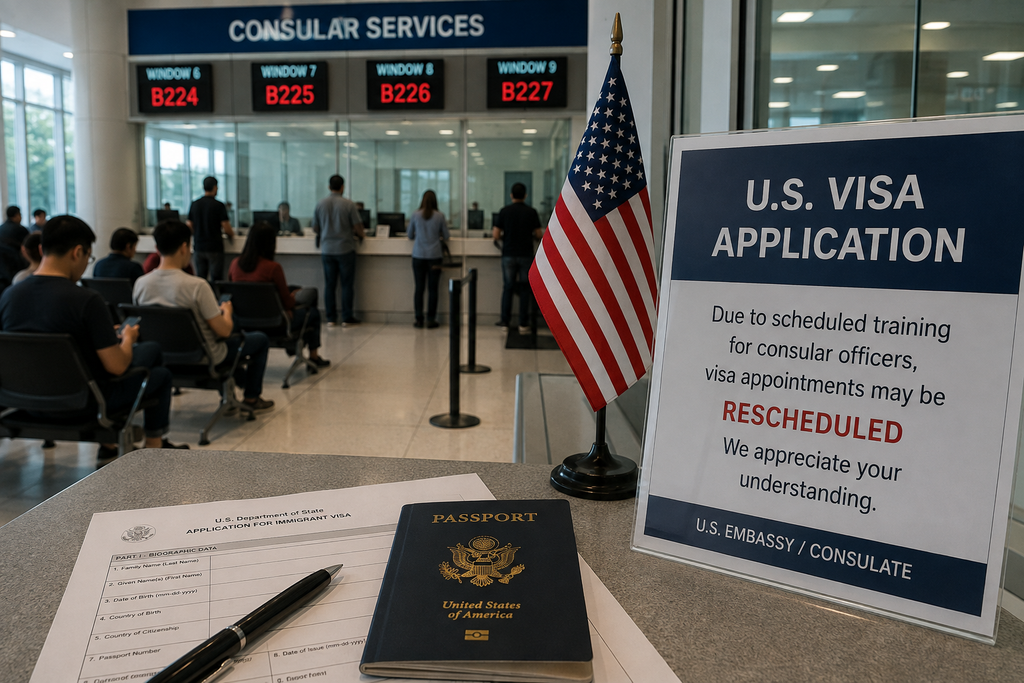


An Indian family travelling with an infant suffered a US visa denial after the consular officer questioned them about a previous trip to China, derailing their planned vacation, according to a report in The Times of India. The family had applied for US visitor visas for a vacation, but the interview took an unexpected turn when the officer asked, “Why have you traveled to China?”
The refusal has resonated widely because it captures a growing anxiety among Indian travellers: that even routine travel history can become a liability at the visa window. The family had apparently included China in their recent travel, and the officer’s line of questioning suggested that the trip raised flags — though, as is standard practice, no detailed reason for the refusal was recorded beyond the consular officer’s discretion.
The US Visa Denial Interview
US tourist visa interviews are brief — often just a few minutes — and consular officers have broad discretion to refuse applications if they are not satisfied that the applicant’s travel purpose matches the visa category or that the applicant will return home. Travel history is one of the factors officers weigh, and trips to certain countries can prompt additional scrutiny, particularly amid heightened geopolitical tensions between Washington and Beijing.
The case has drawn attention because the applicants were a family with a young infant travelling for a holiday — a profile that would ordinarily be considered low-risk. That their China travel history appears to have been the decisive factor has prompted debate about how heavily past itineraries should weigh against applicants.
US Visa Denial Trends and Scrutiny
The episode comes against a backdrop of tightening US visa scrutiny. The Trump administration has moved to restrict birth tourism networks, with Secretary of State Marco Rubio announcing in September new visa restrictions targeting commercial birth-tourism facilitators and visa “fixers”. While that policy is aimed at organised networks rather than ordinary tourists, it reflects a broader hardening of the US immigration posture.
Indian applicants already face long wait times and high refusal rates for B1/B2 visitor visas, and anecdotal reports of refusals linked to travel history, social media activity or perceived weak ties to home have become more common. Immigration advisers consistently warn applicants to be truthful and consistent about their travel history — because, as this family’s experience shows, officers will ask about it.
For the family at the centre of this story, the denied vacation is a costly lesson in how consular discretion works. For thousands of Indian travellers watching the case unfold online, it is a reminder that in the current climate, even a past holiday in China can complicate a future one in America.
US Visa Denial: What Applicants Should Know
Immigration advisers say the most common grounds for B1/B2 refusals are straightforward: officers are not satisfied that the travel will be temporary and fully compliant with immigration law. For families, officials assess ties through the parents’ circumstances — stable employment or business, a clear residence abroad and consistent travel histories all matter. Mismatched information between family members’ application forms or contradictory financial details can also trigger refusals.
The practical advice is equally straightforward: prepare a detailed travel itinerary, be truthful and consistent about every country visited, and never assume that a question about past travel is casual small talk. As one immigration lawyer quoted in coverage of the case put it, the officer’s questions are the interview — every answer feeds the decision. In an era of heightened scrutiny, a well-documented application and calm, honest answers remain an applicant’s best defence against an outcome like the one this family faced.
What is known about the case comes from the family’s own account as reported by The Times of India: an Indian family, travelling with an infant, applied for US tourist visas for a vacation and were refused after the officer focused on their earlier travel to China. Details such as the family’s identity and the exact date of the interview have not been disclosed. What the episode illustrates, regardless of those specifics, is how consular officers weigh travel history alongside ties to home — and how, in a climate of sharpening US-China tensions, a stamp in a passport can carry more weight than travellers expect.