
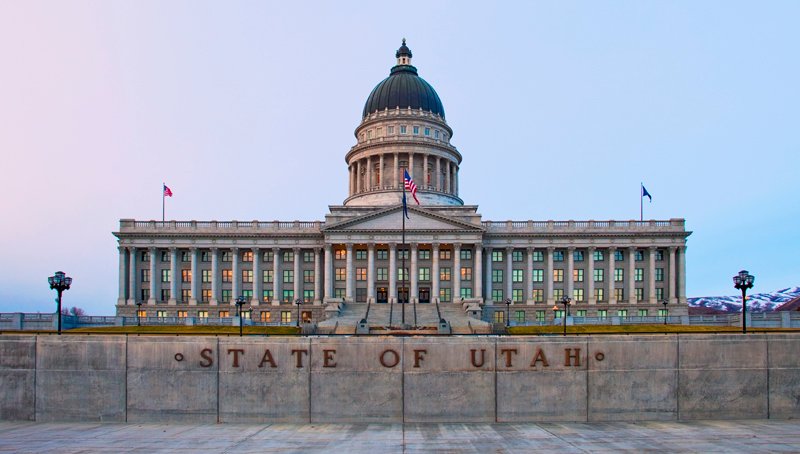


Utah Amendment A led in early election results on Tuesday 3 November, with voters appearing poised to approve a change to how proposed constitutional amendments are published. The Utah Amendment A count from the Associated Press showed 367,923 votes for the measure and 239,896 against, with 1,618 of 3,146 precincts reporting. That put support at about 60 percent, matching preliminary reports that put the measure ahead by about 60 percent to 40 percent with more than 580,000 votes counted before 9:30 p.m. The Associated Press listed the race as too early to call.
What Utah Amendment A would change
Utah Amendment A would change the Utah Constitution so that a proposed amendment must be published for 60 days immediately before the general election in a manner established by state law, instead of in newspapers. The ballot question asked voters: “Shall the Utah Constitution be amended to change how proposed constitutional amendments are published, requiring publication for 60 days immediately before the general election in a manner established by state law instead of in newspapers?” At present, the Constitution requires the full text of a proposed amendment to be printed in a newspaper in every county for two months before the election.
If voters approve Utah Amendment A, a 2025 law known as H.B. 481 would set the new method. That law provides for a class A notice on the Utah Public Notice Website, on the lieutenant governor’s website and by a public posting. No newspaper publication and no mailing would be required under that method. H.B. 481 would take effect on 1 January 2027, but only if Amendment A passes. The measure does not change how amendments are proposed or approved, since the legislature still needs a two thirds vote and voters still decide.
Utah Amendment A and the legislature
Utah Amendment A reached the ballot as H.J.R. 10 in 2025. It passed the House by 70 votes to none and the Senate by 29 votes to none. Its primary sponsor was Representative Anthony Loubet. The measure arose after courts voided two amendments from 2024, after the newspaper notice was not published. Supporters in the legislature argued that the newspaper rule no longer matched how people receive public notices, while the change leaves the 60 day period in place and moves the method into statute, where lawmakers can set it by ordinary law.
Voters also decided a second measure on the same ballot, Amendment B, which would have raised the approval threshold for citizen initiatives that create or raise taxes. The Associated Press count for that measure showed the against side ahead, with 379,717 votes against and 233,465 for, and the race was called against the measure. The two measures were separate questions, and a vote on one did not decide the other. Utah voters faced both questions after a campaign in which the legislature had passed both proposals in 2025.
What remains before Utah Amendment A is final
Results on election night are preliminary, and the final outcome for Utah Amendment A will depend on ballots still to be counted, including ballots received after election day under state rules. All election results are not final until the state’s board of canvassers votes to certify them, and that board was due to meet on 23 November, according to preliminary reporting. Counties will reconcile their counts and report updated totals in the days after 3 November, and the margin for Amendment A may move as those totals arrive.
The debate over notice is not abstract for voters, since the text of a proposed amendment is the document they are asked to approve or reject. Under the current rule, that text must appear in a newspaper in every county where a newspaper is published, for two months. Under the method in H.B. 481, the same text would appear on the Utah Public Notice Website and on the lieutenant governor’s website, with a public posting alongside. The question for voters was whether that change in method still gives the public a fair chance to read the text before election day, within the same 60 day period.
If the lead for Utah Amendment A holds through certification, H.B. 481 will take effect on 1 January 2027 and the next proposed amendment will be published under the new notice method. If the count moves against the measure, the newspaper publication rule will remain in the Constitution. The Associated Press had not called the race in its early count, with 51.43 percent of precincts reporting and an estimated 51.45 percent of votes counted.