
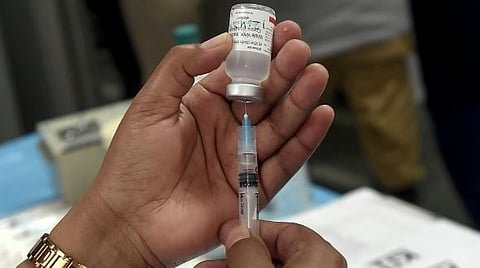


The anti-rabies vaccine is unavailable at 126 government hospitals in Maharashtra, while rabies immunoglobulin is out of stock at 375 facilities, according to a letter from the state public health department — raising serious concerns about timely treatment for dog-bite victims across the state. In a communication dated October 16, health secretary Nipun Vinayak directed officials to ensure that both medicines are available in adequate quantities at all government hospitals by October 31, 2026.
According to figures cited by the department, of the 633 government hospitals covered in the assessment, the anti-rabies vaccine is unavailable at 126 facilities — 19.9 per cent — while 507, or 80.1 per cent, have it in stock. The shortage of rabies immunoglobulin, or RIG, is far more widespread: the medicine is unavailable at 375 hospitals (59.2 per cent) and available at only 258 (40.8 per cent).
The Anti-Rabies Vaccine Shortfall in Numbers
The department’s assessment paints a troubling picture of the state’s post-exposure prophylaxis network. With nearly one in five government hospitals lacking the basic vaccine and almost three in five lacking immunoglobulin, bite victims in many areas may have to travel further for complete treatment — a dangerous delay, since rabies is almost always fatal once symptoms appear.
The figures broadly match data placed before the Bombay High Court earlier this month in the stray dog case, where figures presented showed 128 government hospitals lacking anti-rabies vaccines and 381 lacking rabies immunoglobulin. The High Court has directed the state to submit updated data on stray dog numbers, sterilisation and anti-rabies vaccine availability by November 2, and has pressed the state to “aggressively” implement its animal birth control programme.
Why the Anti-Rabies Vaccine Gap Matters
Both the anti-rabies vaccine and RIG are used in post-exposure prophylaxis to prevent rabies after a potential exposure, but they serve different purposes. The vaccine stimulates the body to develop its own immune response over several days, while RIG provides ready-made antibodies for immediate, short-term protection. Depending on the nature of the exposure and the patient’s vaccination status, both may be required as part of timely post-exposure treatment.
The immunoglobulin shortfall is therefore the more alarming of the two gaps: for severe Category III bites, RIG bridges the critical early window before the vaccine takes effect, and missing it leaves the patient unprotected when protection matters most. The communication comes amid rising concerns over stray dog attacks and human-animal conflict, and refers to directions issued by the Supreme Court in a suo motu writ petition through orders dated August 28, 2025, November 7, 2025, and August 14, 2026.
Anti-Rabies Vaccine Action Ordered
Vinayak’s letter stressed the need to prevent avoidable deaths due to rabies and flagged shortages across the state’s public healthcare network. The October 31 deadline gives hospitals just two weeks to restock, with the department warning that both medicines must be available in adequate quantities at every government hospital.
The crisis also underscores a broader national challenge: in December 2025, the National Medical Commission ordered all medical colleges and hospitals across India to maintain perpetual stocks of anti-rabies vaccine and immunoglobulin, enforcing Supreme Court directives aimed at curbing a surge in dog-bite incidents. Maharashtra’s figures suggest that order has yet to translate into reality on the ground in the state.
With the Bombay High Court’s November 2 deadline for updated figures approaching and the state’s own October 31 stocking target in place, the coming weeks will show whether the directives produce real change — or remain, as public health advocates fear, another round of unmet promises for bite victims who cannot afford private care.
What Bite Victims Should Know
Health experts stress that the first response to a dog bite matters as much as hospital stocks. Guidance issued by Indian clinicians advises washing the wound thoroughly with soap and running water for at least 15 minutes, then seeking medical care immediately rather than waiting to see how the wound develops. If the dog is alive and can be observed, a ten-day observation period is standard — a dog that bit someone and remains healthy and alive ten days later was not infectious with rabies at the time of the bite — but treatment should begin immediately and the animal observed in parallel.
At the hospital, doctors assess the exact location and depth of the wound, the number of bites and whether the wound bled to determine the exposure category and whether immunoglobulin should be infiltrated around the wound or given intramuscularly. Patients requiring rabies immunoglobulin are often referred to the nearest government tertiary care centre, since smaller facilities are typically not supplied with it. For Maharashtra’s bite victims, the October 31 restocking deadline cannot come soon enough.