
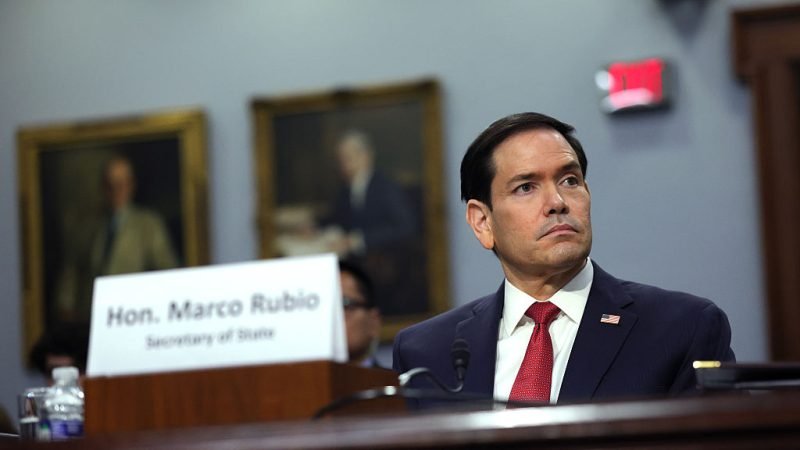


NEW DELHI — US Secretary of State Marco Rubio‘s visit to India has ruffled feathers in New Delhi, after it emerged that the top American diplomat would skip the national capital entirely — and the US ambassador said Washington “expected” India’s foreign minister to travel to Mumbai to meet him. Rubio, who is visiting India from October 18 to 22 after a trip to Samarkand, Uzbekistan, will hold talks with External Affairs Minister S. Jaishankar in Mumbai on Monday and then visit an oil refinery in Jamnagar, Gujarat.
What should have been a routine diplomatic engagement has become a political flashpoint. Speaking at the Bloomberg New Economy Forum in New Delhi on Thursday, US Ambassador to India Sergio Gor said Rubio would meet Indian government officials in Mumbai, and Washington “expected” Jaishankar and others from New Delhi to travel there to see him. Opposition leaders accused the government of allowing India’s top diplomat to be “summoned” on home soil.
Congress general secretary Jairam Ramesh wrote on X that the ambassador’s statement was “quite extraordinary”. Rahul Gandhi, leader of the opposition in the Lok Sabha, wrote that Rubio had “summoned his employee to Mumbai”. Congress MP Pawan Khera went further: “A foreign government summoning India’s External Affairs Minister on Indian soil is a new low, even by the Modi Government’s standards.”
Why Marco Rubio Is Skipping New Delhi
Visiting foreign leaders skipping the national capital is rare, though not unprecedented — in October 2025, then UK Prime Minister Keir Starmer focused his official two-day visit on Bombay, where Prime Minister Narendra Modi travelled to meet him. According to a US State Department statement, Rubio’s India leg will focus on strengthening the strategic partnership, discussing regional and global developments, and exploring opportunities to deepen energy cooperation.
Ministry of External Affairs spokesperson Randhir Jaiswal appeared to confirm the agenda, saying the talks in Mumbai would focus on energy, trade and investment, defence, and critical and emerging technologies. In Jamnagar, Rubio is expected to visit the world’s largest oil refinery, operated by billionaire Mukesh Ambani’s Reliance Industries, and attend a reception hosted by the Ambani family. Gor has said the trip will have a stronger business focus, with Rubio meeting government officials in Mumbai and Reliance representatives in Jamnagar.
Marco Rubio’s Visit Amid Strained Ties
The spat comes as relations between the two countries are strained over trade, tariffs and India’s purchases of Russian oil. This is Rubio’s second visit to India this year, after attending the Quad foreign ministers’ meeting hosted by Jaishankar in New Delhi in May. Earlier in the week, Jaiswal had not confirmed the trip or explained why Rubio was skipping New Delhi, telling reporters the Indian government would announce it “at the appropriate time”, The Hindu newspaper reported.
Ramesh also questioned the MEA’s “silence” on Rubio’s Mumbai meetings and why the US ambassador, rather than the ministry’s official spokesperson, had disclosed Jaishankar’s expected participation. He referred to Operation Sindoor, saying India had first learnt from Rubio on the evening of May 10, 2025, that the operation had been halted.
Marco Rubio’s Itinerary: The Second Visit
This is Rubio’s second visit to India in six months — a frequency that itself underlines how central the relationship has become to Washington’s Indo-Pacific strategy. His first trip, for the Quad foreign ministers’ meeting in May, followed the traditional script with New Delhi at its centre. The contrast with this week’s Mumbai-and-Jamnagar itinerary is what has given the opposition its ammunition.
The larger question, analysts say, is not whether diplomats can meet outside national capitals, but whether the language and circumstances surrounding such meetings reflect mutual respect between sovereign nations. For now, the Mumbai talks will proceed as planned — with energy, trade and defence on the table, and the optics of the visit still very much under scrutiny. Gor’s choice of the word “expected”, and the MEA’s initial reluctance to confirm the schedule, ensured that the substance of the visit has been overshadowed — at least in New Delhi’s political debate — by its staging.