
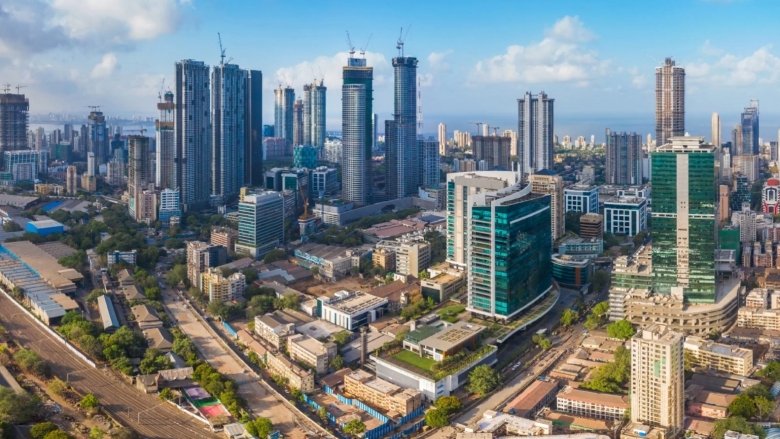


NEW DELHI — India GDP growth is on track for a historic streak, with the country on course to surpass its 2003-2007 record of five consecutive years of 7 per cent or higher growth, according to analysis by Kyunghoon Kim of the Korea Institute for International Economic Policy. Starting 2021, India has recorded a five-year average annual growth rate of 7.83 per cent, marking the second-highest five-year average since 1960, Kim said in a social media post that has been widely shared by economists.
Between 2003 and 2007, the economy had expanded at an average pace of 7.89 per cent. “Sustaining such momentum over several years deserves attention,” Kim said. Following a 5.8 per cent contraction during the pandemic, India’s economy rebounded sharply by 9.7 per cent in 2021 and has sustained growth exceeding 7 per cent in each subsequent year. After a 7.8 per cent expansion in the June quarter, most global institutions have revised their projections to around 7 per cent growth this year, making India the fastest-growing major economy once again.
India GDP Growth Forecasts Keep Rising
The latest round of forecast upgrades has been striking. The International Monetary Fund has raised India’s GDP growth forecast to 7 per cent for 2026-27, up from 6.4 per cent in July, on the back of “stronger-than-expected momentum, supported by resilient domestic demand and robust services activity”, according to its October World Economic Outlook. The IMF also expects another 7 per cent expansion in 2027-28.
The World Bank and the Reserve Bank of India have raised their growth estimates to 7.1 per cent, while the Asian Development Bank has also lifted its projection above 7 per cent. “Many economists, myself included, repeatedly revised forecasts upwards as quarterly GDP figures came in,” Kim noted. The upgrades are significant amid concerns about high global energy prices, geopolitical tensions and slower economic growth in several major economies.
Why India GDP Growth Matters More at This Scale
Kim highlighted that the latest round of growth is on an expanded base. India’s GDP stood at just over $1 trillion in 2007 and is now approaching $4 trillion — meaning a 7 per cent expansion now delivers far larger absolute additions to national output than the same rate did two decades ago. “The same 7 per cent growth rate therefore represents a much larger expansion,” he said.
“It is projected to become the world’s third-largest economy around 2030,” Kim said, though he noted such rankings depend on exchange rates, inflation and the performance of other countries. The assessment echoes S&P Global Ratings, which has forecast that India will become the world’s third-largest economy by 2030 as GDP growth reaches 7 per cent in 2026-27, making it the fastest-growing major economy in the next three years.
While structural and global headwinds remain, Kim noted that maintaining such sustained high-velocity growth across a population of 1.4 billion represents a milestone achievement. “I hope economists at major institutions and I will once again be adding a few decimal points to our forecasts when the next quarterly GDP figures arrive,” he said — a wry nod to how often forecasters have been forced to revise India’s numbers upwards.
The Broader India GDP Growth Story
Kim’s analysis also puts India’s recent performance in historical perspective. The figures suggest that the recent expansion extends well beyond the immediate post-pandemic recovery: between 2003 and 2007, when India attracted global attention as one of the BRIC economies, the five-year average was 7.89 per cent; the 2021-2025 average of 7.83 per cent is the second-highest in data going back to 1960. The earlier boom unfolded on a GDP of just over $1 trillion; today’s growth is on an economy approaching $4 trillion.
The upgrades from the IMF, World Bank, ADB and the OECD have come despite genuine headwinds — elevated global energy prices, geopolitical tensions and sluggish growth in several major economies. That forecasters have nonetheless clustered around or above 7 per cent speaks to the resilience of domestic demand and services activity, which the IMF singled out in its October outlook. S&P Global has similarly projected that India will become the world’s third-largest economy by 2030, calling it the fastest-growing major economy in the next three years and highlighting growth potential in manufacturing, digital and automotive sectors.
The real test, economists say, is whether India can sustain the momentum through structural reforms — developing a strong logistics framework, upskilling workers and increasing female participation in the workforce to realise its demographic dividend. For now, though, the numbers tell a striking story: six straight years at or above 7 per cent would be India’s longest high-growth streak on record.