
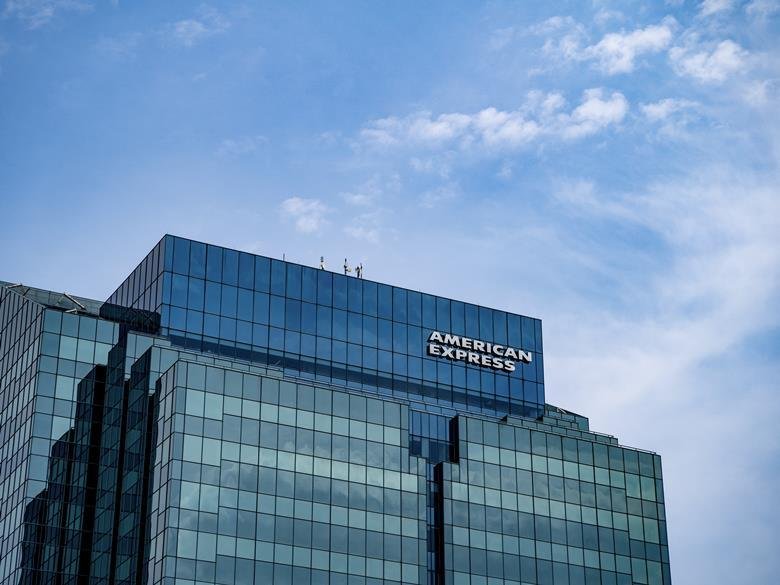


American Express announced Friday it will eliminate 5% of its workforce even as it raises its full-year profit forecast, an unusual pairing of good news and bad that sent the stock down 3.7% and weighed on the Dow.
The card company reported its third-quarter 2026 results before the opening bell, with estimated earnings of $4.53 a share on revenue of about $20.12 billion. The results beat the company’s prior outlook, but investors focused on the cost cutting. The chief executive framed the layoffs as a cost-reduction move aimed at running a leaner operation.
It is one of the largest workforce reductions announced by a major US bank this year. American Express gave no detailed timeline for the cuts in the initial announcement, and it did not break out which divisions would be affected. The company employs tens of thousands of people worldwide, so a 5% cut represents a substantial number of jobs.
The results land at the start of the busiest stretch of earnings season, with one-third of S&P 500 companies reporting next week. That means the numbers will get extra attention from analysts hunting for a read on consumer spending and credit quality across the banking sector.
Why American Express is cutting jobs now
The move reflects pressure on big financial firms to control costs even when revenue holds up. American Express has long traded on premium card fees and spending by affluent customers, but the company is looking to widen its margins. Cutting 5% of the workforce is a blunt way to do it, and it suggests management sees softness ahead that the raised forecast does not fully capture.
The timing matters. Corporate earnings season is at its peak, with one-third of S&P 500 companies scheduled to report next week. American Express is among the first of the big financial names to report, and its cost-cutting decision will be read as a signal. When a company raises its profit forecast and cuts jobs in the same release, investors tend to ask what management knows that the numbers do not yet show.
Market reaction to the American Express announcement
Wall Street did not like the combination. American Express shares dropped 3.7% on Friday, one of the heavier losses in the Dow. The broader market was already under pressure. The Dow Jones Industrial Average fell 652.82 points, or 1.23%, to close at 52,215.16. The S&P 500 lost 0.52%, and the Nasdaq Composite slipped 0.21%.
Rising oil prices weighed on stocks through the session, and investors were cautious ahead of a Federal Reserve policy meeting. In that setting, a bank announcing layoffs alongside a forecast raise read as a warning rather than a reassurance. The stock helped drag the blue-chip index lower, and it finished the day as one of the Dow’s weakest performers.
What the cuts say about the banking sector
The American Express layoffs stand out because they come from strength, not distress. The company raised its profit forecast. Revenue is holding. Yet management still chose to shrink the workforce, which tells you how seriously banks are taking cost discipline right now. It is the kind of decision companies make when they want to protect margins through 2027 without betting that spending growth will do the work.
American Express built its brand on charge cards and travel perks, and its customer base skews toward higher earners who kept spending through the inflation years. That model has insulated the company before. But no card company is immune to a slowdown in travel or corporate spending, and a 5% headcount cut is a hedge against exactly that.
The announcement also feeds a wider debate about what earnings season is really showing. Headline results can look fine while management teams quietly brace for a tougher stretch. The company did both in one morning, and the market rewarded neither.
One-third of the S&P 500 reports next week, and investors will be watching for the same pattern: strong numbers paired with cost cuts. If more companies follow the American Express playbook, the market’s read on this earnings season could darken quickly.