
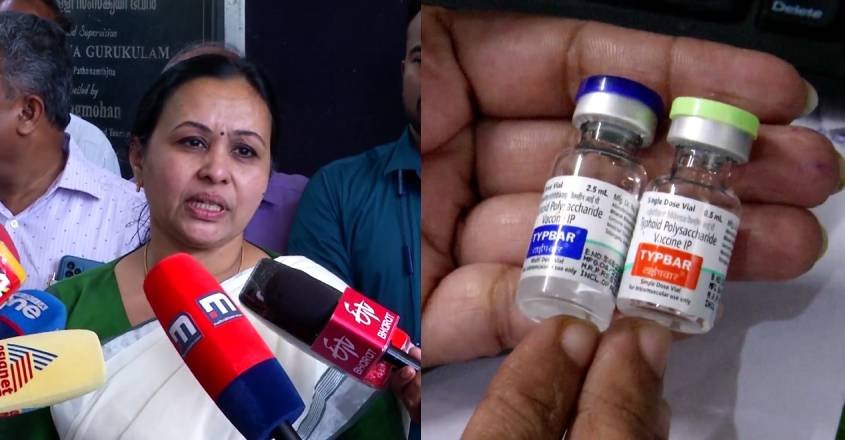


Three former Kerala health ministers have questioned the state government’s decision to supply a generic SMA drug to children with spinal muscular atrophy instead of the branded version, and demanded an investigation into alleged links between the health minister and pharmaceutical companies.
At a joint press conference in Thiruvananthapuram on 22 October 2026, P.K. Sreemathy, K.K. Shailaja and Veena George challenged the UDF government’s switch to Natco Pharma’s Natsmart, a generic SMA drug, in place of Roche’s branded Evrysdi for children covered under the state’s KARE scheme.
Sreemathy demanded an investigation into alleged links between Health Minister K. Muraleedharan and pharmaceutical companies. The former ministers argued that ministers have no direct role in drug procurement, and that norms governing contact between ministers and pharma companies were disregarded in the generic SMA drug decision.
Why the generic SMA drug switch is disputed
The dispute turns on cost, safety and process. The government cites the price gap: Natsmart costs about Rs 15,900 per bottle, or Rs 9,540 to the government according to Natco’s affidavit before the Kerala High Court, against more than Rs 6 lakh per bottle for Roche’s Evrysdi. With 109 children under the KARE scheme needing an estimated 2,133 bottles a year, the difference runs into crores of rupees.
The former ministers flagged reports that some of the supplied bottles were labelled “For Clinical Trials Only”, raising safety and regulatory concerns about what was actually given to children. A clinical-trial label on a medicine dispensed as treatment would breach basic drug-safety norms, and the trio wants to know how those bottles entered the supply chain.
The allegations go beyond the drug itself. The three former ministers accused the government of corporatising the public health sector through a new healthy-ageing task force, and The Hindu reported that they warned of agitation if public health was undermined.
The government’s defence of the generic SMA drug
SAT Hospital superintendent R.S. Riyas rejected the allegations. He said Natco’s Rs 25 lakh contribution was corporate social responsibility funding for renovating Ward 14, an isolation ward, and had nothing to do with the generic SMA drug procurement.
Riyas also addressed the minister’s meeting with Natco representatives in early August, saying it was only to hand over a certificate. On that account, there was no negotiation and no deal, just a ceremonial handover.
The government’s broader argument is arithmetic. At Rs 9,540 a bottle to the state against more than Rs 6 lakh for the branded drug, the generic SMA drug lets the KARE scheme treat far more children with the money available. For a state programme covering 109 children who need the medicine for life, the branded price would break the budget.
What is at stake for the 109 children
For the children under the KARE scheme, the generic SMA drug question is not abstract: it is which bottle the hospital hands their parents, and whether that bottle is what the label claims.
The “For Clinical Trials Only” allegation is the sharpest part of the dispute because it touches the medicine itself rather than the politics around it. If bottles meant for trials reached children, regulators would need to explain how, and the health department would face questions about its quality checks.
Neither side disputes that the children need the drug or that the branded version is far more expensive. The fight is over whether the cheaper generic SMA drug was chosen through a clean process and whether what reached the children met the required standards.
The political battle behind the drug row
The press conference brought together three former health ministers from successive governments, a rare show of unity. Sreemathy, Shailaja and George each ran the health department in their time.
Sreemathy’s allegation is that the norms keeping ministers at arm’s length from drug companies were set aside, and she wants an investigation to establish what happened.
The government has treated the row as a political attack on a cost-saving measure, and it has shown no sign of ordering the probe the former ministers demand.
What happens next
The Natco affidavit before the Kerala High Court, which put the government price at Rs 9,540 per bottle, gives the courts a window into the dispute. Any judicial scrutiny of the generic SMA drug procurement is likely to focus on the labelling allegation first, since that concerns patient safety directly.
The former ministers’ warning of agitation adds pressure of a different kind. A public campaign over medicines for seriously ill children would be difficult for any government to ignore.
For the families of the 109 children, the politics are secondary. What matters is that the generic SMA drug reaching them is safe, properly labelled and supplied without interruption, and that the dispute over how it was chosen does not disrupt their children’s treatment.