
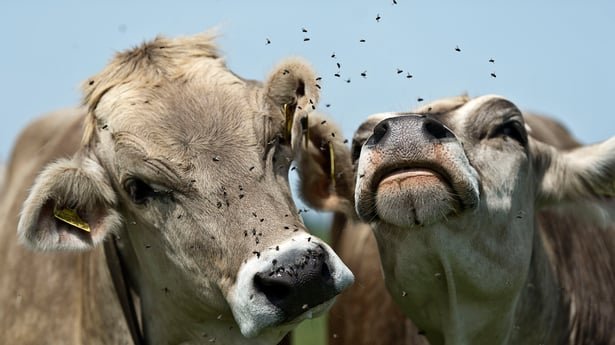


The first reported human infection with Shamonda virus, identified in a severely immunocompromised patient in France who died in early October 2026, has put India’s vast livestock sector under a surveillance lens, with experts calling for stronger veterinary monitoring and a “One Health” approach.
The infection route, suspected to be a bite from an infected midge, is still under investigation. The French case marks the first time the Shamonda virus has been documented in a human being, and it has prompted experts in India to ask whether the country’s surveillance systems would catch something similar.
Experts cited by ETV Bharat have called for stronger veterinary monitoring in India and a “One Health” approach that links human, animal and environmental health. There is currently no established evidence of a Shamonda virus outbreak in India or of sustained human-to-human transmission of the virus.
What the Shamonda virus is
The Shamonda virus is an orthobunyavirus of the Simbu serogroup, first isolated from Nigerian cattle in 1965. It spreads through biting Culicoides midges, tiny insects that feed on livestock, and it has been known for decades as an animal pathogen rather than a human one.
In animals, the Shamonda virus may cause fever, diarrhoea, reduced milk production and reproductive complications. For dairy farmers, a drop in milk yield or a wave of reproductive failures can wipe out a season’s income.
The French case changes the risk picture because it shows the Shamonda virus can infect humans, at least in someone whose immune system was severely compromised. Researchers will now be watching for further human cases and for evidence of how the Shamonda virus behaves outside its usual animal hosts.
Why India’s livestock numbers raise the stakes
India holds the world’s largest livestock population, and the numbers explain why any midge-borne animal virus draws attention here. The 20th Livestock Census of 2019 counted about 535.8 million livestock in the country: 192.5 million cattle, 109.9 million buffaloes, 74.3 million sheep and 148.9 million goats.
That density of animals creates countless points of contact between livestock, biting insects and people. A virus moving between midges and cattle in India would have an enormous population of potential hosts, which is why experts want monitoring in place before a problem appears.
Millions of rural households depend on milk income, and an animal disease that cuts milk production or causes reproductive losses hits family budgets directly.
What Indian experts are asking for
Dr Tamorish Kole, former president of the Asian Society for Emergency Medicine, told ETV Bharat that the French case underlines the need to investigate unusual disease patterns in animals and the links between livestock infections, insect vectors and human illness. His point is that the warning signs usually appear in animals first.
Dr Suneela Garg, a member of the Union Health Ministry’s advisory committee, said closer coordination among veterinary services, public-health authorities, diagnostic laboratories and vector-monitoring agencies could strengthen early detection.
The “One Health” approach the experts invoke treats human health, animal health and the environment as a single system. In practice, that means a fever outbreak in cattle and a cluster of unexplained fevers in people in the same district should be investigated together, not by separate departments that never compare notes.
How Shamonda virus surveillance could work
Stronger veterinary monitoring would start with the basics: testing animals that show the symptoms associated with the Shamonda virus, tracking midge populations in livestock-heavy districts, and making sure diagnostic laboratories can identify an orthobunyavirus if they find one.
Environmental surveillance, the same kind of sewage and vector testing used for other diseases, could be extended to watch for the virus’s genetic traces.
India already runs extensive animal-disease surveillance for threats like foot-and-mouth disease and lumpy skin disease. Adding midge-borne viruses to the watch list would extend existing machinery rather than building a new programme.
What is known and what is not
The confirmed facts are narrow. One human case, in France, in a severely immunocompromised patient who died in early October 2026. A suspected midge bite as the route of infection, still unconfirmed. A virus known since 1965 as a cattle pathogen. No established evidence of an outbreak in India, and no evidence of sustained transmission between people.
What is not known is whether the French case was a one-off event in a uniquely vulnerable patient or the first visible sign of a virus testing new hosts. That uncertainty is exactly what surveillance is for: to replace speculation with data.
For now, the message from experts is vigilance without alarm. India’s livestock sector is too large and too important to livelihoods to leave unmonitored, and the French case is a reminder that the Shamonda virus does not always stay in the animal hosts where it was first found.