
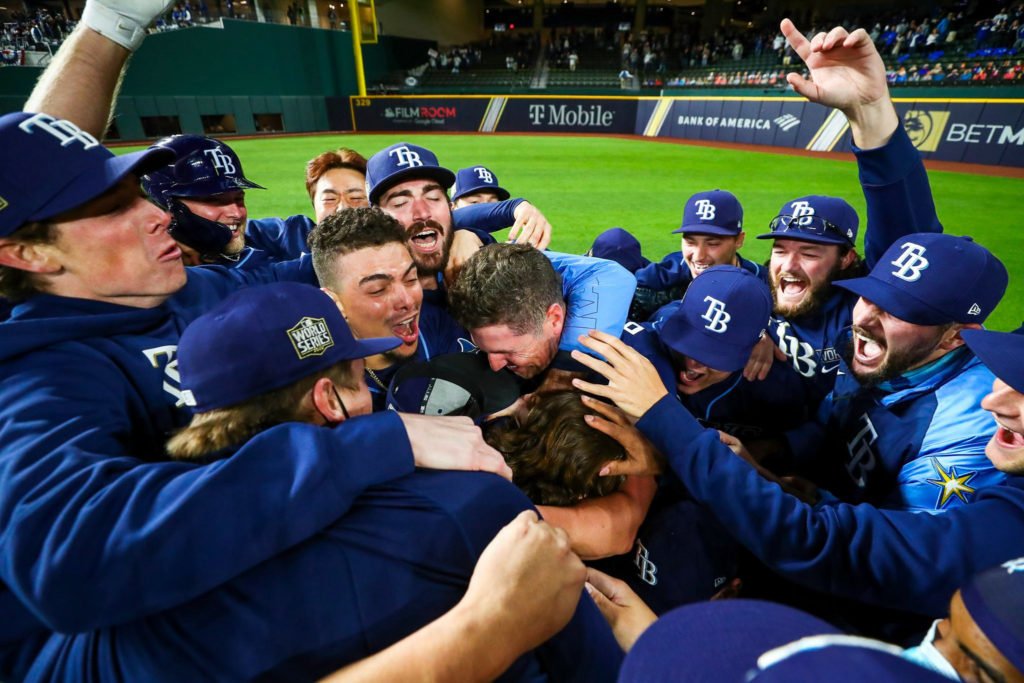


Rob Manfred used baseball’s biggest stage to press his case. The MLB commissioner said the Rays-Brewers World Series is good for the game, but he insisted a salary cap is still needed, even as the sport stares down a possible lockout.
Why the salary cap is back on the table
Manfred spoke before the Fall Classic, a matchup that has drawn more than one million searches in the United States. The pairing of Tampa Bay and Milwaukee put two smaller-market clubs in the spotlight, and the commissioner framed that as proof of competitive balance. Then he returned to his long-running argument: a salary cap would protect that balance and narrow payroll gaps.
The salary cap debate is not new in baseball, but the timing has raised the stakes. The current collective bargaining agreement is winding down, and owners and players are bracing for the next labor fight. Manfred has pushed the salary cap as the centerpiece of that fight, and the 2026 postseason has given him a visible platform to say so.
Two small markets in the spotlight
The Rays and the Brewers are not the sport’s biggest spenders, and their run to the World Series has drawn intense interest. Analysts at The Athletic ran the numbers on MLB’s competitive balance problem, asking whether the current system truly spreads contention around the league. The Series itself answers part of that question, but Manfred argued the answer would be stronger with a salary cap in place.
Commissioners have long cited small-market success as proof the system works. Manfred went further, saying this World Series shows the game is healthy while payroll gaps still threaten that health. The message was aimed as much at the players’ union as at the public.
The framing was deliberate. By praising the matchup first, Manfred made it harder to dismiss what came next. The commissioner gets to celebrate the product while arguing the system behind it needs fixing. It is a familiar move in labor disputes: compliment the game, then point at the books.
The lockout threat ahead
The Associated Press reported that the World Series could be baseball’s last games for a while if a lockout follows. The current agreement expires after the season, and early signals point to a long standoff. A work stoppage would freeze free agency, trades and the winter calendar.
Owners have historically sought cost controls, and a salary cap would be the most direct version of that. The players’ union has opposed caps in past negotiations, preferring a luxury tax system that punishes only the highest payrolls. That disagreement sat at the center of previous labor battles and now looms over the next one.
For now, the games go on. The World Series will crown a champion, and the 1M+ searches show the country is watching. But the AP’s warning hangs over the celebration: these could be baseball’s last games for a while. When the final out is recorded, the conversation shifts from the field to the negotiating table.
What a salary cap would change
A salary cap would set a firm ceiling on payrolls, unlike the current luxury tax, which acts as a soft limit. Supporters say it would narrow the gap between the richest and poorest clubs. Opponents say it would not fix revenue sharing or guarantee that owners spend up to the limit.
Other leagues pair caps with floors that force teams to spend a minimum. Baseball’s luxury tax has no floor, and several clubs have drawn criticism for keeping payrolls low while collecting revenue-sharing checks. A salary cap debate that includes a floor would address that complaint, though neither side has proposed terms yet.
The 2026 postseason will be remembered for the baseball, but Manfred is already writing the next chapter’s first lines. Labor has become the sport’s second season, played in press conferences and statements. This October, the commissioner made sure it started early.
Manfred’s comments framed labor as the dominant story of the 2026 postseason. The Rays and Brewers will settle the championship on the field. What comes after, from negotiations to a possible lockout, may shape the sport longer than the winner’s parade.