
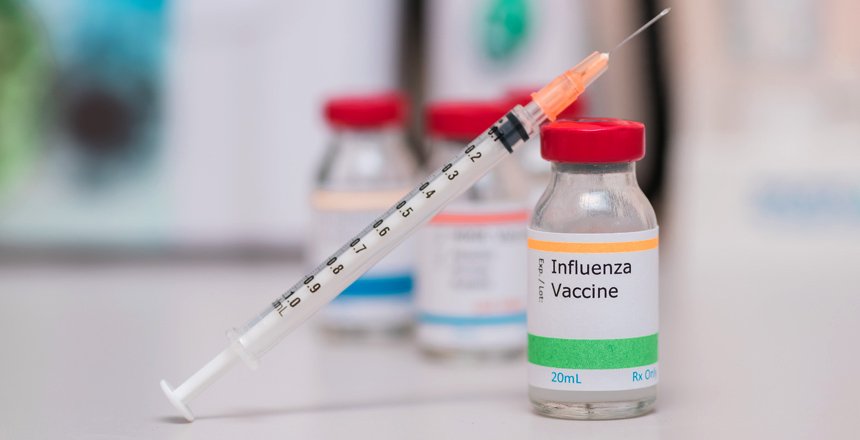


A mutated H1N1 flu strain has caught the attention of researchers ahead of this year’s flu season, raising early questions about how well current vaccines will protect younger people. Flu activity in the United States remained low but was beginning to rise, with 3.4 percent of clinical-lab specimens testing positive for influenza in the week ending Sept 26, 2026.
Preliminary laboratory testing suggests the current vaccine should still recognize the variant. Blood-sample tests, however, indicate that teens and young adults may have less protection against the mutated H1N1 flu strain than older age groups. Northeastern public health expert Samuel Scarpino has been among those tracking the development.
The explanation lies in how immune memory works. Experts say the immune system is shaped by a person’s first childhood exposures to flu, and younger people’s immunity tends to focus on one spot of the virus. This mutation hits that very spot, which could leave younger age groups with weaker defenses against the H1N1 flu strain while older people’s broader immune history protects them better.
Researchers note that a single dominant strain like the mutated H1N1 flu can drive large outbreaks on its own. Which strain takes hold in a given season shapes how many people get sick and how hard the season hits hospitals.
Why the mutated H1N1 flu worries researchers
Last season was severe, driven by an H3N2 variant that partially evaded immunity built up from vaccines and past infections. The vaccine that year was 30 to 40 percent effective. That number sounds low, but researchers stress that even modestly effective vaccines prevent substantial numbers of severe cases and deaths across a season.
This year’s vaccine was updated to better match last season’s H3N2 variant, a change meant to close the gap that the escape variant opened. The worry now is whether the new H1N1 flu mutation could create a similar problem for the vaccinated population, especially the young.
Scientists also caution that laboratory findings are an early signal, not a verdict. Public health officials will not have effectiveness data for this season until midwinter, when enough infections have occurred to measure how the vaccine performed in the real world.
How immune memory shapes the risk
The concept at the center of the discussion is immune imprinting. The first flu strains a person meets in childhood set the template for how their immune system responds to flu for the rest of their life. That template can be a strength or a weakness depending on how closely later strains match it.
For older adults, a lifetime of exposure to different H1N1 strains means their immune systems recognize several versions of the virus. A mutation at one spot matters less when the body has other places to attack. For teens and young adults, whose immune memory is built around fewer and more recent strains, the mutation’s placement is more consequential.
This asymmetry is why blood-sample tests flagged the younger groups first. The tests measure how well antibodies from vaccinated people neutralize the new variant in the lab, and the gap showed up in samples from younger donors.
What the H1N1 flu data means for this season
The mutated H1N1 flu strain does not change the official guidance. Federal health officials continue to recommend that everyone aged six months and older get a flu shot each season, and the sooner the better once vaccines are available.
What it does change is the forecast. If the variant keeps spreading, the season’s burden could land harder on school-age children, college students and young workers than on older adults, reversing the usual pattern in which seniors take the worst of flu season.
Hospitals and clinics will watch the strain’s share of infections through the fall. Surveillance systems track which variants are circulating week by week, and that data feeds into decisions about next year’s vaccine composition. Public health officials will publish the first effectiveness estimates for this season around midwinter.