
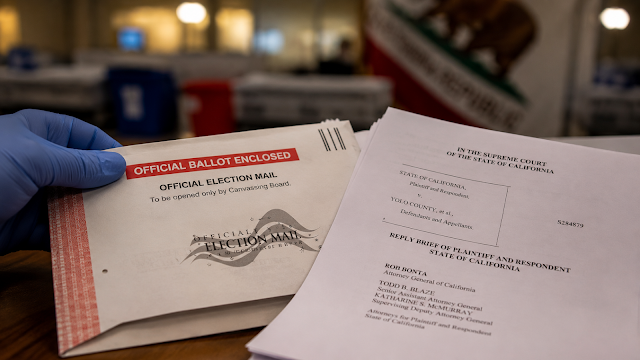


California ballots from more than 20,000 registered voters will keep being counted after a federal appeals court rejected a Trump administration bid to block them on Friday, 30 October. The 2-1 decision from the Ninth Circuit Court of Appeals denied the Justice Department request for an order stopping the state from counting mail ballots from voters the department alleges may not be citizens, while the case continues. The ruling came four days before the midterm elections on Tuesday, 3 November.
Judges Mark Bennett and Gabriel Sanchez formed the majority. Bennett was appointed by President Donald Trump during his first term, and Sanchez was appointed by President Joe Biden. They wrote that blocking the count would risk taking votes away from eligible voters. Judge Patrick Bumatay dissented, saying the request would have given the state or the federal government time to verify citizenship without cancelling any votes. The Justice Department is expected to appeal to the United States Supreme Court, which could set up a ruling days before the election.
What the California court majority decided
The majority pointed to a lower court finding that the Trump administration list may not be fully reliable. “There is a material risk that granting the United States its requested relief would result in the disenfranchisement,” Bennett and Sanchez wrote. They also wrote: “We decline the United States invitation to contravene the Elections Clause by undermining the Constitution’s plain text.” The majority said the request likely violates the National Voter Registration Act, which bars systemic voter purges less than 90 days before an election.
The court also accepted the district court finding that there is no workable way to pick out and set aside the ballots of specific people without risking serious harm to the whole counting system. The majority quoted that finding, which warned of potentially catastrophic effects on the entire system if officials tried to separate those ballots while voting was already well under way. California officials had argued that the federal data were suspect and that meeting the demand would risk disenfranchising eligible voters.
How the California ballot dispute began
Federal immigration agencies told California officials in July that they had identified thousands of registered voters believed to be noncitizens. The Justice Department sent the state a list of more than 20,000 suspected noncitizens on 13 October and demanded that officials verify citizenship within 48 hours or set the ballots aside until eligibility could be established. California officials refused, and the Justice Department sued the state and Los Angeles County on 15 October, asking a federal judge to order the state to separate those ballots and not count them until citizenship was verified.
United States District Judge David Carter heard the case in Los Angeles and denied the request for a temporary restraining order on Wednesday, 28 October. Carter wrote that the demand would “wreak havoc” on the election and potentially disenfranchise thousands of lawfully registered voters. He found that the Justice Department was unlikely to succeed, saying the government likely lacks standing and a cause of action, and that the federal criminal ban on noncitizen voting does not give the department authority to override state ballot rules. He also rejected the claim of an emergency, writing that the eleventh-hour predicament was solely due to its own neglect.
Earlier California rulings and what happens next
Friday was the third straight court loss for the administration in this dispute. The Ninth Circuit had already rejected an earlier emergency appeal on Monday, 26 October, by 2-1, because Carter had yet to rule, so the appeal was premature. Two judges in that earlier majority also questioned the legal authority for the intervention and warned that the restrictions could prevent eligible citizens from voting and disrupt counting already under way. Carter then ruled on Wednesday, and the Justice Department appealed again, leading to the Friday decision.
Voting in California was already well advanced when the courts ruled. More than 3 million ballots had been cast statewide, including more than 500,000 in Los Angeles County, according to figures cited in the litigation. Los Angeles County alone had processed more than 331,000 mail ballots by 21 October. California is a universal vote-by-mail state, and it has several competitive congressional races this cycle, with control of the House of Representatives at stake nationally.
The administration has also pressed a similar demand in Washington state, asking officials there to withhold ballots from more than 400 people accused of being noncitizens registered to vote. Attorney General Todd Blanche has threatened similar lawsuits in other states. California officials said they will continue counting ballots under state procedures while the case moves forward, and a Justice Department appeal to the Supreme Court is expected immediately.