
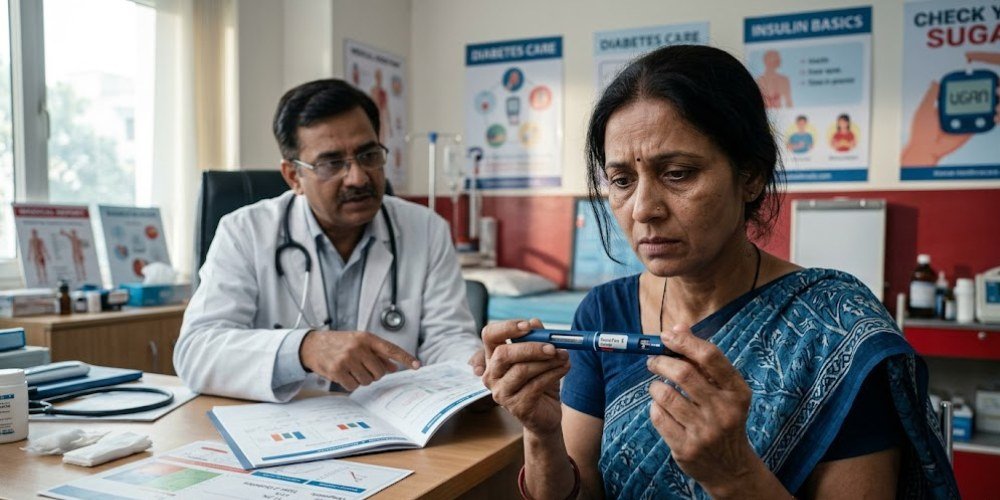


Physicians in Kolkata have asked the central government to bring in an insulin price cap and fund zero-cost insulin packages for low-income families, warning that rising out-of-pocket costs are pushing people with diabetes to ration doses or stop treatment. The call, reported in the Kolkata edition of The Times of India on 31 October 2026, came from senior clinicians who said the gap between older vials and modern pens has left the cheapest option hard to use and the easiest hard to afford.
India is home to tens of millions of people living with diabetes, and most health spending comes straight from household savings rather than insurance. For people who need insulin every day, a missed dose is not a minor lapse. Without steady doses, patients face diabetic ketoacidosis, a metabolic emergency in which toxic acids build up in the blood. Doctors in Kolkata said that reality is what makes an insulin price cap urgent, since a treatment people cannot afford is a treatment they cannot take.
Dr Debasis Basu, a diabetologist and chairman of the Metta Dana Foundation in Kolkata, has argued for a state-backed, zero-cost insulin care package for every patient with established clinical need, plus an insulin price cap on pharmacy prices. Dr Apurba Ghosh, executive director of the Institute of Child Health in Kolkata, spoke about parents of children who need several injections a day and who face repeated choices between household needs and the supplies their child needs to stay safe.
Why an insulin price cap is now on the table
Insulin is a hormone made by the pancreas that lets blood sugar enter cells and produce energy. In type 1 diabetes, the immune system attacks the cells that make insulin, leaving the body with little or none of the hormone, so daily external insulin is needed to stay alive. Many people with advanced type 2 diabetes also need insulin once diet, exercise and oral medicines can no longer keep blood sugar in a safe range. Demand is steady, daily and lifelong for this group, which is why an insulin price cap matters to them.
The clinicians want two things from regulators. The first is an insulin price cap covering pens, cartridges and older vials. The second is a zero-cost package for low-income families, so that people who qualify do not have to pay at the pharmacy counter at all. Supporters say caps alone will not help a family with no spare income, while subsidies alone will not stop prices climbing for everyone else.
Vials, pens and the price gap
A large part of the insulin price cap debate comes down to how insulin reaches the patient. Glass vials and syringes are the least expensive pharmacy option. The patient draws liquid from a vial into a syringe and checks the marks by eye, which calls for steady hands and a clean place to prepare the dose. Insulin pens and cartridges work differently. The user dials an exact dose on a wheel and presses a button, which eases dosing for children and older adults.
That convenience carries a steep premium, and the figures behind the insulin price cap debate show how large it is. A multi-country study published in BMJ Global Health, covering 13 low- and middle-income nations including India, found median patient prices of about US$9 for a standard 10-millilitre vial of human insulin, while newer analogue formulations reached US$34 to US$44. The same study found a low-income worker needed four working days of wages for one 10-millilitre vial of human insulin, and more than seven days for the same volume of analogue insulin.
A separate observational study of private pharmacies in Delhi, also published in BMJ Global Health, found analogue pens and cartridges priced five to nine times higher than standard human insulin vials. Basic human insulin had an average retail availability of just 44.4 percent, while analogue formulations were stocked at only 13.1 percent. Dr KK Gangopadhyay, a senior endocrinologist at Peerless Hospital in Kolkata, said insulin costs vary widely with formulation and device, and larger daily doses for many Indian adults can quickly overwhelm a monthly household budget.
Getting an insulin price cap right
Health economists cited in the coverage cautioned that a blanket ceiling on a complex biologic is not simple to set, and an insulin price cap set too low could do harm of its own. Unlike a simple chemical pill such as paracetamol, insulin is made through living cell cultures using recombinant DNA technology, which needs cold-chain refrigeration and sterile facilities. If ceilings sit below realistic production and distribution margins, companies may cut supply or pull advanced formulations from the market, creating artificial shortages. Regulators also cannot treat human insulin and analogue insulin as interchangeable, since the two differ in absorption rates, peak windows and duration of action.