
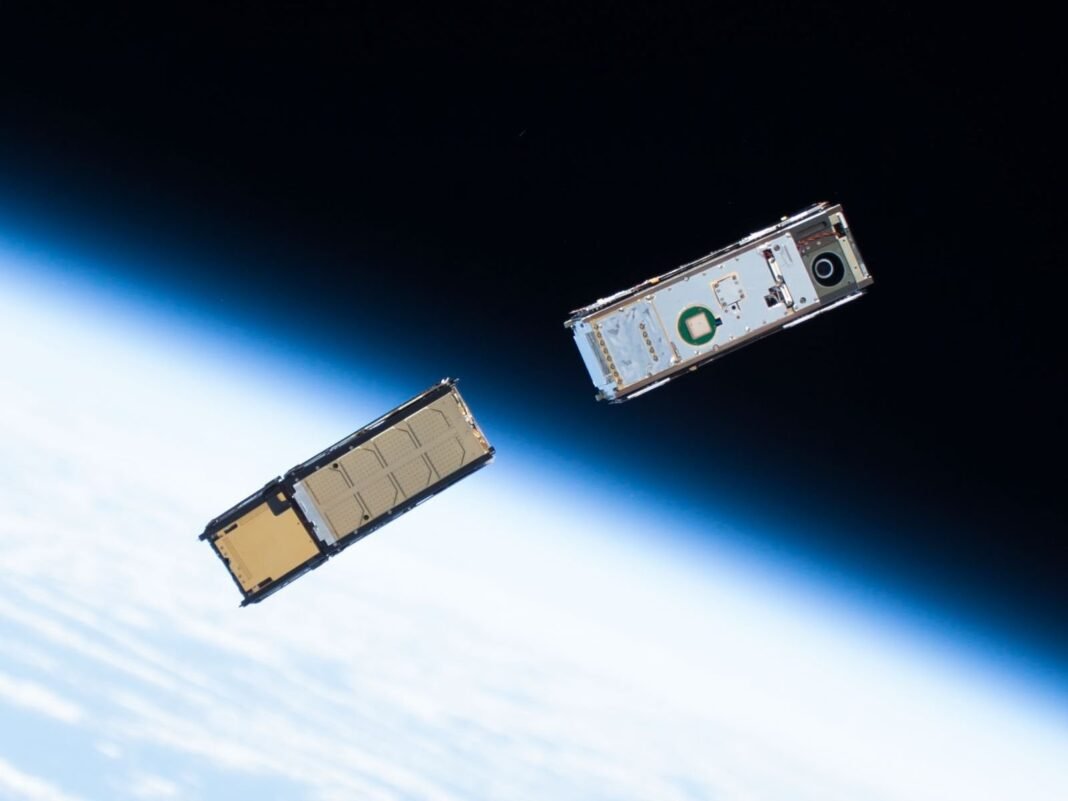


Google has run a generative artificial intelligence model on a TPU in orbit and sent the answer back to Earth, in a test of Project Suncatcher, its research effort into AI computation in space. Google announced on October 30 that it had powered up the TPU aboard a prototype satellite and run Gemma 4 on it. The model wrote a haiku about space, and the satellite transmitted the text to a ground station. Google described the result as the first AI response in orbit from a data center class TPU.
The satellite launched on October 1 aboard a SpaceX Falcon 9 and carries four TPUs. Only one TPU can run at a time, each session lasts about 15 to 20 minutes, and the satellite can generate about 1 kilowatt of power at most. Google itself called the test a “Hello World” moment. It confirmed basic operation for Suncatcher, but it did not show that a full space data center can run for years or pay for itself.
What Suncatcher is trying to test
Project Suncatcher asks whether AI computation can move beyond data centers on Earth. Power use by AI data centers is rising fast, and Google envisions placing AI chips in sunlit orbits, with satellites linked for larger computation. Turning sunlight into cheap AI computation involves launch costs, communications links, cooling equipment, and protection against radiation.
Google plans to evaluate the prototype under thermal stress and radiation exposure, and it aims to run an experiment with two interconnected satellites in 2027. The prototype is expected to operate for about one year, which alone cannot prove five years of stable operation.
Radiation and heat facing Suncatcher
Radiation and heat stand out as the main technical problems for Suncatcher hardware. Data centers on Earth use air or liquid to carry heat away from chips. In space, air cooling is not available, so heat must leave through conduction and radiation, and every kilogram of heat rejection hardware must be launched.
High energy particles in space can also cause chips to malfunction or degrade over time. On the ground, Google irradiated its sixth generation TPU, Trillium, with a 67 MeV proton beam to test radiation tolerance. The expected cumulative dose over five years is 750 rad(Si). The high bandwidth memory in the test started showing anomalies only after exceeding 2,000 rad(Si), about 2.7 times the expected value. Sudden bit flips from radiation particles are a separate problem from slow degradation, and silent data corruption, where results are corrupted without warning, is another. Google research estimates silent data corruption at roughly once per 3 million inferences. That rate may be acceptable for inference, but it could cause trouble for large scale AI training.
Why a broken chip in space is hard to fix
A failed part in a ground data center can be shut down and replaced, while a failed part in orbit cannot. Bit errors in memory can be corrected with error correcting code, but that does not repair a permanently failed memory channel or TPU circuit. A space system therefore needs a way to detect and isolate a faulty part and switch work to spare circuits, ideally automatically. Reporting on the prototype did not confirm how much of that recovery is already built into Suncatcher.
For Suncatcher, system availability matters as much as one chip’s life. If a shared power supply or communications unit failed, the whole satellite could become unusable even if the TPUs were fine.
How Suncatcher compares with rival timelines
Travis Beals, who leads Project Suncatcher at Google, told NPR on October 1, 2026 that he does not expect space data centers to become cheaper than terrestrial ones within five years. SpaceX chief executive Elon Musk offered a different view when SpaceX announced its acquisition of xAI in February 2026, saying space would become the cheapest place for AI compute within two to three years. Google research considers a scenario in which launch prices fall to about 200 dollars per kilogram around 2035, assuming about 1,800 Starship launches over ten years, or 180 per year, each carrying 200 tons. Starship’s best year so far was 2025, with five launches.
AI chips also change fast. A TPU that survives five years in space without failure could still lose economic ground if new chips on Earth improve power efficiency sharply in the same period. Ground servers can be upgraded one by one. With uncrewed satellites today, swapping only the TPUs or memory is not easy, and a new satellite may be needed instead. Limited uses, such as processing satellite imagery with AI where it is captured, may reach commercial use sooner. Moving terrestrial AI data centers into space is a separate and larger task, and the Suncatcher test is only the first step on that road.