
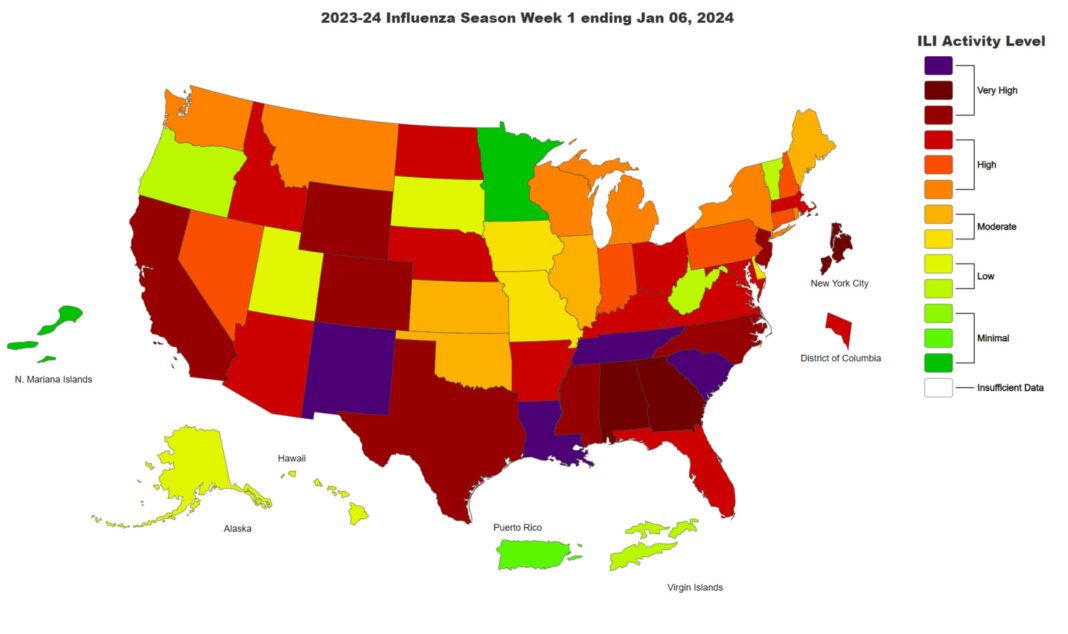


Flu deaths in the United States reached 47 in a single recent reporting week, according to reports published on October 30, 2026. The figure came as influenza activity rose earlier than usual, with cases climbing well before the winter months when flu normally peaks. Reports said the timing, rather than the total alone, drew attention from state health departments and federal surveillance teams.
The typical flu season in the United States builds through autumn and reaches its highest levels between December and February, the Centers for Disease Control and Prevention (CDC) notes. This year, cases began rising in late August and early September, according to the same reporting. That early start left health departments watching weekly hospital and laboratory figures more closely than they usually do at this point in autumn.
Flu deaths reported earlier than last year
Connecticut reported six flu deaths since late September, state health officials said. All six people were older than 55. The state said its first death this season came about a month earlier than the first death reported last season. At the same point last year, Connecticut had not recorded a flu death, according to the state announcement reported on October 28.
The state did not release the counties where the flu deaths occurred, the type of flu involved, or whether the people who died had been vaccinated.
Flu deaths and the H1N1 strain
H1N1, the influenza A strain linked to the 2009 swine flu pandemic, accounted for the majority of reported influenza cases in the latest available data for the week ending October 10, 2026, federal surveillance information showed. The strain has circulated as part of seasonal influenza since 2009 and continues to change through genetic shifts.
Researchers are watching those changes because some newer mutations may help the virus partly evade existing immunity in communities. Andrew Pekosz, a professor at the Johns Hopkins Bloomberg School of Public Health, said the current vaccine appears capable of recognising the circulating H1N1 variant despite some genetic changes.
In the week after October 10, close to 5,000 people were hospitalised with lab-confirmed flu across the country, according to reports of CDC figures. A Johns Hopkins vaccine researcher said that was the highest early season hospitalisation rate for mid-October since the 2010-11 season, according to the same reporting. The CDC said in its report for the week ending October 17 that early season influenza activity was higher than typically observed at this time of year.
What hospitals and laboratories are seeing
For the week ending October 10, 5 percent of flu tests at clinical laboratories came back positive, up from 3.9 percent the week before, reports of CDC data said. At the same point last year, positivity was under 1 percent. The rise in positive tests came alongside higher hospital admissions and a growing number of state reports of flu deaths.
Reports also identified two child flu deaths in San Diego and another in Colorado. In Colorado, positive flu tests were running about six times higher than at the same point a year ago, according to reporting of University of California Health figures. The CDC later received its first report of a child dying from flu in the 2026-27 season, a death that occurred in the week ending October 10 and was linked to H1N1, according to its Week 42 FluView report. The agency did not release the child’s age, state, or vaccination status.
The CDC cautioned that an early increase in activity does not necessarily lead to a higher seasonal peak or greater overall severity. Weekly figures can move as delayed reports arrive, and a publication date for a flu deaths report is not the same as the date a person became ill or died.
Vaccination advice for the weeks ahead
The seasonal influenza vaccine targets H1N1, H3N2 and a B/Victoria lineage strain. Public health guidance says the immune system generally takes about two weeks after vaccination to develop a protective response, so vaccination sooner rather than later gives protection time to build before holiday gatherings, travel and indoor activities increase contact between people.
Older adults, young children, pregnant people and people with certain underlying health conditions face a greater risk of serious flu complications, according to CDC guidance reported in the coverage. Those groups are advised to seek advice from health care professionals when they develop symptoms. Antiviral treatments may be appropriate in certain circumstances, particularly when started early, according to the same guidance.
Across a full year, the CDC estimates seasonal influenza causes between 9.4 million and 51 million illnesses in the United States and is linked to about 6,300 to 52,000 flu deaths each year. Health departments will keep publishing weekly updates on cases, hospital admissions and flu deaths as the season develops.