


Britannia profit beat market estimates in the September quarter as steady demand for packaged foods and higher prices offset rising costs. Consolidated net profit rose 10.8 per cent to Rs 726 crore for the three months ended 30 September, from Rs 655 crore a year earlier. Revenue from operations climbed 15.6 per cent to Rs 5,598 crore, from Rs 4,841 crore in the same quarter last year. The results, reported on 5 November, sent the shares up 5 per cent to Rs 6,186 in early trade on Thursday.
Britannia profit rises on volume growth
Volume did most of the work behind the Britannia profit rise. Britannia sold 13 per cent more by volume than a year earlier, which means the growth came from shoppers buying more packets rather than from price rises alone. The company said Rusk, Wafers and Croissants all grew at double digit rates, and that growth was spread across sales channels and its main state markets. The biscuit business grew with the bakery and adjacent ranges, while the international business added to the total.
The Britannia profit beat was clearest at the operating level. Earnings before interest, tax, depreciation and amortisation rose to Rs 1,022 crore from Rs 955 crore a year earlier. The CNBC-TV18 poll had put net profit at Rs 585 crore and operating profit at Rs 846 crore, so the reported numbers came in well ahead on both counts. Margins told a different part of the story, and the company will need to explain how it plans to protect them in the quarters ahead.
Britannia profit and the cost squeeze
Britannia profit rose even as margins narrowed. The operating margin fell to 18.25 per cent from 19.72 per cent a year earlier, a drop of 147 basis points. Wheat, sugar, cocoa and palm oil all feed into the Britannia cost base, and the company has limited room to keep raising prices in a category where shoppers switch to cheaper brands quickly. Gross margin held almost flat at 41.7 per cent, against 41.5 per cent last year, which shows the pressure sat further down the income statement.
The first half of the financial year shows the same pattern. Consolidated sales for the six months ended 30 September reached Rs 10,506 crore, up 13.1 per cent on the year, with volume growth of 11 per cent. Net profit for the half year was Rs 1,319 crore, up 12.3 per cent. Sequentially, the September quarter was stronger than the June quarter, with sales up 12 per cent and profit up 22 per cent on the previous three months.
What comes next for Britannia profit
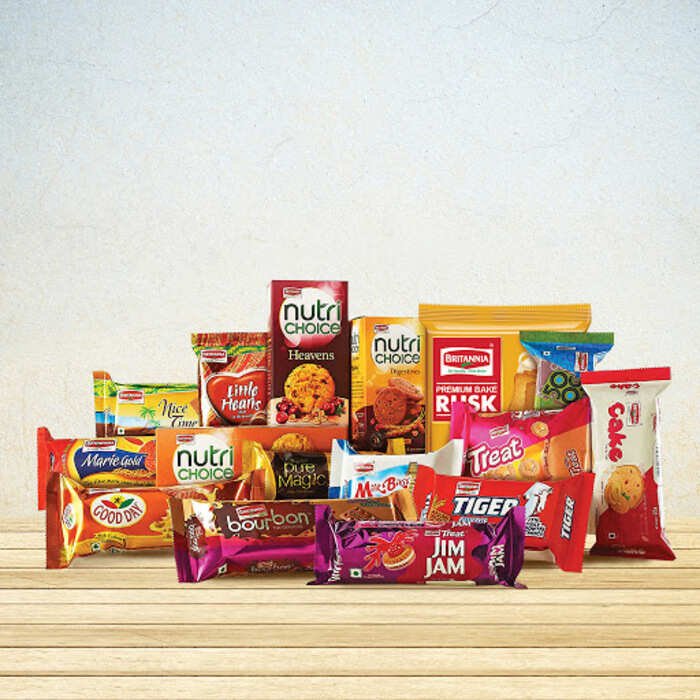
The backdrop for packaged food makers has improved, and that backdrop will shape Britannia profit in the quarters ahead. Industry data put FMCG value growth in India at 8.6 per cent in the September quarter, the fastest pace in six quarters, with double digit growth in rural markets and a late recovery in towns and cities. Britannia, the largest biscuit maker in India, sells through Good Day, Marie Gold, NutriChoice, Bourbon, 50-50, Little Hearts and Winkin Cow, and its reach across shops in small towns gives it a direct read on rural demand.
Costs remain the watchpoint for Britannia profit. The company flagged inflationary pressure on raw materials as a continuing concern in its filing, and investors will look for management comment on wheat, sugar and edible oil prices in the investor call scheduled for 6 November. Promotional spending by regional bakery rivals adds to the pressure, since Britannia has to defend shelf space without giving away margin. A clean read on volumes in the December quarter will show whether the recovery in demand can carry profit growth on its own.
The Britannia profit beat moved the shares sharply. Britannia stock opened 5 per cent higher at Rs 6,186 on Thursday, closing in on its 52 week high of Rs 6,336. The company has a market value of about Rs 1.18 lakh crore. The market will now judge the company on whether it can hold volumes and rebuild margins at the same time, and the December quarter will give the first answer.