


Brain-computer interface company Science Corp has raised $400 million in a late-stage funding round that values the company at $3.5 billion. The Science Corp round, announced in a blog post on Tuesday, was led by venture capital firm Khosla Ventures.
Other investors in the round included the Ackman Oxman Institute, Tenet Healthcare, 885 Capital, Y Combinator and PLC Neurotech. The company said the money will help bring its flagship product, PRIMA, to the US healthcare market, after it gained traction in Europe.
The round is a Series D, the company’s fourth major funding round since it was founded. It comes eight months after the Series C, and it lifts the company’s valuation to more than twice the level of that round.
What Science Corp will do with the money
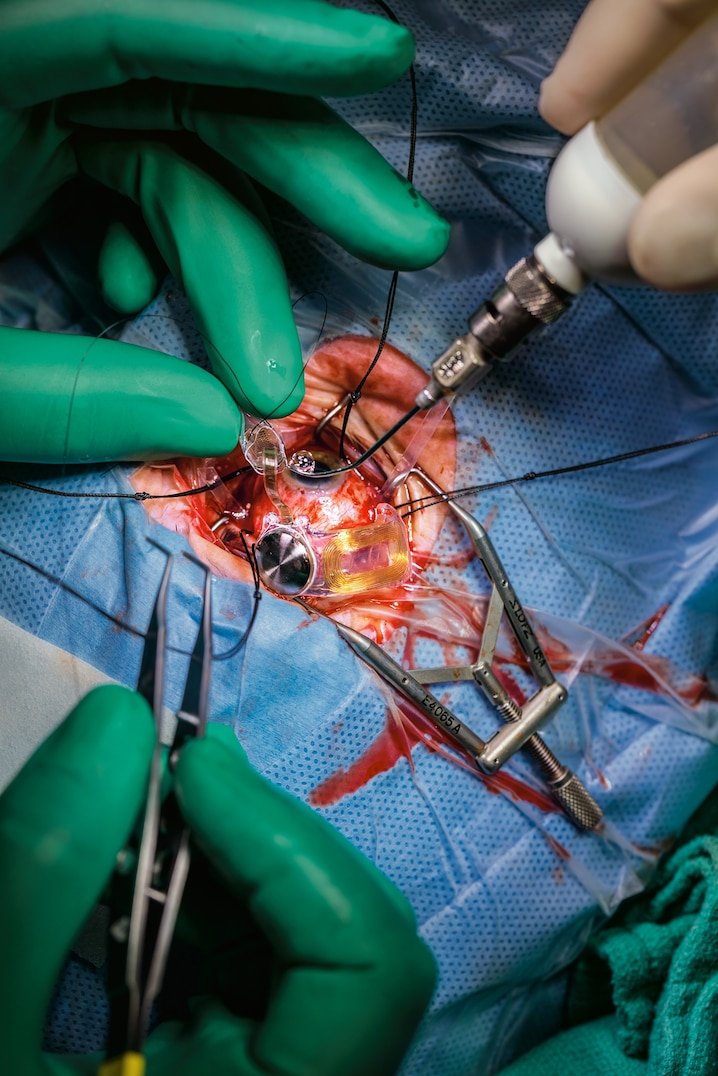
PRIMA is a chip implanted in the eye of patients with age-related macular degeneration, one of the most common causes of vision loss among older adults. The device pairs with a pair of glasses and is designed to restore partial vision. It has 378 pixels, each with a tiny electrode, and measures 2 millimeters by 2 millimeters.
The chip works with a pair of glasses worn by the patient. Together, the implant and the glasses are designed to restore form vision, the ability to read letters, numbers and words, for some patients blinded by late-stage macular degeneration.
PRIMA is approved in Europe and available in Germany, and Science Corp is now trialling it for Stargardt disease, another condition that causes blindness. The company also wants to offer it to patients willing to pay out of pocket at a unit at Moorfields Private Eye Hospital in London, though it has not said what they would pay.
In the United States, PRIMA is being vetted by the Food and Drug Administration. Science Corp is pursuing approval through the agency’s Humanitarian Device Exemption pathway, which allows experimental medical technologies for rare conditions to reach patients faster.
The Humanitarian Device Exemption pathway is designed for devices that treat rare conditions. The company has argued that advanced macular degeneration in both eyes is uncommon enough to qualify, according to TechCrunch.
Max Hodak, the founder and chief executive of Science Corp, told Bloomberg he hopes the device will be available to US patients early next year. TechCrunch reported the target as the first half of next year.
Science Corp and the $3.5B valuation
The $3.5 billion valuation comes from a person familiar with the deal who spoke to TechCrunch, rather than from the company itself. The company confirmed the $400 million round and said its total funding since its 2021 founding is now more than $900 million.
The valuation was not confirmed by the company, and the figure comes from a single source familiar with the deal. Even so, the jump from the March round shows how fast investor interest in brain-computer interfaces has grown.
The valuation is up from about $1.5 billion after a $230 million Series C round in March. Hodak founded Science Corp in 2021 after serving as president of Neuralink, Elon Musk’s brain-computer interface company.
The new money will also fund research, manufacturing and the company’s biohybrid program. That work aims to connect directly to the human brain through a sensor built from cultured neurons combined with silicon.
The biohybrid program grows engineered neurons on silicon to connect with the brain’s own circuits. The idea is to build an interface that works with living tissue rather than sitting beside it.
Science Corp brain implant trials ahead
The biohybrid implant is the company’s founding ambition, and it is further from the market than PRIMA. Tests so far have been carried out only on animals, and the company hopes to start its first human clinical trials within the next 16 months.
Human trials of the biohybrid device are still at the design stage. The company is working with Yale on the trial plan, and the first patients would be treated for a disease the company has chosen but not named.
Science Corp is designing those first human trials with Murat Günel, a neurosurgery professor at Yale. The company has picked the first disease it hopes to treat with the device but has not disclosed it. Günel has said the approach could eventually offer treatments for Parkinson’s disease and other brain injuries and illnesses.
For now, PRIMA is the product closest to patients. It is already in use in Germany, and the new funding is meant to carry it into the United States and widen its use in Europe.