
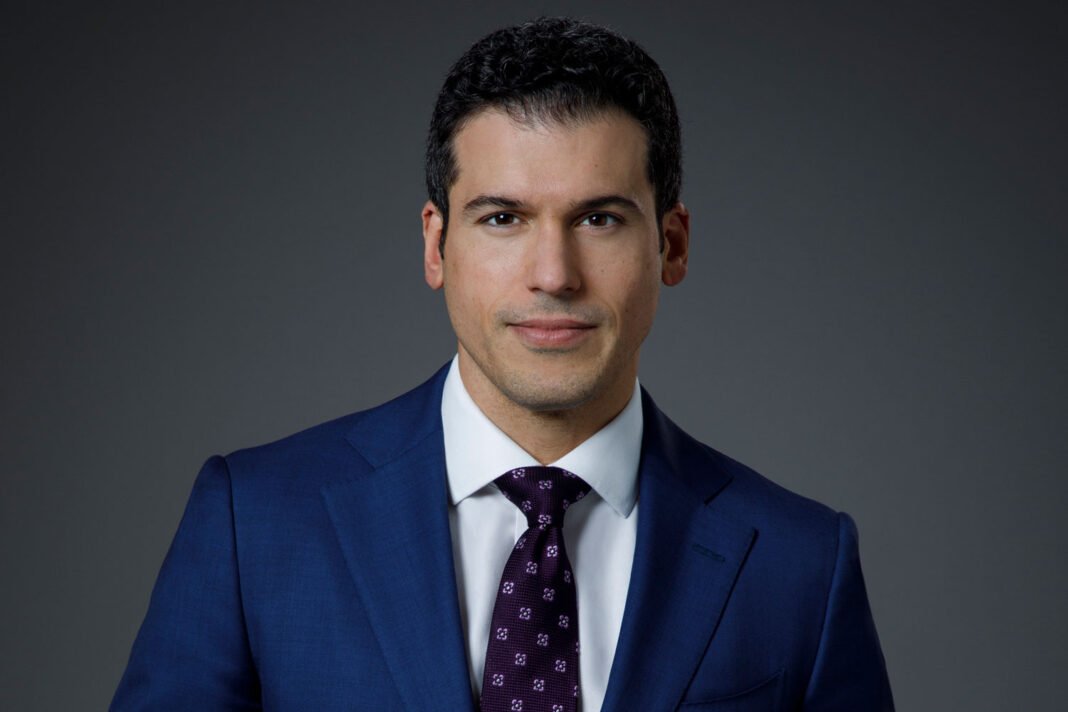


Gio Benitez, the Good Morning America Sunday co-anchor and ABC News transportation correspondent, has revealed that he has coronary artery disease. The 41-year-old shared the diagnosis on the set of Good Morning America on Tuesday, November 17, after a heart scan found plaque building up in his arteries even though he felt healthy.
The diagnosis followed a coronary artery calcium scan, a noninvasive CT test that measures calcium deposits in the walls of the coronary arteries. Benitez said his score was 137, and that the result led to his diagnosis of coronary artery disease. He had expected a zero, which would have meant no calcified plaque was found. A score above 100 points to an elevated risk of heart disease.
The coronary artery disease diagnosis caught him off guard because he had no warning signs. He exercises regularly, eats well, does not smoke, and has no history of diabetes or high blood pressure. He had also passed a cardiac stress test with another cardiologist, who told him he passed with flying colors.
Coronary artery disease found by a calcium scan
The scan came about a year after ABC News chief medical correspondent Dr. Tara Narula, a practicing cardiologist, looked at his medical history while working on a heart health segment. Narula suggested the calcium scan. Benitez had the test a few weeks ago and learned the result the next morning.
“I couldn’t believe it. My other tests were fine and now here it was, my worst fear, coming true,” Benitez told People. “How could this be happening?”
Coronary artery disease develops when plaque builds up in the arteries that carry blood to the heart. The plaque is made up of cholesterol, fatty substances and other material. The Centers for Disease Control and Prevention describes the condition as a buildup of plaque that can lead to heart attacks and other complications. It is the most common heart disease in the United States.
A calcium score of 137 does not mean a heart attack is imminent. Doctors weigh the score with other factors, such as age, blood pressure, cholesterol and family history, before deciding on treatment.
Coronary artery disease and a family history of heart attacks
Benitez said the diagnosis frightened him because heart disease has run through his family for generations. Good Morning America reported that four relatives died of heart attacks in their 40s, 50s and 60s.
His grandmother died of a heart attack at 61. His aunt had a heart attack in her sleep while still young, and two of his uncles had heart attacks at young ages. On the other side of his family, one grandfather had triple bypass surgery, and a grandmother regularly needed medication to ease chest pressure.
“It was literally everywhere all around me,” Benitez told People. “So I was always sort of panicked around it, even though doctors over the years told me everything’s fine.”
The fear stayed with him after the diagnosis. Benitez told People he had panic attacks every night for about a week after he heard the news. He said he lay awake wondering whether he might fall asleep and never wake up, asking himself, “Is this going to happen to me tonight? Is this it? Will I close my eyes and just never open them again?”
Coronary artery disease treatment and what comes next
Benitez has started treatment for coronary artery disease, including cholesterol-lowering medication. Care for the condition can include drugs such as statins and aspirin, which thins the blood to lower the risk of clots, along with exercise, a healthy diet and stress management.
Benitez said going public with his coronary artery disease was his way of warning people about a risk that can go unnoticed. “I know that so many people have the silent killer inside them, and they have no idea,” he said on Good Morning America. “That’s what I want everyone to know, that you can feel fine and still have this happening.”
He told People he wants people at risk to talk with a doctor about a calcium scan, even when they feel well. “If there is any risk for you, I want you to have this conversation with your doctor,” he said. “Even if you feel fine, something could be lurking that isn’t fine.”
Narula told People that a coronary artery disease diagnosis does not show how narrow the arteries are, but it calls for steps to cut risk. She said no one is too young to start thinking about heart health.
Benitez, who joined ABC News in 2013, said he is feeling good since starting treatment. He has asked viewers with a family history of heart disease to talk with a doctor about whether a calcium scan is right for them.