
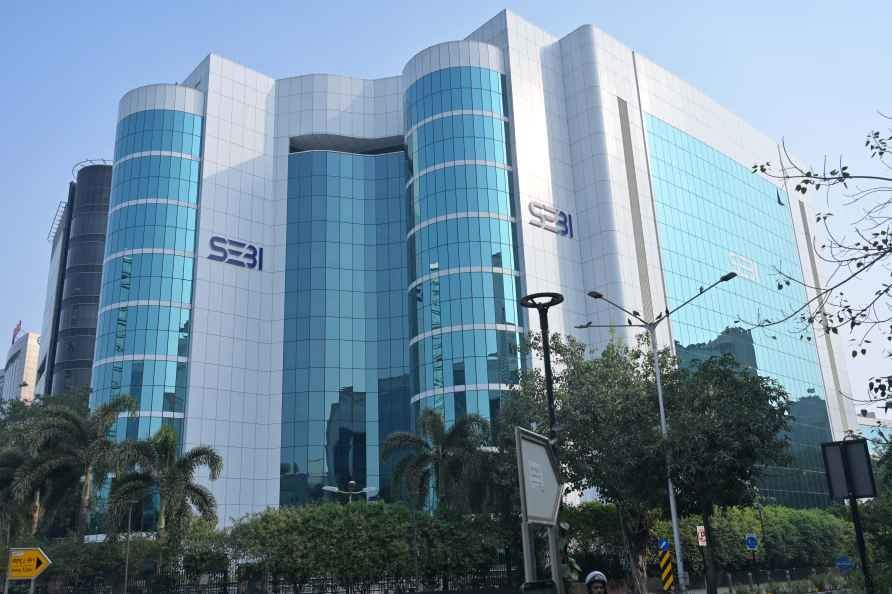


The Securities and Exchange Board of India is examining whether to build its own artificial intelligence model for the securities market, as part of India’s digital public infrastructure. SEBI chairman Tuhin Kanta Pandey said the regulator was weighing the idea, while keeping in mind the risks that come with the technology.
Pandey spoke to the media on the sidelines of the CII Financing Summit in Mumbai on November 20. “We are exploring whether it is feasible for us to have our own model as part of our DPI (Digital Public Infrastructure). But we have to examine its feasibility. There are a lot of risks in AI, and opportunities too. Guardrails are also needed,” he said.
He had first raised the idea on October 28, speaking at the Business Standard BFSI Summit in Mumbai. Pandey said then that concerns about the confidentiality and availability of frontier AI models lay behind the plan, since most advanced models are developed and hosted abroad.
“Given concerns about the confidentiality and availability of frontier AI models, we are exploring the possibility of developing a securities market-specific AI model that could be built and governed domestically as a form of digital public infrastructure,” Pandey said at the summit.
SEBI cites control over frontier models
SEBI’s case for a home-built model rests on control. A model built and governed in India would keep market data inside the country and leave the regulator less dependent on foreign providers for access. Pandey said AI tools can spot patterns that call for closer examination, and that such tools can strengthen risk assessment and market supervision.
SEBI is already using AI in its daily work. The regulator is piloting a tool to monitor disclosures from debenture trustees, stock exchanges, depositories and credit rating agencies, to flag early signs of corporate debt defaults. It is also building an in-house system to analyse compliance reports filed by portfolio managers and asset management companies.
The regulator is also putting in place the supervisory toolkits for AI published by the International Organization of Securities Commissions, which help regulators assess machine learning, generative AI and agentic systems used by market participants.
SEBI pairs AI plan with other reforms
Pandey used the same appearance to set out other changes. SEBI has removed the requirement for non-resident Indians to travel to India to complete their know-your-customer formalities, and they can now do so through video-based verification. The regulator is also working to simplify the onboarding process for foreign portfolio investors.
On small and medium enterprise IPOs, a consultation paper has already been released, and SEBI will decide on changes after public feedback. “Already, a consultation paper is out. We are publicly consulting. After the consultation is over, we will take our decisions,” Pandey said. The paper covers changes that include lot sizes.
SEBI is working on a market-making framework to improve liquidity in the secondary corporate bond market, and on a framework for pre-IPO investments to protect investors in unlisted shares. Pandey said the details of the pre-IPO framework, including the stage at which it would apply, were still being worked out.
Pandey also said the regulator had taken up goods and services tax issues affecting the commodities market with the ministries concerned. On the self-listing of stock exchanges, he said the proposal was neither on the table nor off the table, and was not being actively considered.
Guardrails come first
Pandey stressed that the AI plan is at an early stage. No timeline, budget or technical design has been given, and SEBI has described the work as an examination of feasibility rather than a decision to build. The risks of the technology and the guardrails around it will shape whether the model goes ahead.
The approach fits a wider pattern at the regulator, which has been adding AI tools to its supervision while writing rules for how market participants use the technology. The model, if built, would sit inside that work as a piece of public infrastructure for the market, open to the institutions the regulator oversees.