
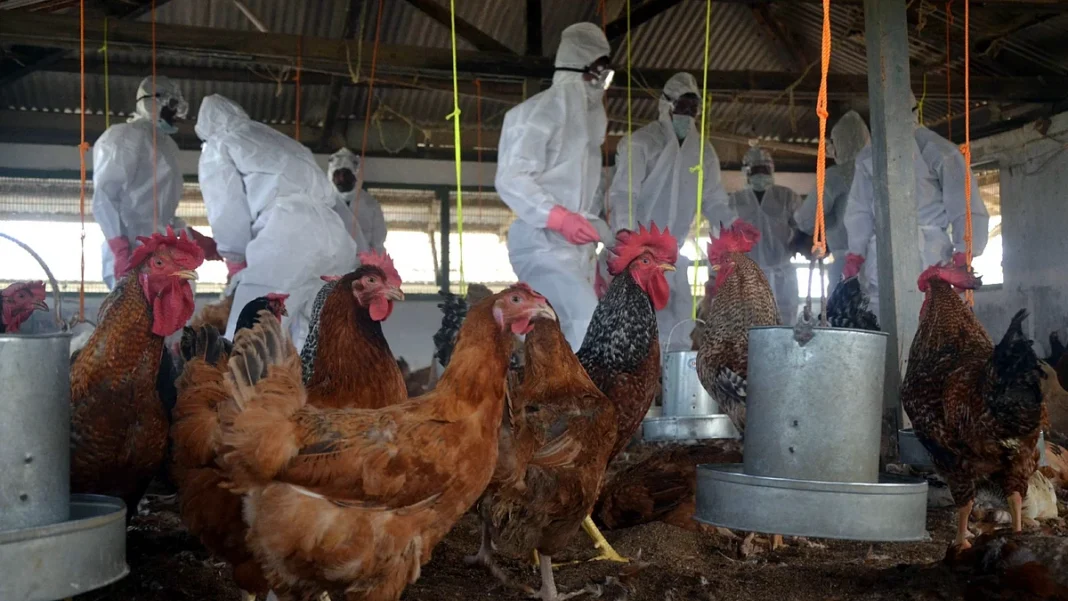


India will launch its first indigenous H5N1 vaccine for chickens on November 20, as fresh bird flu outbreaks are reported in several parts of the country. Union Agriculture Minister Shivraj Singh Chouhan will dedicate the vaccine to the nation at the ICAR-National Institute of High Security Animal Diseases (ICAR-NIHSAD) in Bhopal. The H5N1 vaccine is the first developed in India against the H5N1 strain of highly pathogenic avian influenza, the virus behind bird flu in poultry.
The H5N1 vaccine was developed by scientists at ICAR-NIHSAD and targets H5N1 Clade 2.3.2.1a, the strain behind most bird flu outbreaks among chickens in India. The institute is based in Bhopal, Madhya Pradesh, in central India, and handles high-security animal disease research for the country. It is an inactivated vaccine, which means it contains a version of the virus that cannot replicate and infect. When given to a chicken, it exposes the bird’s immune system to viral components, so the bird can recognise the virus and respond if it meets the live virus later.
Why India needed an H5N1 vaccine
No commercial vaccine is currently available against this particular H5N1 strain, according to the Ministry of Agriculture and Farmers’ Welfare. The new H5N1 vaccine is intended to fill that gap and protect the poultry flocks that carry the strain now circulating in the country. The ministry said the vaccine would strengthen India’s ability to prevent outbreaks and cut the losses poultry farmers face when birds fall sick or have to be culled.
Bird flu was first detected in India in 2006. Since then the country has reported more than 500 combined outbreaks involving the H5N1 and H5N8 subtypes. The 2006 outbreak alone caused estimated direct and indirect losses of Rs 2,200 to Rs 3,000 crore, as infected birds were culled and trade in poultry was hit. Outbreaks have returned in most years since, and control has rested on culling, movement restrictions and surveillance.
Fresh outbreaks as the H5N1 vaccine arrives
The launch comes as fresh cases are reported. In Tamil Nadu’s Cuddalore district, H5N1 infections were confirmed after sudden deaths among chickens at poultry farms. More than 35,000 birds had died by November 13, prompting containment and culling. Andhra Pradesh has also reported H5N1 infections in poultry, prompting restrictions and surveillance measures.
Reports say a single dose of the H5N1 vaccine is expected to protect chickens for up to six months, with laying hens and breeder flocks the main target. The government has not yet said when the vaccine will reach poultry farms, what it will cost, or how vaccination will be organised across states. Those details will decide how much protection the vaccine gives farmers in practice. The ministry said the vaccine would also help protect the livelihoods of poultry farmers, who face heavy losses when flocks are culled.
Can the H5N1 vaccine stop outbreaks?
The H5N1 vaccine is an important step, but it will not prevent outbreaks on its own. Its effect will depend on vaccination coverage, how it is given, monitoring of viral strains and compliance with farm biosecurity measures. Vaccinated flocks still need surveillance, and infected birds still need to be culled where the virus is found.
H5N1 mainly affects birds, but it can occasionally infect people who have long-term contact with infected birds, their secretions or contaminated surroundings. Human infections can range from mild respiratory illness to severe pneumonia and, in some cases, death. The World Health Organization has recorded 1,003 human cases of H5N1 infection, including 479 deaths, across 25 countries since 2003. Human infections remain uncommon, and sustained human-to-human transmission has not been established.
People who work with poultry should avoid handling sick or dead birds without protective equipment, and unusual bird deaths should be reported to veterinary authorities. The H5N1 vaccine is for chickens, not for people, and it does not directly protect humans against bird flu. Its value lies in cutting the virus in poultry, which in turn lowers the chance of the virus spreading to other animals and to humans. The shot was developed by the ICAR National Institute of High Security Animal Diseases in Bhopal.