
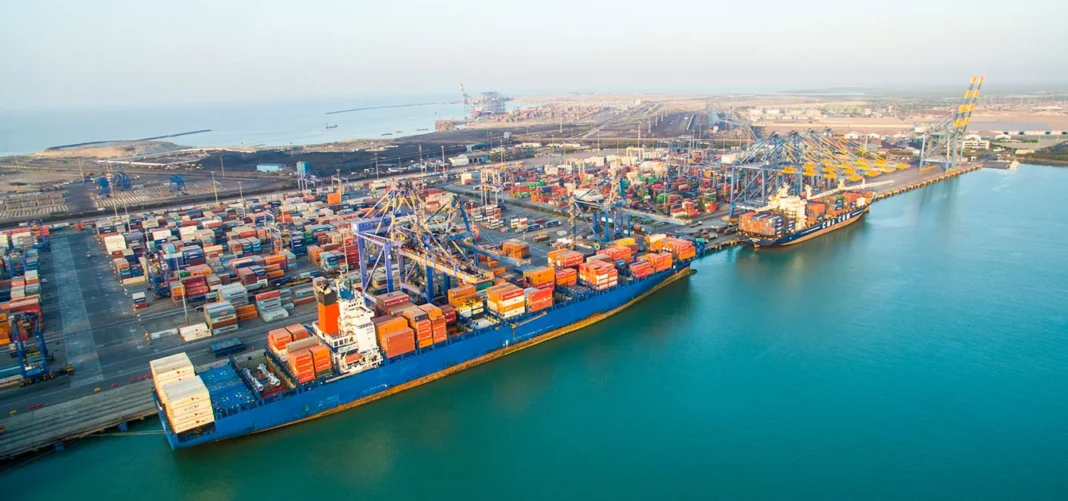


India exports to the United States still account for about 20 per cent of the country's total shipments, despite a year of punitive tariffs and New Delhi's push to diversify its trade. An analysis of trade ministry data for the 12 months through July shows the US remains India's largest export market, with 88.5 billion dollars of goods shipped across the period.
The share has held steady even though President Donald Trump's tariffs on Indian goods reached as high as 50 per cent during the period. The tariff rate was later cut to 18 per cent in February 2026 and now stands at 10 per cent. The resilience of the US share shows how hard it is to replace the world's largest economy as a buyer, even when trade policy turns hostile.
India exports to the US have grown since 2022
The US share of India exports has actually risen over the past few years, from 17.4 per cent in 2022-23 to about 20 per cent in the 12 months through July. India exports to the US have therefore grown in share even while the politics of the relationship turned difficult. In FY26 the share stood at 19.8 per cent, nearly double the 10.9 per cent recorded in FY10. The long rise reflects the depth of the trading relationship, which now covers electronics, gems and jewellery, textiles, marine products and pharmaceuticals.
The mix of goods has changed sharply. Electronic goods made up 28 per cent of India exports to the US in FY26, up from 3.5 per cent in FY20, as phone and component manufacturing expanded. Gems and jewellery moved the other way, falling from 17.9 per cent of the total in FY20 to 5.8 per cent in FY26. The shift shows that India's export basket to America is now driven more by manufacturing than by traditional goods.
Diversification will take years, trade body says
India has worked to widen its export markets, signing a trade deal with the UK in July and reaching agreements with the European Union, Oman and New Zealand. Exporters have scouted newer markets to reduce risk, and India exports to China surged 42 per cent to 21.5 billion dollars in the 12 months through July. But the US share has not moved, and trade officials say that will not change quickly.
Ajay Sahai, director general of the Federation of Indian Export Organisations, said it will take at least two to three years for market diversification to show meaningful results, adding that the US continues to be the most attractive market. Commerce Secretary Rajesh Agrawal said the focus is on engaging with economies that collectively account for over two-thirds of global GDP.
The other leading destinations remain far behind America. The UAE accounted for 8.5 per cent of India exports in FY26, down from 13.4 per cent in FY10. China took 4.4 per cent, down from 6.5 per cent, while the Netherlands rose slightly to 4 per cent from 3.6 per cent. The UK took 3 per cent and Singapore 2.7 per cent. No other single market comes close to the US share of about one fifth.
India exports keep growing overall
India's combined merchandise and services exports reached a record 863.1 billion dollars in FY2025-26. The momentum has continued into the current financial year, with merchandise and services exports together reaching 232.73 billion dollars in April to June 2026, up 11.37 per cent from a year earlier. Overall export growth has therefore held up even while tariffs weighed on specific sectors.
The figures point to a trade relationship that has absorbed a tariff shock without breaking. India exports to the US at roughly the same share as before the tariffs, the government is signing deals to open new markets, and exporters are adjusting product by product. The US remains India's top export destination, and the data show that replacing it will be a slow process rather than a sudden break. The new trade deals signed this year will show over time whether other markets can take a larger share.