


China’s entertainment industry is now built around women watching, and the change is reshaping what gets made, who stars in it and what sells. A New York Times report published on November 26, written by Murphy Zhao, Alexandra Stevenson and Gilles Sabrié, says the female gaze China entertainment boom runs from male dancers on stage to handsome hiking companions on mountain trails, with a growing industry catering to female fantasies and testing the limits of what Beijing will allow.
The shift has been building for years. Women now decide a large share of household spending in China, and their choices at the box office and on streaming have turned female-centred stories into the safest bet in the business. The female gaze China entertainment boom is a run of films, series, live shows and online acts that put women’s pleasures first, and it has grown while the authorities keep a close watch on how far it goes.
Female gaze China entertainment: what the report found
The Times report points to two examples that show how far the trend reaches. Male dancers perform for largely female crowds, and young men work as hiking companions, carrying women up mountain steps and posing for photos at scenic spots. Videos of the hiking companions, filmed at places such as Tianzhu Mountain in Anhui province, show groups of young men carrying female tourists in bridal carries and piggybacks up long stone stairways, and the clips have drawn large audiences online.
The female gaze China entertainment boom runs through film too. Her Story, a comedy directed by Shao Yihui, became one of China’s biggest hits of 2024, taking in more than $77 million at the box office, according to the tracker Maoyan, and earning a 9.1 rating out of 10 on the review site Douban. The film follows two women who become neighbours in Shanghai, a free-spirited singer and a single mother, and it jokes about clueless suitors who quote feminist theory at them. Shao has said in public appearances that she is not interested in provoking gender antagonism, a charge official media has sometimes aimed at feminists.
Her Story was not alone in the female gaze China entertainment boom. YOLO, a film directed by and starring a woman, was the year’s top box office performer, and producers have since backed more women-led projects. The female gaze China entertainment boom also shows in the numbers: films by women directors grossed more than 845 million yuan, about $118 million, at China’s domestic box office in 2024 alone, according to figures cited by the sales agent Parallax Films, which is now selling new work by Shao and fellow directors Yang Lina and Yin Lichuan to buyers abroad. The female gaze China entertainment boom has given that generation of directors a commercial footing they did not have before.
How female gaze China entertainment grew at the box office
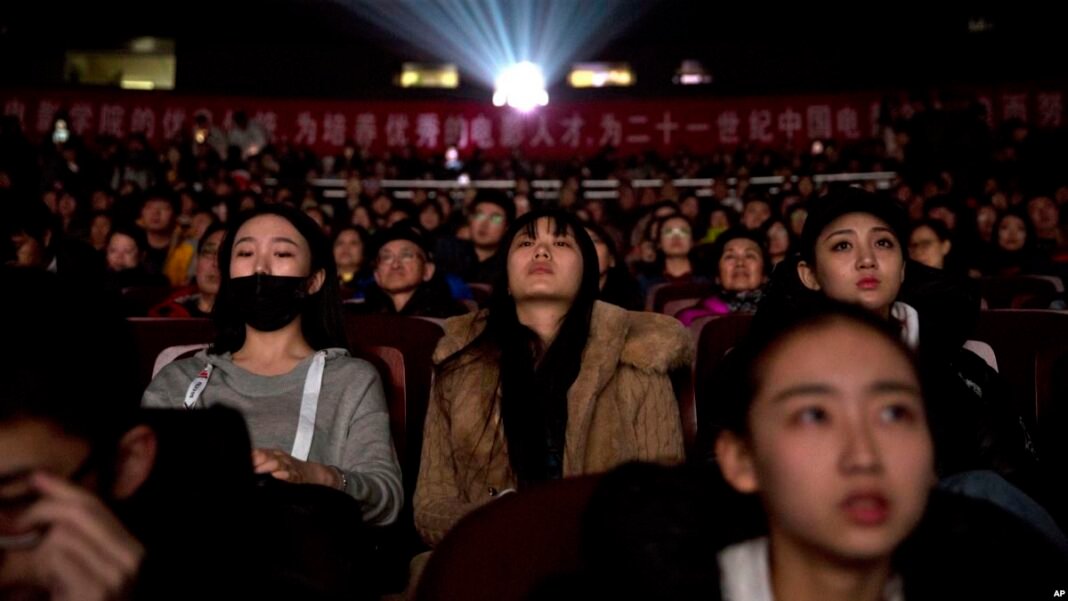
At a time of slow growth and weak ticket sales, producers have been eager to attract female audience members, who have become a more important consumer base. Women who watched Her Story became its loudest supporters, spreading memes and recording podcast episodes, and a low-budget film that opened in only a few major cities went on to rank among the year’s top 15 highest-grossing films in China.
The trend also runs through short video and live streaming. On Douyin, China’s version of TikTok, male creators perform a soft, flirtatious masculinity for female viewers, selling memberships and paid chats that promise attention and company. Academic research on the platform describes these creators as playing edge-ball, a term from table tennis for a shot that lands on the edge of the table, used here for content that tests the limits of what censors allow.
Where female gaze China entertainment meets the censors
The boom has limits, and they are set in Beijing. The government has cracked down on feminist activism, pushed women to marry and have children, and kept a tight grip on public speech. Talk about women’s lives is generally allowed, so long as it does not turn into calls for rights, and films such as Her Story have passed the censors by cushioning social criticism with jokes. The film calls out double standards around single mothers and female sexuality, and it names feminist scholars, yet it also won praise from the ruling Communist Party’s own mouthpiece newspaper.
That tension sits at the centre of the female gaze China entertainment boom. The industry is making money from women’s desires, and the state is watching how openly those desires are shown. Producers keep testing the line, and audiences keep rewarding the ones that get closest to it. Women’s tastes now drive a large part of what China watches, and the people who make it are listening.